
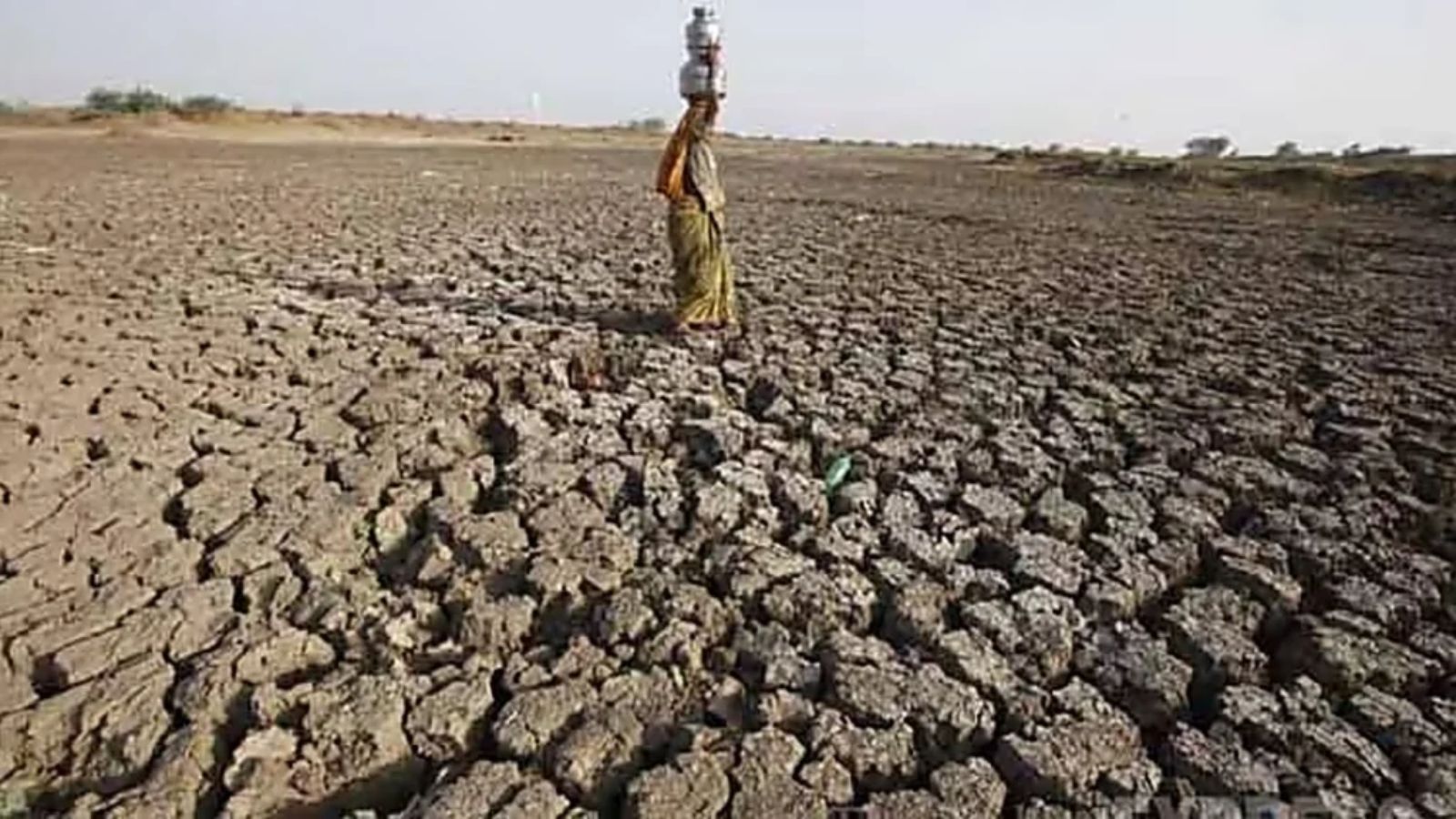
A new study of weather records from 1951 to 2020 shows India’s climate zones are shifting. Marathwada turned hotter, moving into a semi-arid zone, while the Konkan coast got wetter. Researchers said these shifts need close monitoring and to be built into long-term agricultural planning as drought hits many state talukas.
As Maharashtra declares drought in 265 of its 358 talukas in an El Niño year, a study of 70 years of weather records by scientists from the India Meteorological Department (IMD), Pune, and the Indian Institute of Tropical Meteorology has been published in ‘Mausam’, IMD’s peer-reviewed journal.
Climate zones are defined by temperature and rainfall, and the researchers redrew India’s climate map for successive 30-year periods, the standard span over which climate is measured, from 1951–1980 to 1991–2020, using IMD’s own observations. In 1961–1990, Marathwada and west Vidarbha lay mostly in the tropical savanna zone, which is warm throughout the year with a long dry season, but by 1991–2020 they had moved into the hot semi-arid zone, which is hot with low rainfall, a change the authors attribute mainly to rising daytime and night-time temperatures.
Along the coast, the tropical monsoon zone, the country’s wettest, with heavy seasonal rain, has extended further across the Konkan, Goa, coastal Karnataka and Kerala.
The change in Maharashtra’s interior does not show up in the figures for central India as a whole, where the hot semi-arid zone shrank slightly over the period, so the study’s maps, rather than its regional totals, reveal what happened in the state, according to researchers.
The spread of the wettest zone along the coast aligns with a broader pattern in the study: rainfall has increased over southern India even as it has declined over the northern plains, so Maharashtra’s interior and coastline have changed in opposite directions.
The authors note that climate zone shifts affect which crops suit a region and when to sow them, and say these shifts need close monitoring and to be built into long-term agricultural planning. The study’s records end in 2020, but the area it identifies in Maharashtra’s interior is at the centre of this year’s drought, with the state declaring drought in 265 of its 358 talukas on 26 September after its monsoon rainfall ended 19 per cent below normal.
El Niño, the periodic warming of the Pacific Ocean that tends to weaken India’s monsoon, left the country 12.6% short. The coast was also affected, with Goa ending the season 34 per cent below normal and Kerala and coastal Karnataka 28 per cent below.
“This year’s El Nino has left Maharashtra and much of the west coast well short of rain, with drought declared across most of the state’s talukas, and our records show that such shocks now land on a region whose climate has been changing in two directions, with Marathwada and west Vidarbha becoming hotter and drier and the Konkan and the coast to its south becoming wetter, which is the kind of long-term change IMD needs to build into its advisories to the state and its farmers,” Mrutyunjay Mohapatra, Director General of Meteorology and a co-author of the study said.
The details of the study were also explained at Simplifying Science, a programme curated by Asar Social Impact Advisors to build public understanding of climate science and its impacts across India.