
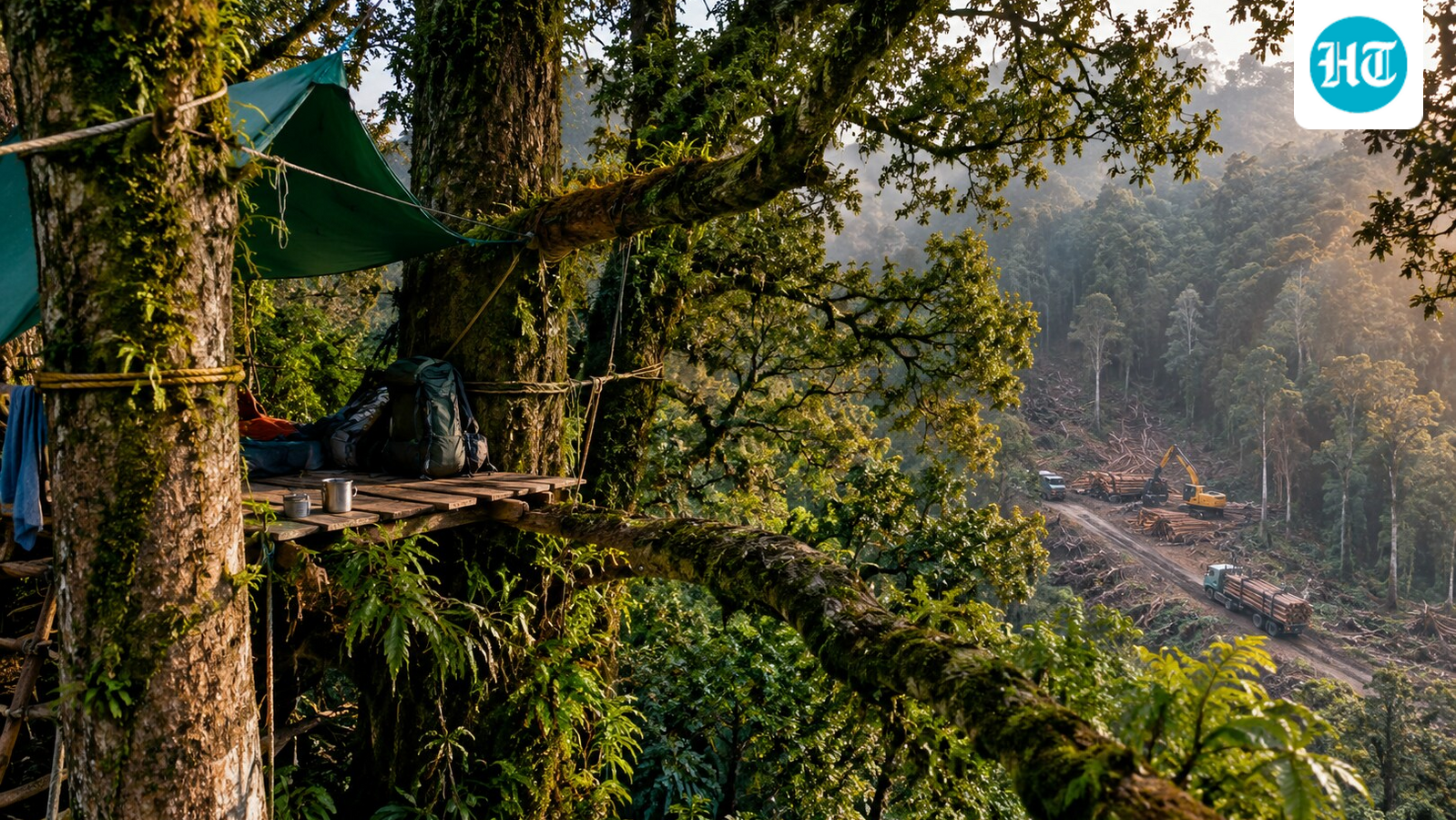
In January 1978, botanist Stephen King and protesters camped in Pureora’s tōtara canopy to stop logging. This brave act saved the ancient trees from being cut down. Logging halted that year and ended by 1983. Today, the forest remains a protected home for many birds and rare native plants.
In January 1978, conservationists made their way up the giant trees of Pureora forest, New Zealand, to take up a unique position against the practice of logging. Taking part in the demonstration were a number of environmental activists, including a botanist named Stephen King, who participated in the protest without his shoes. The protesters put up a platform in totara trees that were very old and camped there to prevent them from being cut down.
According to the New Zealand Department of Conservation, the 1978 protest marked the turning point in the campaign to protect Pureora Forest. Tree-cutting operations were temporarily suspended during the same year and were subsequently terminated completely by the beginning of the 1980s following further discussion for several years. Today Forest Park protects an important remnant of Podocarp Forest that once covered much of New Zealand's central North Island. Its historic tree-top protest site serves as a reminder of how determined groups of activists helped change the future of an ancient forest.
The Pureora Forest is situated in the central part of North Island, New Zealand, covering the regions of Waikato and King Country. The forest contains indigenous Podocarp trees such as totara, rimu, matai, and kahikatea, some of which are several centuries old. The trees create a diverse forest ecosystem in which indigenous wildlife find shelter and food, including the threatened kōkako, known for its distinct blue wattles and melodic call. The Pureora Forest Park was one of the last large stretches of indigenous forest to be made available for commercial exploitation in the area. Loggers first appeared in 1946.
During the 1970s, conservation groups had grown wary of what remained of the old-growth trees. It was not just a matter of a single totara; the felling of larger trees and cutting into the forest canopy would allow for more exposure to wind and potential for machinery damage to roots and habitat for other wildlife. In fact, the New Zealand Department of Conservation states that this Pureora protest during 1978 is considered one of New Zealand's most important conservation struggles.
After many years of attempts to convince authorities to conserve the forest, the conservationists renewed their activism. In January 1978, Stephen King and other activists camped out in the Pikiariki Block, an area where some of the last old tōtara trees in Pureora Forest Park were threatened by logging. They created campsites in the treetops to make it difficult for the loggers to reach their occupied trees without risking harm to activists. Some took other methods such as sitting in front of the trees, blocking the access tracks, and hiding under the logs to prevent their movement. Media reports raised awareness about the conflict, as pictures of people camping out on the treetops reached the homes of all New Zealanders. Not only were they defending trees, but also the forest as a whole and its wildlife.
Their effort led to the temporary cessation of logging activities as negotiations were conducted. Later on, the government invited public comment on the proposed plan for the management of West Taupo forests. As reported by the Department of Conservation, the government received 1658 submissions on the future of the forest, with only 15 supporting continued logging. On August,7, 1978, the government announced the establishment of Pureora State Forest Park and introduced the three-year logging moratorium across most of the area. Although timber extraction was still permitted, the decision marked a significant milestone for conservationists.
Despite the moratorium declared in 1978 being the significant milestone in the process, the fate of the forest remained unclear for a few years. Some logging still took place in selected sites, whereas studies were being conducted to examine the ecological significance of the forest and its species. Kokako was among the species whose very existence relied on native forest, which was another reason why the bird was one of the researchers' special interests. The conflict also raised economic implications because the logging industry created jobs and its decline affected local employment.
According to the Department of Conservation's technical history, logging stopped for good, but the final logging activities of Pureora Forest were conducted in 1983. Today, the Forest Park retains its natural environment and serves as a reminder of forest logging history. Visitors can visit the treetop protest site, near the modern-day forest tower, to see old logging equipment, the former loggers' home, and the remnants of the transport network in the region. The Pureora campaign continues to be a significant case study of how activism can influence environmental policies. Thus, through the efforts of Stephen King and others, the preservation of the old-growth native forest gained national attention.