
Charles Williams has planted trees on his Kentucky farm every Good Friday since April 16, 1976. He has now planted over 100,000 trees, turning old tobacco fields into a home for quail and songbirds. "It takes 150 years to grow a forest," Williams said about his long-term conservation work.
Charles Williams was a young boy in Hart County, Kentucky, when his father took him to the family farm and began planting loblolly pine about half a mile away. He was curious to try it himself, WBKO reported in May 2026 and the practice became a routine. The Sand County Foundation says Charlie Williams, known as "the tree man" in Munfordville, Kentucky, has planted trees on his farm every
Good Friday since 1976, as reported by Amanda Cooke in an article originally published by the American Forest Foundation on May 31, 2011 and later reproduced by Columbia Magazine.Good Friday planting began on April 16, 1976Williams wrote in his essay, This I Believe, that he started planting trees in the spring of 1962. His Good Friday custom began on April 16, 1976. He primarily plants Christmas trees but has planted some chinese chestnuts, peaches, apples, pears, bald cypress trees, redbud trees and dogwood trees. William's minister appreciates the symbolism of planting Christmas trees on Good Friday. Williams' motive is very simple. He said he discovered the concept of carbon sequestration only after 40 years of his planting activity.
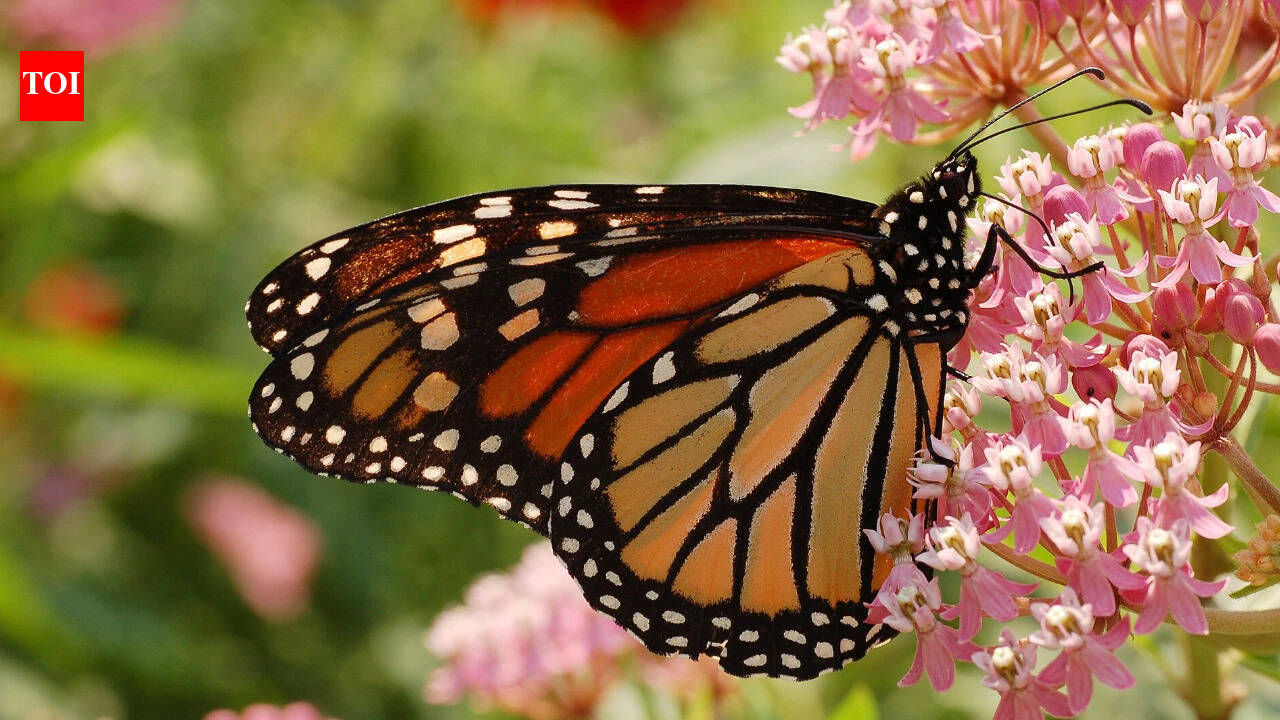
Dust Bowl erosion emptied Hart County farms in the 1930s WBKO reported how hot and dry weather in the 1930s destroyed tobacco crops throughout Hart County. According to Williams, the sandy soil washed away fast and people moved to Indianapolis, Detroit and Louisville to work in cities. On one abandoned farm, he recalls, the crop rows were still visible 30 or 40 years later. Regrowth takes a long time. "It takes 150 years to grow a forest," Williams said. WBKO reported that West Wind Farm had joined a federal conservation program that provides financial incentives to landowners for preserving forest land. However, the report did not identify the specific program.Former tobacco fields now hold warm-season grasses for quail The Sand County Foundation, which gave West Wind Farm its 2015 Leopold Conservation Award, notes that Williams received 90 acres from his grandfather one Christmas and has grown the holding to 1,200 acres. The tracts he bought had piles of concrete blocks, discarded pieces of tractors and appliances. He removed these and filled them with trees, clover and fescue. In the tobacco fields, he planted warm season grasses where quail, rabbits and birds could take up residence.Quail need that kind of cover. The study Northern bobwhites select for native grasses on working grazing land, published in the Journal of Wildlife Management in 2026, reports that bobwhite numbers have dropped 85% across most of their range since the 1960s, with the worst losses in the southeastern US. Birds followed by researchers in Eastern Kentucky chose native warm-season grasses over exotic pasture grasses at multiple scales. This study was not carried out on West Wind Farm; however, the planting used was similar. The study was based on radio-telemetry monitoring from April 2019 through October 2022, in eastern Kentucky, where grazed and burned native warm-season grass fields sat alongside exotic grazed and hayed cool-season grass fields. The research found bobwhites used the native grass fields more than expected by chance at both second- and third-order scales, while cool-season pastures were used less than expected.A power line easement grew from 60 feet to 240 feetWhen the local electric cooperative upgraded a power line running through his property to 69kV, the T&D World article Monarch Movement: Saving a Species reported that the easement widened from 60 feet to 240 feet and required clearing mature trees. This provided an opportunity for Williams. The Sand County Foundation's profile of West Wind Farm said he also planted swamp milkweed there as monarch habitat.The population of monarchs has declined drastically. The study Quasi-extinction risk and population targets for the Eastern, migratory population of monarch butterflies (Danaus plexippus), published in Scientific Reports, found that the eastern migratory population fell 84% between the winters of 1996-97 and 2014-15. It put the chance of quasi-extinction within 20 years at 11% to 57%. USGS defines a quasi-extinction population as one that has too few survivors for recovery to be possible. In the paper, the authors used a Bayesian multivariate auto-regressive state-space model to estimate extinction risk and conservation targets. They concluded that the population would need to grow to above five times its winter 2014-15 size to cut quasi-extinction risk in half, underscoring how stochasticity and a small current population amplify vulnerability.More than 4,000 forestry field days held on the farm An article by Amanda Cooke, originally published by the American Forest Foundation in May 2011, reported that Charlie Williams had held more than 4,000 Forestry Field Days at West Wind Farm, a term he uses for a day of work and learning. The Sand County Foundation separately said he has hosted thousands of them for children, undergraduates and business people. It also stated that the Arbor Day Foundation presented him with its 2011 Good Steward Awards for his conservation efforts. The Sand County profile reveals that he hires high school and college students during the summer and trains them on tree identification, planting and pruning.