
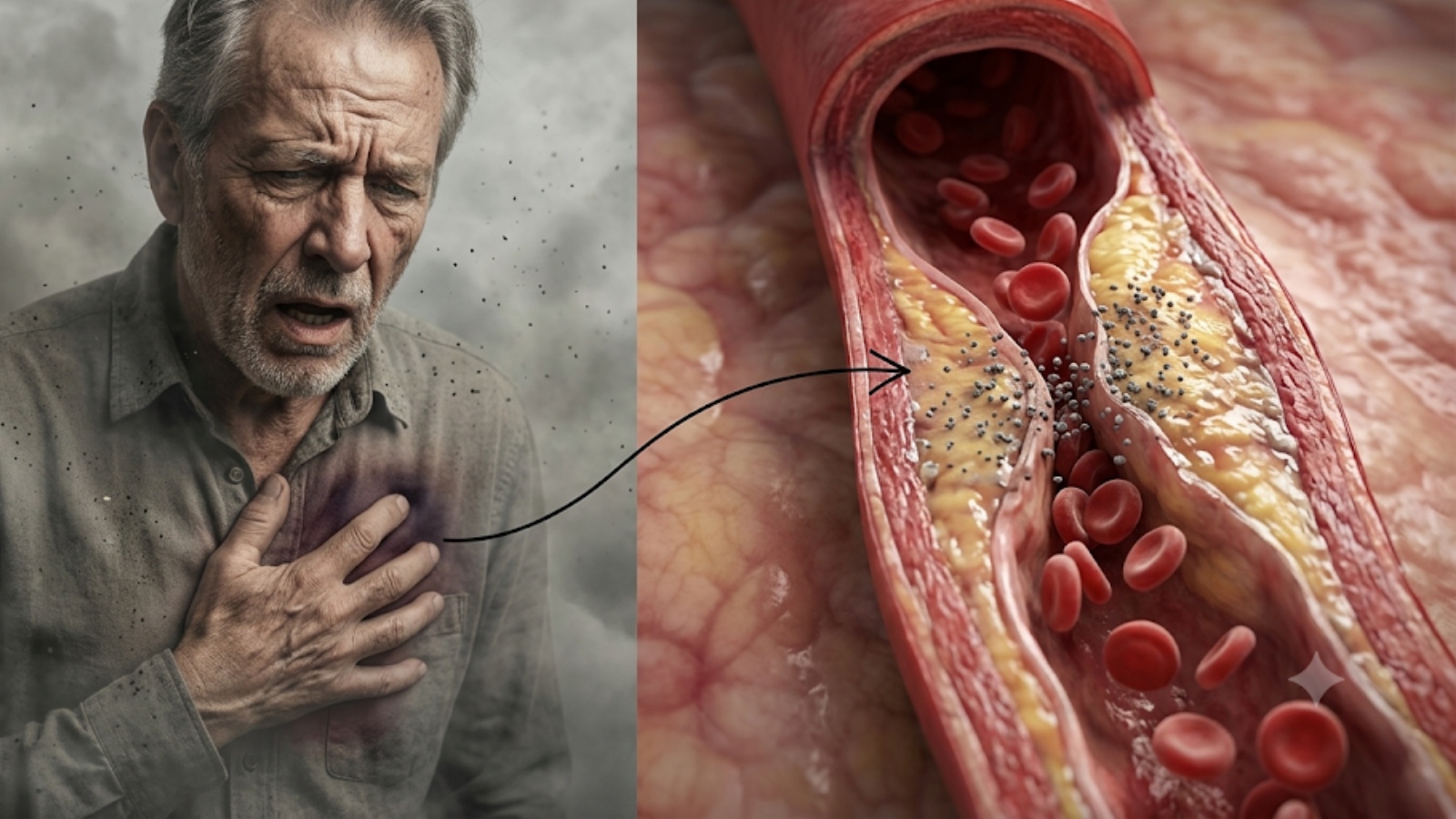
Pollutants like PM2.5 and microplastics pose a growing threat to heart health. Dr. Sukriti Bhalla said, "PM2.5 can penetrate deep into the lungs, causing inflammation and allowing toxins to enter the bloodstream." These particles may damage blood vessels and raise blood pressure, potentially increasing the risk of serious heart attacks.
From raising blood pressure to potentially destabilising arterial plaques, pollutants such as PM2.5 and microplastics may pose a growing threat to heart health.
Air pollution is increasingly being recognised as a significant risk factor for cardiovascular disease. While its impact on respiratory health is well established, prolonged exposure to pollutants such as fine particulate matter (PM2.5) may also silently damage the heart and blood vessels. Emerging research has also raised concerns about microplastics, with studies finding higher concentrations of these particles in patients who have suffered acute heart attacks.
An Italian study published in the European Heart Journal has raised fresh concerns about the impact of microplastics on cardiovascular health, detecting these particles in the blood supplying the heart. But how are these tiny plastic particles entering the heart's blood supply in the first place?
"Researchers found that people who smoke were six times more likely to have detectable micro- and nanoplastics in the blood supplying their hearts than non-smokers. Even more notable, every smoker who was also exposed to higher levels of air pollution had plastics detected in their blood, compared with just 12.5% of people who neither smoked nor experienced high pollution exposure," reported The Conversation.
But how do these pollutants affect the cardiovascular system, and can their combined exposure increase the risk of heart disease? According to Dr Sukriti Bhalla, Associate Director and Unit Head - Cardiology (Unit 2), Aakash Healthcare, PM2.5 and microplastics can trigger inflammation and oxidative stress, potentially damaging blood vessels over time.
"PM2.5 can penetrate deep into the lungs, causing inflammation and allowing toxins to enter the bloodstream. This can damage the lining of blood vessels, reduce circulation, raise blood pressure and promote atherosclerosis, or plaque build-up in arterial walls," she explains.
Microplastics, which enter the body through inhalation or ingestion, may also contribute to inflammation and oxidative stress. "Co-exposure to these pollutants over time may cause endothelial dysfunction, damage arteries and increase the risk of cardiovascular events. However, the degree to which these exposures interact in humans still needs to be elucidated," Dr Bhalla adds.
Can microplastics increase the risk of heart attacks?
Researchers are increasingly concerned that micro- and nanoplastics might inflame blood vessels and destabilise existing plaques in arteries. Dr Bhalla explains that persistent inflammation can weaken the fibrous cap covering an arterial plaque, potentially making it more vulnerable to rupture.
"When a plaque ruptures, the body may form a blood clot at the site. This clot can block blood flow and cause a heart attack or stroke," she says.
However, the presence of higher microplastic concentrations in patients who have suffered heart attacks does not establish a direct causal relationship.
"Although it is concerning that higher microplastic counts have been found in patients with acute heart attacks, this does not necessarily mean the particles caused plaque rupture or clot formation. More studies are needed to establish a direct cause-and-effect relationship," Dr Bhalla clarifies.
Can air pollution affect people without existing heart conditions?
Air pollution is an independent risk factor for cardiovascular disease. Its effects are not limited to smokers or people who already have heart conditions.
According to Dr Bhalla, prolonged exposure to PM2.5 can trigger chronic inflammation and oxidative stress, damage blood vessels, and contribute to high blood pressure. Over time, these changes may promote plaque formation and increase the risk of heart attacks, strokes and other cardiovascular complications.
"Years of exposure to air pollution can silently harm the cardiovascular system, even in otherwise healthy non-smokers. Therefore, maintaining a healthy lifestyle cannot completely offset the harmful effects of long-term exposure to polluted air," she says.
How can you protect your heart during periods of high pollution?
Reducing exposure to polluted air can help lower the body's overall inflammatory and cardiovascular burden. However, it does not eliminate exposure to microplastics, which require additional precautions.
Dr Bhalla recommends the following measures:
* Monitor AQI: Check daily air quality levels and avoid jogging, exercising or taking long walks outdoors when pollution levels are high.
* Wear a well-fitted mask: If stepping outside is unavoidable, use an N95 mask or another well-fitted respirator to reduce inhalation of particulate matter.
* Improve indoor air quality: Use a properly sized HEPA air purifier and keep windows closed during periods of severe outdoor pollution.
* Avoid indoor pollutants: Limit exposure to incense smoke, tobacco smoke and fumes generated during excessive frying.
* Reduce microplastic exposure: Avoid heating food in plastic containers. Use glass or stainless-steel containers for storing food and drinking water, and limit single-use plastics.
* Manage cardiovascular risk factors: Keep blood pressure, cholesterol and blood sugar within healthy limits through regular monitoring and medical guidance.
* Maintain a healthy lifestyle: Follow a balanced diet and engage in regular physical activity to support long-term heart health.