
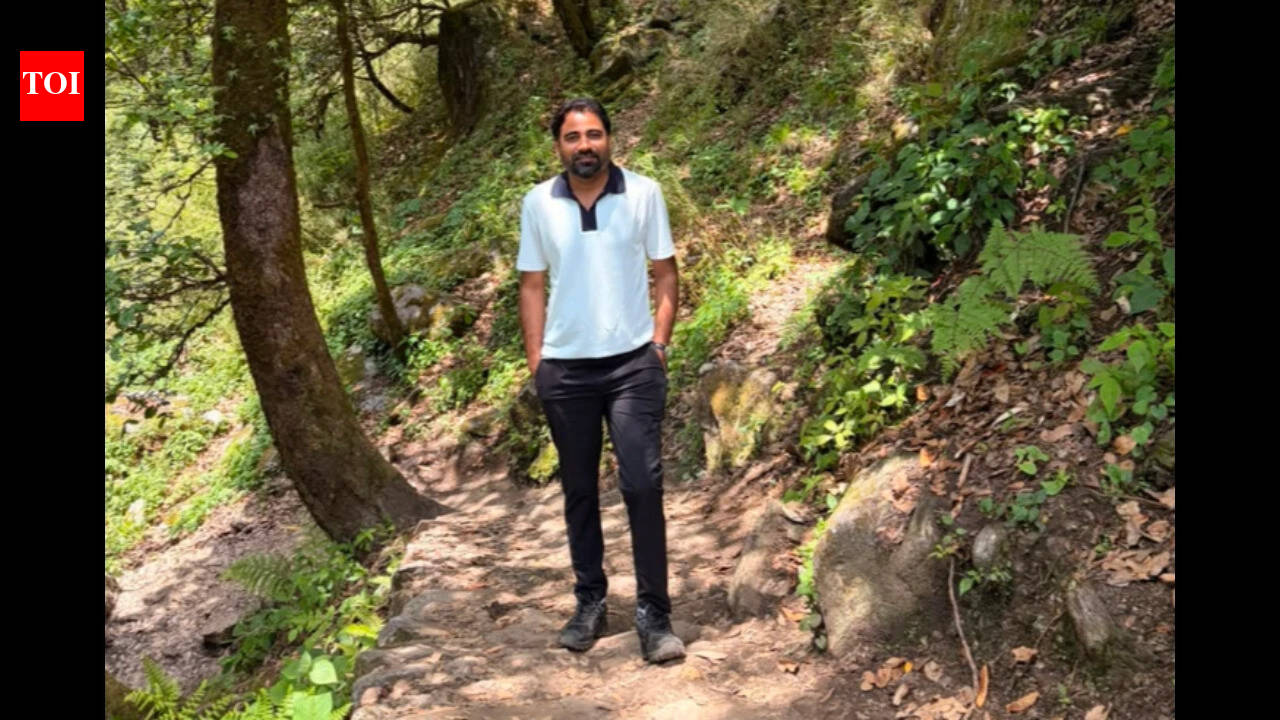
Vikrant Tongad turned a Greater Noida dumping ground into a forest by planting 3000 trees. He cleared 12 truckloads of waste and recycled 1,600 kilograms of plastic. Vikrant said, "This land was burdened with waste and remnants of illegal soil mining." Now, the area is a green space for residents.
Think about a spot in your neighbourhood that everyone walks past with a scrunched-up or closed nose. Maybe it is an empty plot where people dump their rubbish, or a corner where smoke rises from the dump every evening. We often end up complaining, frowning, or end up covering our faces, and hurry on.
A man decided to clear up one such dumping area in a sector in Greater Noida by planting around 3000 trees, and the place looks almost unrecognisable before and after.
Meet Vikrant Tongad: The man who turned a Greater Noida dumping ground into a forest
Environmentalist Vikrant Tongad, founder of the Noida-based non-profit organisation SAFE (Social Action for Forest and Environment), took up this cause after residents asked for his help. He had handled a similar problem in Ghaziabad before, so he knew what he was walking into.
Even so, the site was grim. Vikrant told The Better India, "This land was burdened with waste and remnants of illegal soil mining. There were uneven pits as deep as six to eight feet. The air hung heavy with toxic fumes from open garbage burning, which threatened the health of nearby residents. Concerns about respiratory problems, especially among asthma patients, were rampant" and the biggest worry was that it would one day become another Ghazipur, Delhi's mountain of waste.
How did he plan such a massive cleaning drive?
The land stretched over 10 acres of municipal and industrial waste. Vikrant first secured a No Objection Certificate from the Greater Noida Industrial Development Authority (GNIDA). Then he built his plan around volunteers, CSR funding, and his own team.
After getting the No Objection Certificate from the Greater Noida Industrial Development Authority, which he needed before he could touch the site, Vikrant got to work. His plan was simple. He would bring in volunteers from the community, raise money through CSR or Corporate Social Responsibility funding, and then work through with the help of his own team.The first job was to remove 12 truckloads of waste and take it to official municipal sites. His team then sorted 1,600 kilograms of plastic by hand. The plastic was recycled, and some of it was turned into benches."Land preparation was key," says Vikrant adding that "We conducted soil sampling and levelled the land to fix the illegal mining pits and prepare the site for tree planting."
He planted as many as 300 trees and converted the area into a 'forest'
As per The Better India, native saplings of peepal, neem and banyan were planted using the Miyawaki method. This Japanese technique helps a forest grow in two to three years instead of decades. A gardener was hired, solar pumps were installed to save electricity, and one of the two water bodies was cleaned so it could collect rainwater. Now around 3,000 trees, including ashoka, stand on the restored land, and birds have returned.
The community's role
Vikrant credits the locals, who first spotted the problem and still watch for dumping trucks or a missing gardener. One of them, Antram, a tea seller in the area guards the site and keeps cattle away from the young trees. Vikrant said, "It was the community that first identified and alerted me about the problem. Now, they remain vigilant. They report to me directly if they see any trucks trying to dump waste, or when the gardener is on leave".
"Many people come here to plant trees. I make sure to check that no cattle damage them. With the rain, the trees look lush and green. There's no garbage to be seen, no unpleasant odour. It's refreshing now. Customers can now sit at my stall without foul smells bothering them. My business is also doing well because people are more willing to visit," Anantram, a tea seller in the area explained.
The area is now filled with birdsong, children playing, and grandparents taking a stroll
"The area is no longer an isolated wasteland. We've seen a complete stop in unauthorised waste dumping. People now come here for recreation. Children play, and elderly residents enjoy walking along pathways shaded by young trees," explains Vikrant
On the land that was once barren and neglected, 3,000 trees now stand tall, including peepal, neem, banyan and ashoka. They are bringing back the area's plant and animal life and restoring some of its natural balance. Birds now sing in the branches above the spot where piles of rubbish used to rot.The revival began in early 2025. In just seven months, four of the 10 acres went from a dumping ground to a green space.
The road to this change was anything but easy
Early funding requests were turned down, and many companies felt the work needed too much effort for too little quick reward. Vikrant kept approaching companies and individuals. In the end, CSR funds and personal contributions covered the cost of about ₹10 lakh. In seven months, four of the 10 acres became a green zone. Illegal dumping has stopped there; children play, and elderly residents walk under young trees. Maintenance of those four acres continues, and the remaining six are still being cleaned.