
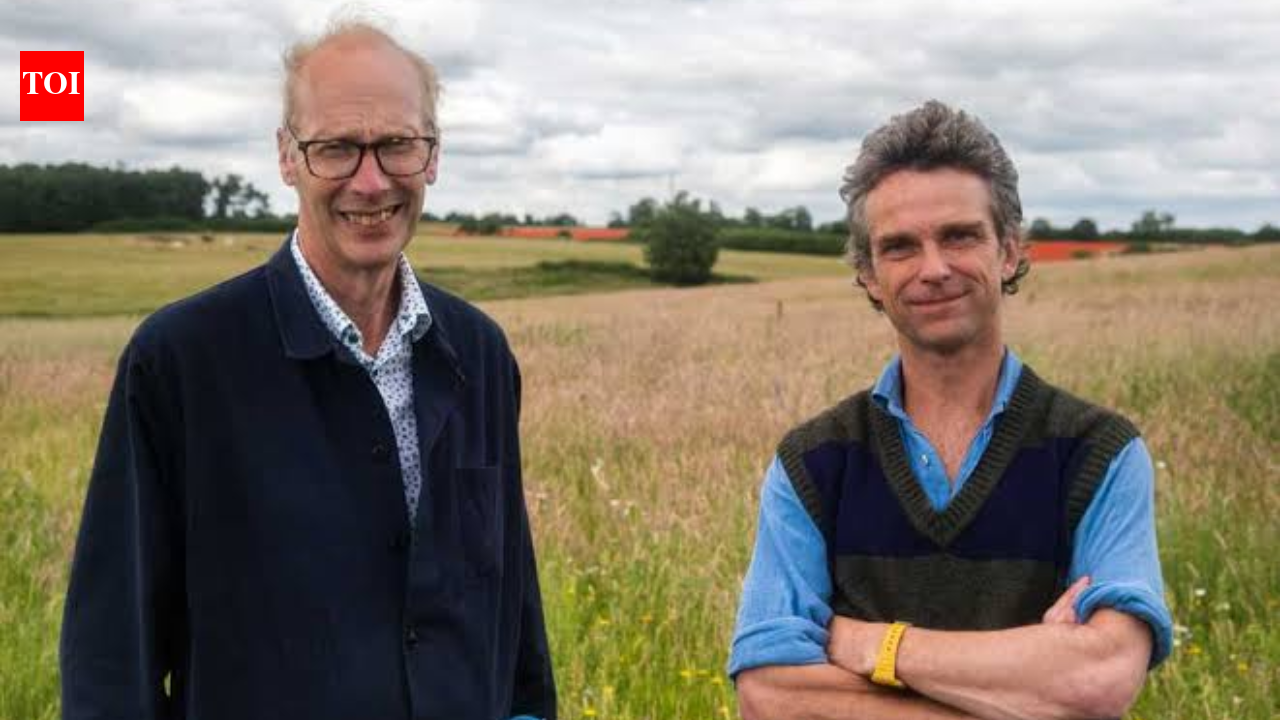
Rare butterflies, orchids and birds returned to 1,200 acres of Norfolk farmland after a ten-year restoration project. Farmer Olly Birkbeck started this work in 2016 to move away from intensive farming. "The wildlife response has been remarkable," said John Ebbage. The site now features a rich mix of native plants.
Rare butterflies, orchids and birds have returned to 1,200 acres of former farmland in west Norfolk after a ten-year nature restoration project led by local landowner Olly Birkbeck and Natural England. The changes took place at Massingham Heath, part of the Little Massingham Estate. Ten years ago, the land was used for intensive farming and depended heavily on chemical fertilisers and pesticides. Today, the 1,200-acre site, roughly the size of 680 football pitches, has become a rich mix of grassland, wildflowers and scrub. This was reported in a Natural England press release published on 18 June 2026.
Among the wildlife that has returned is the dingy skipper butterfly, which had not been seen in the area for 15 years. Botanists and conservation workers have also recorded pyramidal orchids, wasp spiders, oil beetles and more bird species across the estate. "The wildlife response has been remarkable, with the return of species including skylarks, goshawk, hobby, woodlark and stonechat," said John Ebbage, nature recovery manager at Natural England, in the agency's official announcement. "The dingy skipper butterfly, absent from the area for 15 years, has returned, as have wasp spiders, oil beetles and the beautiful pyramidal orchid."
Rethinking conventional crop farming
The project began around 2016, when Birkbeck, owner of the Massingham Estate, started working with Natural England to look at new ways to manage parts of the land. Instead of continuing with traditional crop farming, the team began creating large natural habitats with financial support from Natural England's agri-environment schemes. "I began working with Natural England around ten years ago to rethink how parts of the estate could be managed," Birkbeck said in the Natural England release. "Their support helped us move away from conventional cropping and towards large-scale habitat creation that has restored the landscape closer to its original character." To plan the restored heathland, the team studied old maps and records. Natural England said the original plan was to restore the heath to its former boundaries using Faden's map of Norfolk and first edition Ordnance Survey maps.
Hand-collected seeds and local flora
Instead of using standard commercial grass seed, the project used seeds from native plants growing in the surrounding area. Ed Cross, a tenant farmer on the nearby Sandringham Estate, led the practical restoration work. According to Natural England, Cross worked with botanists to collect seeds by hand from ancient Norfolk grasslands. They then matched the seeds to the soil and conditions in different parts of Massingham Heath. The team also planted a specially prepared mix of wildflower seeds collected from nearby areas to create grassland suited to the local environment. This careful planting helped bring back several native plants that had disappeared from the farmland. These included rock-rose, wild thyme and field mouse-ear.
Conservation grazing keeps habitats open
Wildflower-rich grassland needs regular care. Without it, fast-growing grasses and scrub can take over and prevent smaller plants from growing. At Massingham Heath, farm animals help manage the land instead of heavy machinery. "The grassland is carefully managed through conservation grazing using Konik ponies, Bagot goats and Tamworth pigs," Ebbage explained in the Natural England announcement. "This helps control invasive species, prevents aggressive plants from dominating, and allows habitats to develop naturally. We have also encouraged the growth of scrub and trees to support a wider range of wildlife." The different animals disturb the ground in different ways. This creates a variety of small habitats where insects, ground-nesting birds and wildflowers can live and grow.
Spring bird arrivals and wider landscape links
Bird surveys carried out in spring 2026 show that both migrating birds and species that breed locally are making use of the restored grassland and scrub. Along with skylarks, woodlarks, stonechats, hobbies and goshawks, Natural England reported spring visits from whinchats, lesser and greater whitethroats, wheatears, yellow wagtails, quail and ring ouzels. Massingham Heath is also part of a wider nature recovery effort.
The Little Massingham Estate forms part of the proposed west Norfolk nature network. This larger project aims to connect existing wildlife areas, create new natural corridors and encourage farming methods that support wildlife across west Norfolk. Natural England explained that connecting separate wildlife habitats allows animals and plants to spread more easily across the countryside. It also helps build stronger wildlife populations that are better able to survive changes in the environment.
Documenting seasonal change through art
Alongside wildlife surveys, members of the Society of Wildlife Artists have recorded the changes through their artwork. As part of a series of artist residencies organised under the Massingham Heath Project, artists have visited the estate during different seasons. Their work shows how the former crop fields have gradually changed into living heathland. Natural England has highlighted the ten years of work at the Little Massingham Estate as an example of how nature can recover on working farms. The project shows that long-term funding through agri-environment schemes, together with cooperation between farmers, landowners and conservation groups, can help restore wildlife and plant life across English estates.