
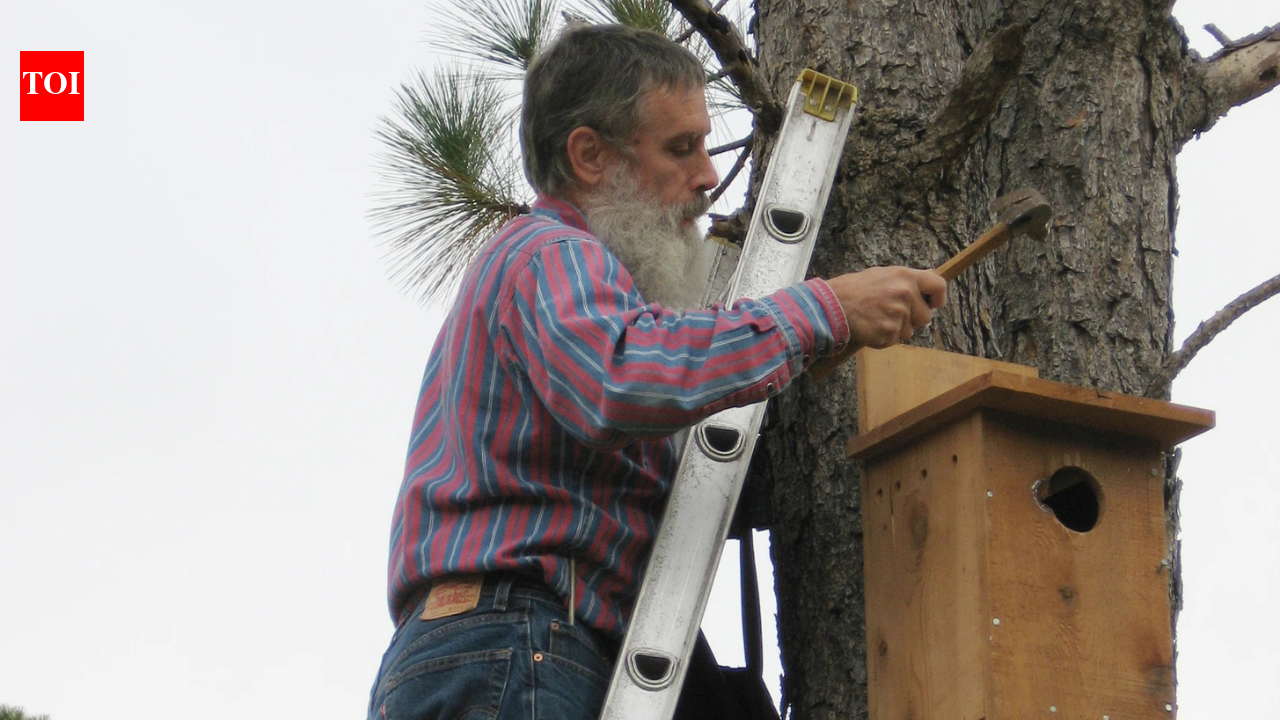
Florida conservationist Bob Simons spent five decades protecting forests and wildlife before he died in June 2024. His efforts helped save thousands of acres of wilderness across the state. In October 2026, a new trail at Turkey Creek Preserve opened to honour his long commitment to Florida’s natural heritage.
For more than five decades, Florida conservationist Bob Simons worked to protect forests, preserve wildlife habitats and prevent ecologically sensitive landscapes from being lost to development. A forester and longtime member of the Alachua Audubon Society, Simons contributed to efforts to protect thousands of acres across north-central Florida, including land that became part of San Felasco Hammock Preserve State Park. He also devoted nearly three decades to building and maintaining nest boxes for the Southeastern American kestrel, one of the smallest falcons in the United States. Although Simons died in June 2024, his conservation work continues to be recognised. In October 2026, a new observation platform and a trail at Turkey Creek Preserve were dedicated in his honour, celebrating a lifetime spent protecting Florida's natural heritage.
How he helped protect thousands of acres of wilderness
During the early 1970s, Simons identified an ecologically sensitive mixed-hardwood forest in north-west Gainesville that he believed deserved protection. He persuaded 10 private landowners to sell their properties to the state and spent two years lobbying legislators to support the effort.
His campaign contributed to the establishment of San Felasco Hammock Preserve State Park, which covers approximately 6,900 acres and protects a diverse range of natural habitats. The preserve is known for its hardwood forests, wildlife and extensive network of trails.Simons also contributed to conservation efforts involving other natural areas across Florida, including River Rise Preserve State Park, Silver Springs State Park, Tosohatchee Preserve and Fakahatchee Strand Preserve State Park. His work extended to Pinhook Swamp, an ecologically important landscape associated with the connection between Florida's Osceola National Forest and Georgia's Okefenokee National Wildlife Refuge.His achievements formed part of broader conservation efforts involving public agencies, environmental organisations, landowners and local advocates. Together, these efforts helped protect natural landscapes that might otherwise have faced development or other forms of land-use change.
Three decades devoted to protecting a tiny falcon
Alongside his work to preserve forests, Simons devoted nearly three decades to protecting the Southeastern American kestrel, one of the smallest falcons in the United States.He spent years constructing, installing, maintaining and repairing nest boxes to provide suitable nesting sites for the birds. He also acquired a telescoping camera to help monitor activity inside the boxes, supporting efforts to understand their nesting behaviour.The project involved college interns and volunteers, giving them opportunities to participate in wildlife monitoring and conservation work. Simons' long-term commitment reflected the importance of sustained observation and practical intervention in protecting wildlife.His work with the kestrel also demonstrated how conservation extends beyond protecting large landscapes. Providing suitable nesting sites, monitoring wildlife and maintaining habitats can all contribute to efforts to support vulnerable species.
His work helped shape local conservation policy
Simons' influence extended beyond individual parks and wildlife projects. He was a longstanding advocate for policies that protected ecologically sensitive areas from intensive development.He opposed large-scale construction on environmentally important land and challenged proposals that would have permitted activities such as grazing, timber harvesting and hunting in state parks. He also supported prescribed burning, a land-management practice used in suitable ecosystems to maintain habitats and reduce accumulated vegetation.According to the Alachua Conservation Trust, Simons' surveys and documentation of natural communities helped provide a scientific foundation for the Alachua County Forever programme. The initiative focuses on protecting environmentally significant land, including areas important for water resources, wildlife habitats and natural landscapes.
Turkey Creek Preserve: land protected from development
One of the places associated with Simons' conservation legacy is Turkey Creek Preserve, a roughly 375-acre natural area in Alachua County, Florida. The land had been designated for another phase of residential development, but conservation efforts helped preserve it as a natural landscape.Today, the preserve contains a variety of habitats, including basin swamp, depression marsh, dome swamp, upland hardwood forest, blackwater streams and sinkholes. These environments support wildlife and contribute to the area's ecological value.The preserve is also home to the state-endangered woodland poppy mallow and the state-threatened gopher tortoise. Its walking trails allow visitors to experience the area's forests and wetlands while observing its natural features.Alachua County acquired the preserve in December 2009, using funding from its Wild Spaces Public Places sales tax programme, alongside reimbursement through the Florida Communities Trust. Its protection reflects the combined efforts of public agencies and conservation advocates to safeguard environmentally important land.The preserve now offers visitors an opportunity to experience the kind of natural landscape Simons spent decades working to protect.
A new trail and observation platform honour his legacy
On October 3, 2026, approximately 60 people, including county officials, conservationists, friends and family, gathered at Turkey Creek Preserve to honour Simons and celebrate the opening of a new wildlife observation platform.The ceremony also marked the dedication of the Blue Trail in his honour. The route leads visitors on a walk of roughly half a mile to the observation platform, providing an opportunity to explore the preserve's natural surroundings.Interpretive signs along the trail explain aspects of Simons' conservation work, including his involvement in the Champion Tree programme and his efforts to protect the Southeastern American kestrel. The platform gives visitors a place to observe the surrounding wetlands and wooded habitats.The dedication creates a lasting tribute to Simons at a preserve that reflects the wider conservation mission he championed. It also allows visitors to learn about the people and sustained efforts behind the protection of natural landscapes.
Why the ceremony ended with a vine cutting
One detail from the dedication ceremony offered a glimpse into Simons' approach to the natural world. Instead of a conventional ribbon-cutting, the event concluded with a vine-cutting ceremony.According to WUFT's report, Simons believed vines played an important ecological role and should not simply be pulled down from trees. The unusual ceremony reflected his appreciation for the complexities of natural ecosystems and the need to understand them before intervening.His wife, Erika Simons, attended the dedication, joining those who gathered to recognise his decades of conservation work. For friends and fellow conservationists, the event was an opportunity to remember both his achievements and his commitment to protecting Florida's natural heritage.
A legacy that extends beyond one trail
Bob Simons' conservation legacy encompasses the natural areas he helped protect, the wildlife projects he sustained and the environmental programmes he supported over more than five decades.His involvement in efforts to establish and protect natural areas, including San Felasco Hammock Preserve State Park, helped shape conservation work across north-central Florida. His long-running kestrel nest-box project also demonstrated the value of sustained commitment to wildlife protection.The trail and observation platform at Turkey Creek Preserve now give visitors a way to learn about his work while experiencing the habitats conservationists strive to preserve. They serve as a reminder that protecting wilderness often requires years of research, advocacy and cooperation, and that the effects of such work can endure long after the people behind it are gone.