
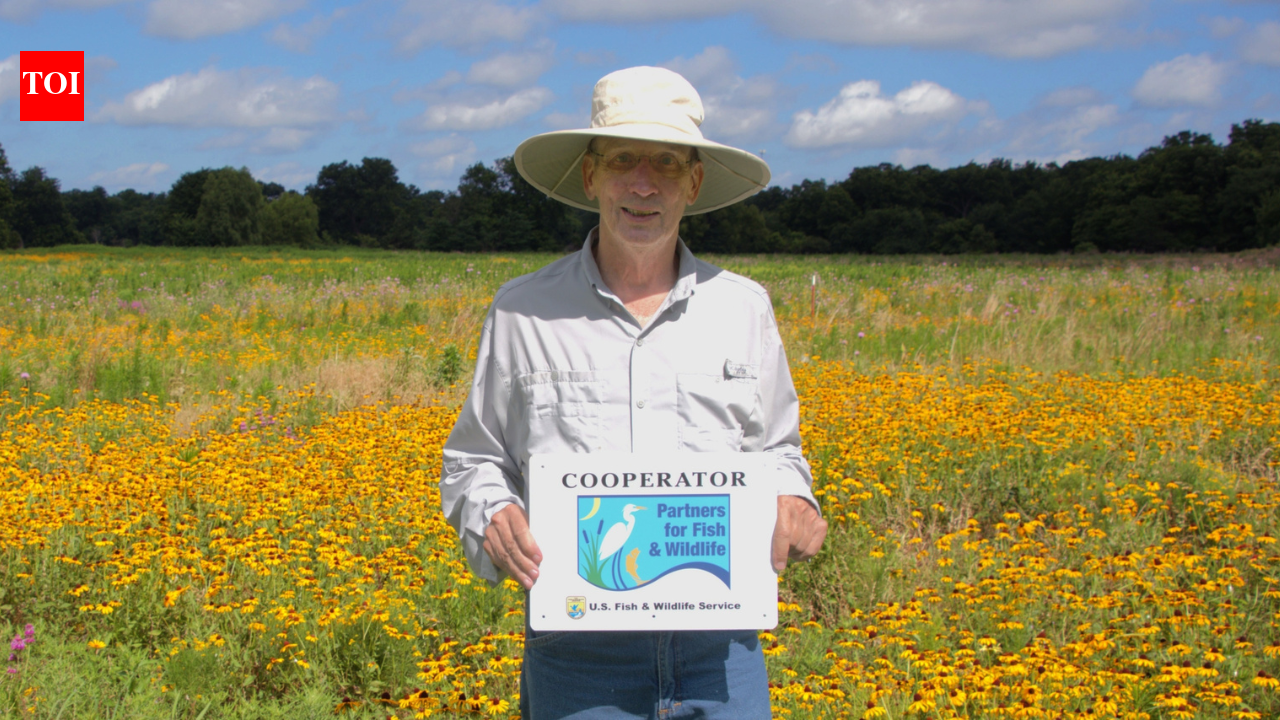
Patrick Bell turned his family’s 130-acre Oklahoma cattle farm into a haven for pollinators after noticing fewer monarch butterflies. He spent seven years working with conservation groups to remove unwanted vegetation. Bell used native grasses and flowering plants to restore the land, successfully creating a vital habitat for local wildlife.
For nearly 70 years, Patrick Bell's family farmed land in Johnston County, Oklahoma, primarily raising cattle. Over time, the fields became dominated by introduced grasses and other vegetation, while Bell began noticing fewer monarch butterflies during their autumn migration. He also observed a decline in other butterflies and pollinators. Rather than accept the changes, he decided to restore part of his family's property as wildlife habitat. With help from conservation agencies and local organisations, Bell spent seven years experimenting with planting methods and land-management techniques. The effort resulted in 130 acres being managed for pollinator conservation, with native grasses and flowering plants providing habitat for butterflies, bees and other pollinators.
How an Oklahoma landowner turned his family's cattle farm into a pollinator haven
Bell's family had operated the farm for generations, raising cattle on land that had gradually become dominated by introduced vegetation. These included Bermuda grass, fescue, rye, vetch and Johnson grass.Bell remembered seeing hundreds or even thousands of monarch butterflies passing through southern Oklahoma during their autumn migration when he was growing up. About 15 years ago, he began noticing that fewer butterflies were appearing.
In the later years of the family's farming operation, he also observed fewer other butterfly species and pollinators.
In 2016, Bell attended a lecture organised by the Oklahoma Native Plant Society, where monarch conservation expert Orley "Chip" Taylor spoke about declining butterfly and pollinator populations. The event helped inspire the formation of the Oklahoma Monarch and Pollinator Collaborative, of which Bell became a co-founder.Bell had already established a small pollinator garden at his home in Edmond, Oklahoma, but wanted to expand his efforts. He decided to use his family's land to create a larger area of habitat for pollinators.
How Bell began restoring 130 acres for native plants and pollinators
Bell sought assistance from the US Fish and Wildlife Service's Partners for Fish and Wildlife programme, the Oklahoma Department of Wildlife Conservation, the Natural Resources Conservation Service (NRCS) and the Oklahoma Prescribed Burn Association.He divided the land into sections and began experimenting with methods to remove unwanted vegetation and establish native plants. His initial approach involved applying herbicides, conducting prescribed burns and tilling the soil before planting native seeds.However, the results were mixed. Some native grasses and flowering plants failed to establish as successfully as he had hoped, prompting him to consult conservation specialists and research alternative methods.With advice from the NRCS and the US Fish and Wildlife Service, Bell determined that using a no-till drill, which places seeds into the soil without conventional tilling, would be important to improving the results.Funding provided by the Chickasaw Nation enabled the nearby Pontotoc County Conservation District to supply him with an agricultural no-till drill. The equipment helped Bell refine his planting strategy and expand the approach across the restoration area.
How the family cattle farm became a pollinator habitat
The restoration took seven years of experimentation, research and changes to land management. According to the US Fish and Wildlife Service's report published on July 29, 2026, Bell has treated and replanted 118 acres, while the remaining 12 acres already had native vegetation. Together, the 130 acres are managed for pollinator conservation.The restored land contains native grasses, flowering plants and wildflowers that provide habitat for pollinators. Photographs accompanying the federal agency's account show a bumblebee on an Engelmann's thistle growing on the property, along with fields of native yellow wildflowers and areas where the new planting approach was used.Bell also plans to continue using prescribed fire to manage the habitat, working with the Johnston County Prescribed Burn Association.
Bell wants the restored land to help future conservationists
Bell hopes the property will serve an educational purpose alongside its role as pollinator habitat. He wants the land to remain available in perpetuity for students and future land managers to learn about habitat restoration and conservation practices.The project involved cooperation between Bell and several organisations, including federal and state conservation agencies, local conservation districts and the Chickasaw Nation. Their support helped him access technical advice, equipment and resources while he worked through the challenges of establishing native vegetation across the property.Bell has described the effort as a labour of love and credited the people and organisations that helped him make progress. After seven years of work, the restored acreage provides an area managed specifically for native vegetation and pollinator habitat."I hope that my story can inspire others," Bell said, according to the US Fish and Wildlife Service.