
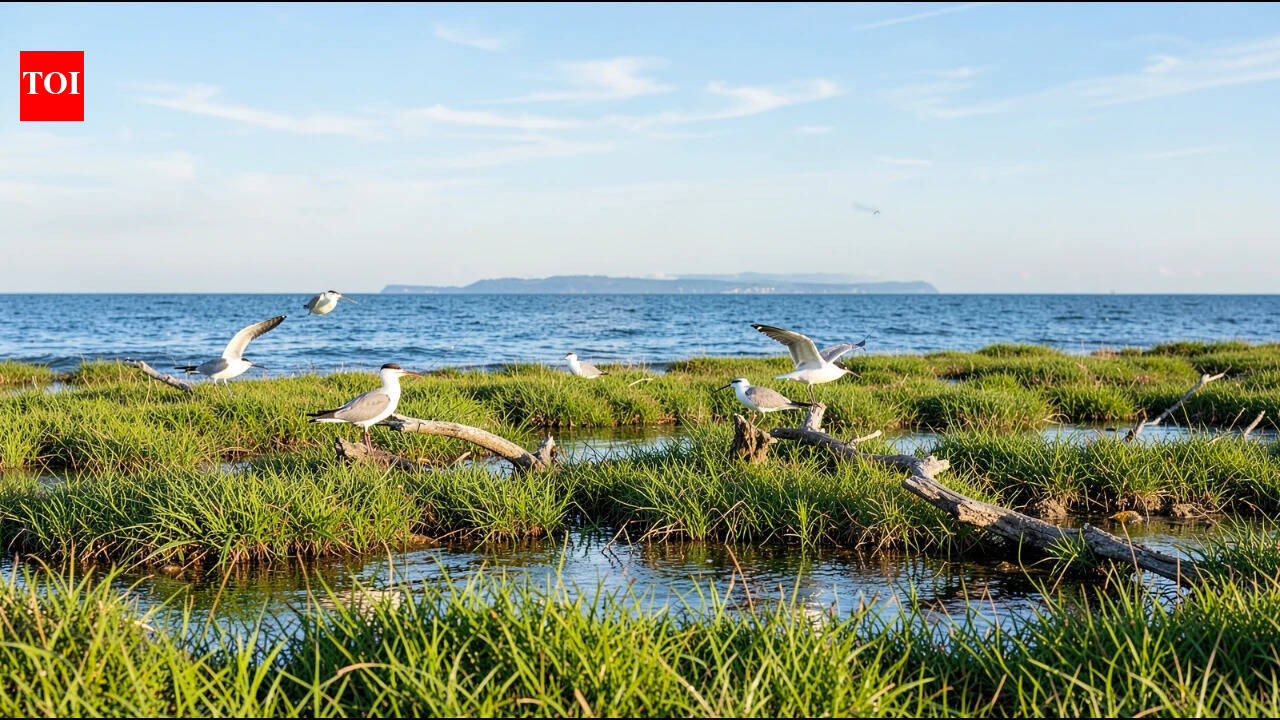
NOAA awarded $8.5 million on September 10 to restore Hawaii’s Tern Island. The project aims to fix coastal habitats damaged by rising seas and storms. This remote site supports many seabirds, but old infrastructure and erosion threaten their nesting grounds. Officials hope this work will protect vital species and wildlife.
A remote island in the Northwestern Hawaiian Islands is set to receive federal funding for coastal habitat restoration as conservation managers confront rising seas, storms and deteriorating infrastructure. On September 10, 2026, the National Oceanic and Atmospheric Administration (NOAA) announced an $8.5 million award to the Papahānaumokuākea Marine Debris Project for work at Tern Island, part of Lalo, also known as French Frigate Shoals. Tern Island has the largest area of available land at the atoll and is identified as a priority landmass for species diversity and population size. Its habitat supports seabirds and other wildlife but is vulnerable to flooding, erosion and damage from animals moving inland. A 2024 report outlines possible restoration measures, including addressing contaminants and derelict structures and improving habitat conditions.
Why Tern Island is important for seabird nesting and wildlife conservation in Hawaii
Tern Island lies within Lalo, the largest atoll in the Northwestern Hawaiian Islands. Tern Island is part of the Papahānaumokuākea Marine National Monument and the Hawaiian Islands National Wildlife Refuge, according to the US Environmental Protection Agency. Tern Island has the largest amount of available land at Lalo. An earlier state-of-knowledge paper cited in the
2024 Lalo (French Frigate Shoals) Resilience Implementation Options Report identifies it as the priority landmass for species diversity and population size.
The island also retains infrastructure from earlier military and US Fish and Wildlife Service occupation, including former barracks, a boat ramp, a runway and a seawall. Some structures have deteriorated, creating potential hazards for wildlife.
The island supports black-footed albatrosses, Laysan albatrosses, Bonin petrels and Tristram's storm petrels. The report notes that a high proportion of the global populations of these four species breed at a small number of sites, many only a few metres above sea level. Tern Island also has a history of long-term wildlife research. The report describes Lalo as having hosted "the most comprehensive and long-term" breeding seabird monitoring programme in the US tropical Pacific. The US Fish and Wildlife Service maintained more than 30 years of data on breeding pairs, breeding seasons and reproductive performance for most of the 21 monument species in its database. Annual monitoring ended after severe weather damaged field research facilities in 2012.
What NOAA's $8.5 million Tern Island habitat restoration grant is intended to support
NOAA announced the award as part of a wider allocation of $103 million for 16 habitat restoration projects intended to benefit fisheries. The September 10, 2026, announcement names the Papahānaumokuākea Marine Debris Project as the recipient of $8.5 million for coastal habitat restoration at Tern Island. The funding comes from the federal government, not the state of Hawaii. NOAA describes the project broadly as restoring coastal habitat but does not provide a detailed breakdown of the work or confirm that every measure proposed in the 2024 report will be funded through the award.
The Papahānaumokuākea Marine Debris Project, a Hawaii-based nonprofit, carries out marine debris removal work across the monument, including efforts to remove discarded fishing gear and other materials that threaten marine wildlife. The 2024 report was prepared for the monument's management board following a March 2023 workshop involving specialists in climate science, wildlife biology, Native Hawaiian cultural practice and coastal engineering. Its recommendations provide context for the restoration challenges but are not a confirmed list of grant-funded activities.
Contaminant cleanup, abandoned buildings and proposed habitat improvements on Tern Island
The report identifies contaminant removal as a high-urgency action that should precede longer-term habitat improvements. It discusses options including removing contaminated sediment for disposal in the main Hawaiian Islands, containing remaining contaminants in concrete and considering bioremediation. The work is linked to a separate cleanup effort overseen by the EPA. Its Tern Island Removal Action profile says waste from the former Coast Guard LORAN station was placed in a large dump, while a legacy burn pit contributed high concentrations of polychlorinated biphenyls (PCBs) to the soil. A Coast Guard cleanup in 2001 was not completed, leaving high PCB concentrations that affected surrounding water and wildlife. The EPA is working with the US Fish and Wildlife Service on the removal action, but its public profile does not establish whether field cleanup has since been completed. Infrastructure modification is another high-urgency priority. The report recommends removing derelict barracks and outbuildings, improving the boat ramp and davit, and establishing a more permanent research shelter. It also proposes breaking up the Tern Island runway to create nesting habitat for burrowing seabirds.
The report recommends planning for seawall removal or replacement, subject to further engineering and hydrodynamic studies. Coastal engineering experts at the workshop believed the seawalls could not be removed entirely because currents in the dredged channel on the island's north side would cause rapid erosion. For habitat stabilisation, the report recommends identifying suitable indigenous plant species to improve nesting and resting areas, provide shade and retain sand. It does not prescribe naupaka for future planting. Instead, it notes that US Fish and Wildlife Service teams have sown naupaka seeds on the island several times since Hurricane Walaka in 2018. The report also recommends coordinating planting with invasive-plant removal and considering a shade house and water catchment system.
How rising seas, Hurricane Walaka and wildlife threaten Tern Island seabird habitat
Hurricane Walaka caused severe damage to East Island, another important nesting site at Lalo, in 2018. Following the loss of vegetation and a black-pipe barrier on Tern Island, Hawaiian green sea turtles moved farther inland to lay their eggs. The report says this movement has increased the destruction of seabird nests and incubating eggs. It also records that monk seals and green sea turtles have wandered inland from beaches into vegetated areas where seabirds nest, contributing to the destruction of nests and eggs. Separately, the report says more frequent use of Tern Island by displaced monk seals has increased disturbance to more sensitive seals, including mothers with pups and moulting individuals, caused by nesting turtles. The report stresses that restoration decisions should account for ecological conditions, engineering constraints and Native Hawaiian cultural perspectives. It also calls for cultural consultation in considering seawall replacement. NOAA's new award provides funding for coastal habitat restoration, while the specific measures to be implemented at Tern Island remain to be established.