
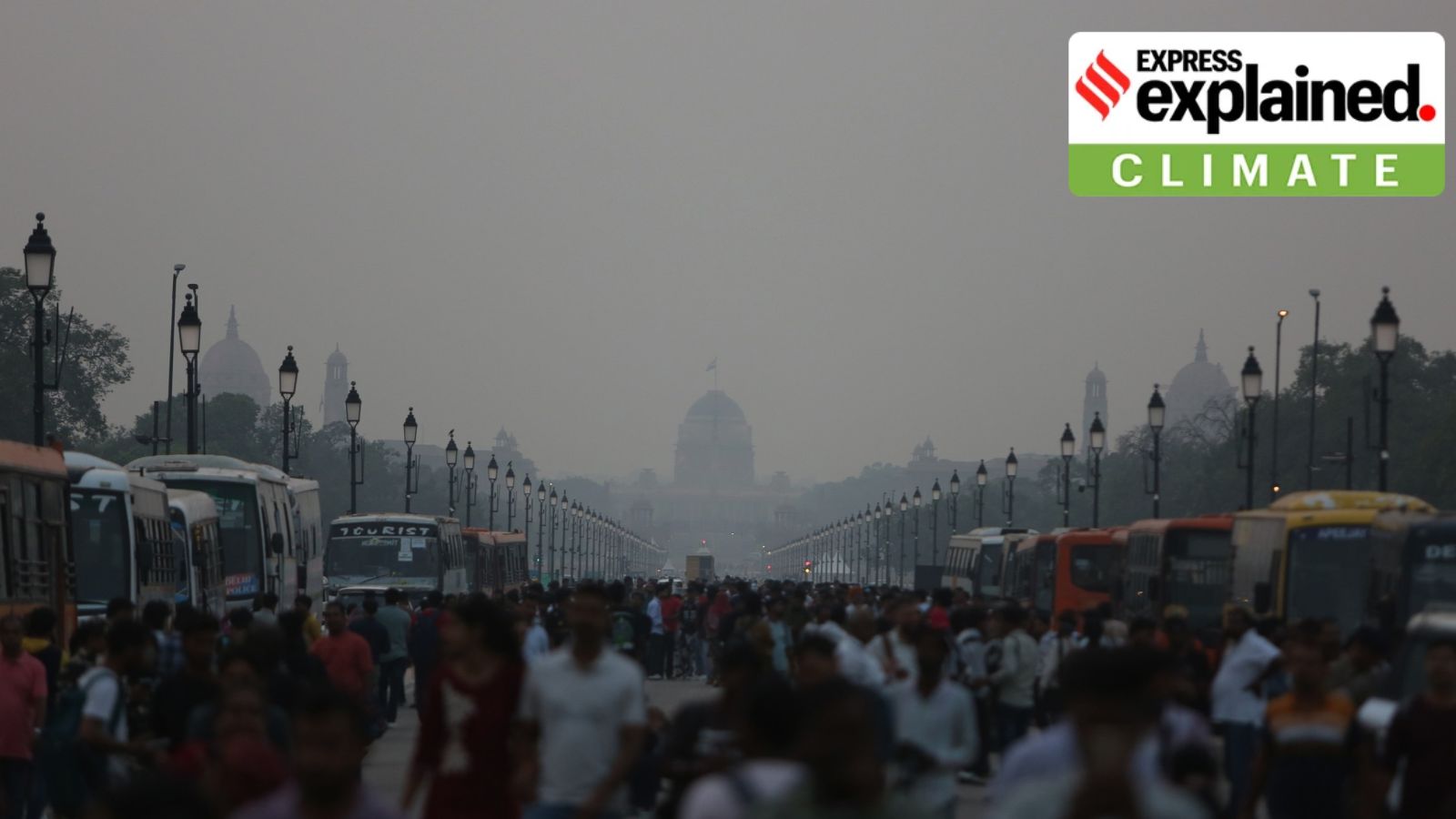
The Commission for Air Quality Management invoked Stage I of the Graded Response Action Plan in Delhi-NCR on Wednesday, October 21. This move started after air quality reached the Poor category. Authorities now use strict dust-mitigation measures and enforce rules on construction, waste management, and vehicle emissions to control pollution.
Delhi GRAP-1 Rules Explained: Here are the measures authorities must enforce under Stage I, the rules residents should follow, and the restrictions that do not automatically apply.
Delhi GRAP-1 Rules Explained: With air quality in Delhi-NCR deteriorating to the "Poor" category, the Commission for Air Quality Management (CAQM) has invoked Stage I of the Graded Response Action Plan (GRAP) with effect from Wednesday (October 21).
The decision was based on a review of the air quality scenario and forecasts for meteorological conditions.
Delhi's Air Quality Index (AQI), which stood at 179 in the 'Moderate' category on October 20, rose sharply to 244 at 2 pm on October 21, the CAQM said.
The official notification said the AQI is expected to remain in the 'Poor' category in the coming days.
What is GRAP?
GRAP is a set of emergency measures that kick in to prevent further deterioration of air quality once it reaches a certain threshold in the Delhi-NCR region.
Following Supreme Court directions in December 2016, the Ministry of Environment, Forest and Climate Change notified the Graded Response Action Plan (GRAP) on January 12, 2017, assigning its implementation to the Environment Pollution (Prevention and Control) Authority (EPCA). The plan established graded measures to address different levels of air pollution in Delhi-NCR.
GRAP is incremental in nature and thus, when the air quality deteriorates from 'poor' to 'very poor,' measures listed under both sections must be followed:
* Stage I of GRAP is activated when the Air Quality Index (AQI) is in the 'Poor' category (201 to 300).
* Stage II is activated when the AQI is in the 'Very Poor' category (301-400)
* Stage III is activated when the AQI falls in the 'Severe' category (401-450)
* Stage IV is activated when it rises to the 'Severe +' category (more than 450).
What measures apply under GRAP-I?
Under GRAP Stage I, authorities are directed to strengthen dust-mitigation measures and enforce existing rules governing construction and demolition activities, waste management and other pollution sources.
The schedule also includes measures concerning vehicle emissions, diesel generator sets, public transport, industrial emissions and the use of coal and firewood in tandoors.
These measures continue when higher GRAP stages are activated, subject to the applicable schedule.
The concerned state and municipal agencies are tasked with ensuring the following:
Roads, traffic and vehicle pollution
Synchronise traffic signals and deploy adequate traffic personnel at congestion points, intersections and high-traffic corridors.
Enforce Pollution Under Control (PUC) requirements; impound visibly polluting vehicles and/or impose applicable penalties.
Enforce restrictions on over-age diesel and petrol vehicles in accordance with applicable court orders and regulations.
Divert non-destination truck traffic away from Delhi via the Eastern and Western Peripheral Expressways, in accordance with applicable court orders.
Restrict the entry into Delhi of inter-city and inter-state buses covered by the revised GRAP schedule, including specified BS-IV and below buses from NCR and adjoining states. The restriction is subject to the schedule's provisions on permitted fuel types, routes and applicable exemptions.
Encourage offices to introduce unified employee commuting to reduce road traffic.
Increase the frequency and fleet strength of CNG and electric buses, Metro and RRTS services; introduce differential fares to encourage off-peak travel.
Road dust and road maintenance
Conduct regular mechanised road sweeping and water sprinkling.
Ensure dust collected during sweeping is scientifically disposed of at designated sites or landfills.
Intensify water sprinkling, anti-smog guns and other dust-suppression measures at road construction, widening, repair and maintenance sites
Construction and demolition (C&D)
Enforce dust-mitigation requirements at construction and demolition sites.
Store C&D materials and waste properly and keep them covered.
Transport C&D materials and waste only in covered vehicles.
Ensure prescribed water sprinkling, anti-smog gun deployment and other dust-control measures.
Ensure that eligible construction and demolition projects with plot areas of 500 sq. m or more comply with applicable web-portal registration, dust-control monitoring and other statutory requirements.
Enforce restrictions or take action against sites that fail to comply, as provided under the applicable directions.
Ensure proper environmental management and disposal of C&D waste.
Municipal waste, landfills and open burning
Ensure regular lifting and removal of municipal solid waste, C&D waste, industrial waste and hazardous waste from designated dump sites and industrial areas.
Prevent illegal dumping of waste on open land.
Strictly prohibit open burning of biomass and municipal solid waste.
Impose environmental compensation in accordance with the applicable National Green Tribunal (NGT) orders.
Maintain strict vigilance to prevent fires at landfills and dumpsites
Industrial emissions and pollution control
Intensify inspections of industries, including those operating in non-conforming areas.
Take strict penal or legal action against non-compliant and illegal industrial units.
Enforce pollution-control regulations and prescribed emission standards for industries, brick kilns and hot-mix plants.
Ensure industrial units use only approved fuels.
Enforce emission standards at thermal power plants and take action against violations.
Diesel generator (DG) sets and electricity
Minimise interruptions in electricity supply across NCR to reduce reliance on backup generators.
Ensure DG sets are not used as a regular source of power.
Enforce the prescribed operating conditions and emission-control requirements for DG sets across industrial, commercial and residential sectors.
Enforce emission-control rules for diesel generator (DG) sets. Portable DG sets below 19 kW are generally prohibited, except for specified emergency services; other sets must comply with applicable requirements.
Hotels, restaurants and eateries
Enforce the existing ban on coal and firewood as fuels in tandoors at hotels, restaurants and open eateries.
Ensure these establishments use electricity, gas or other permitted clean-fuel-based appliances.
Firecrackers
Strictly enforce applicable court and tribunal orders concerning firecrackers.
Public awareness and grievance redressal
Conduct public awareness campaigns through print, electronic and social media, bulk SMS and other channels.
Issue citizens clear alerts on pollution-reduction measures and recommended do's and don'ts.
Use mobile apps to communicate pollution levels, control-room contact details and reporting mechanisms.
Respond promptly to pollution complaints received through the 311 App, Green Delhi App, SAMEER App and other relevant apps or social media platforms.
Green cover and open spaces
Encourage tree planting and cover open spaces with grass and shrubs to help reduce dust.
What can residents do?
The GRAP citizen charter recommends the following measures:
* Check the current AQI and GRAP stage using the SAMEER App and CAQM website.
* Keep vehicle engines properly tuned and tyre pressure at recommended levels.
* Maintain valid PUC certificates.
* Switch off engines while waiting at red lights; avoid unnecessary idling.
* Do not ply end-of-life or visibly polluting petrol and diesel vehicles.
* Prefer public transport, carpooling and electric vehicles.
* Segregate waste and dispose of it only at designated municipal collection points.
* Do not litter, dump waste in open spaces or burn waste or biomass.
* Ensure prompt removal of C&D waste and compliance with dust-control measures.
* Avoid using DG sets except for essential activities, in accordance with the applicable restrictions.
* Avoid firecrackers and follow applicable restrictions.
* Report pollution incidents through the relevant municipal or pollution-control apps.
* Participate in public awareness initiatives and encourage others to follow pollution-control measures.
Stage I does not, by itself, impose a blanket ban on private vehicles, all construction activity, school attendance or office attendance. Any additional restrictions must be assessed against the applicable GRAP stage and separate government or judicial orders.