
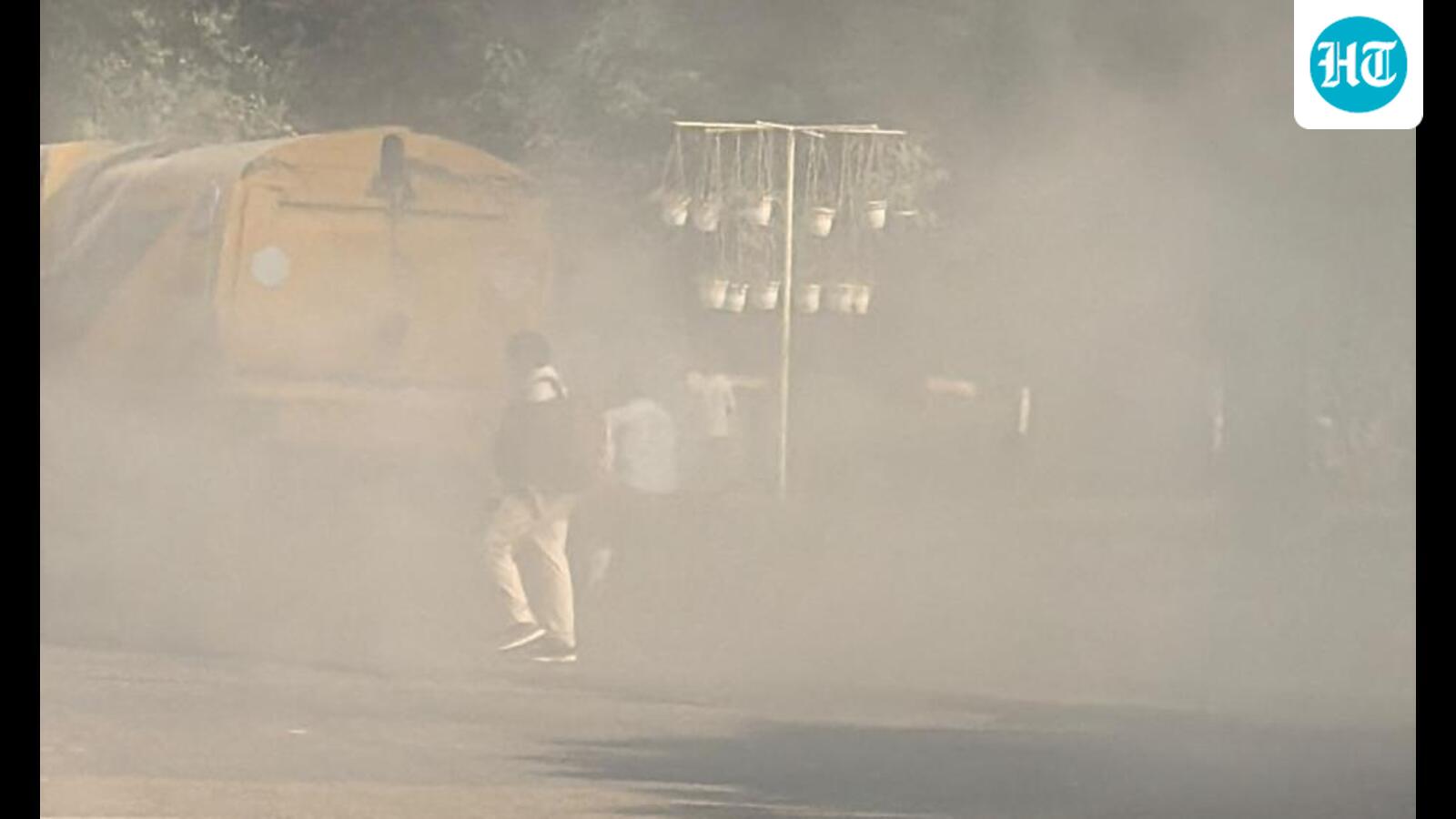
Greater Noida residents flagged dust caused by a road-sweeping machine on Saturday morning. The RWA said the machine blew dust into the air instead of cleaning it. Harender Bhati said, “Instead of collecting dust, they are blowing it back into the air.” Officials promised to look into the matter soon.
According to the RWA, the machine deployed by the Greater Noida authority’s health department was seen sweeping the road while generating clouds of dust on Saturday morning. It alleged that the cleaning exercise is increasing air pollution instead of reducing it.
RWA general secretary Harender Bhati urged the authority to direct the department concerned and the contractor to ensure that dust is not generated during mechanical sweeping.
“The machines, deployed in the sector only once every three to four days, are old and ineffective. Instead of collecting dust, they are blowing it back into the air. While the government and administration are making efforts to control air pollution, such negligence casts doubt on the efficacy of these initiatives. Compromising public health in any manner should not be tolerated,” Bhati said.
In a message to the authority, the RWA also called for water to be sprinkled wherever necessary and for roads to be cleaned using scientific methods to prevent dust from becoming airborne.
Rajesh Gautam, senior manager (health) at the authority, said: “These machines are important to ensure cleanliness in the area. We will look into ensuring that they do not generate excessive dust.”
On Saturday, Greater Noida recorded an average Air Quality Index (AQI) of 281, placing it in the poor category, while Noida logged 297, at the lower end of the poor zone, according to the Central Pollution Control Board’s (CPCB) daily bulletin. Delhi’s air quality stood in the very poor category with an AQI of 369, the bulletin stated.
A February circular issued by the Commission for Air Quality Management (CAQM) states that inadequate and inconsistent road-sweeping practices contribute to elevated particulate matter levels and adversely affect air quality across the National Capital Region. It also describes effective mechanised road sweeping as an essential air pollution control measure.