
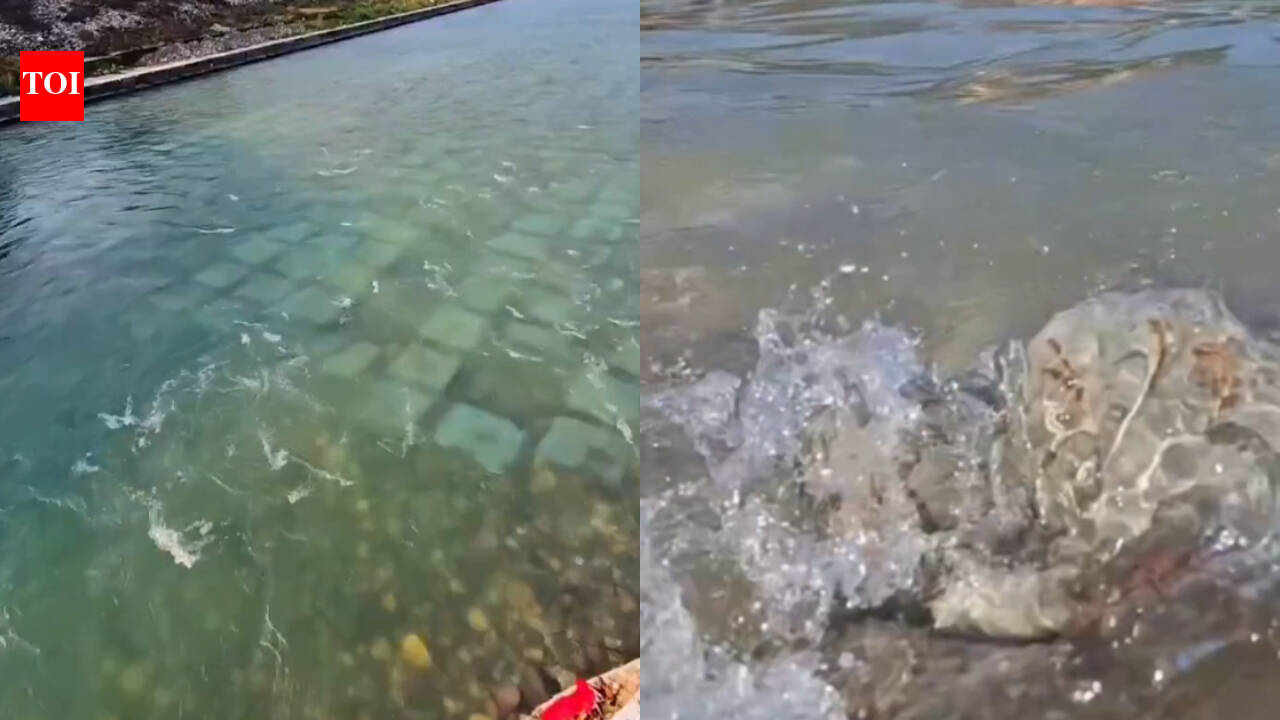
The Ganga in Haridwar looks crystal clear after teams removed 150 tonnes of waste ahead of the 2027 Ardh Kumbh. Authorities stopped the canal flow for 20 days to clear the riverbed. Bharat Bhushan Sharma said, "The department had just 20 days of stopped flow to clean up garbage."
If you have scrolled through social media lately, you might have come across a viral video of the Ganga in Haridwar looking almost unrecognizable, clear enough to spot stone tiles resting on the riverbed and small fish darting beneath the surface. That dramatic transformation comes on the heels of a massive clean-up drive ahead of the 2027 Ardh Kumbh, where teams pulled nearly 150 tonnes of garbage out of a 10-kilometre stretch of the river.For anyone used to seeing murky water and floating debris around busy pilgrimage spots, the clip offered a welcome surprise. Over several days, sanitation crews, municipal staff, government officials, and everyday volunteers worked side by side to haul away heaps of silt, plastic wrappers, discarded clothes, and old religious offerings that had piled up along the banks.
How workers cleared 150 tonnes of garbage
Pulling off a clean-up on this scale required shutting off the water first. Authorities temporarily halted the flow of the Upper Ganga Canal for roughly 20 days - an annual maintenance window that exposed the accumulated trash sitting along the riverbed near major bathing spots, including Har Ki Pauri.
With the riverbed dry and accessible, crews moved in quickly to clear out the rubbish before releasing the water back into the channel.
That freshly refilled stretch is what people are now admiring online.
Still, water that looks clear to the naked eye isn't automatically safe to drink or bathe in - actual water quality can only be confirmed through laboratory testing.
Speaking to The New Indian Express, Bharat Bhushan Sharma, sub-divisional officer with the Uttar Pradesh Irrigation Department's Ganga division, noted that finishing the job within such a tight window was no small feat. The department had just 20 days of stopped flow to clean up garbage people had tossed in over the entire year.Sharma also pointed out just how much hinges on keeping this waterway healthy. Beyond its spiritual value, the canal feeds irrigation across 15 districts in Uttar Pradesh and supplies drinking water to seven districts in the National Capital Region, including Meerut, Agra, and Gautam Buddha Nagar.
Volunteers step up and raise hard questions
According to Sharma, the drive wouldn't have succeeded without strong public turnout. Alongside government departments and municipal workers, thousands of residents pitched in through voluntary groups such as Ganga Seva, led by Deepak Rajguru, and the Bharatiya River Council.
Online, the viral footage has racked up thousands of views and sparked a lively debate about how visitors treat the river."That is stunning. Well done to the authorities. I hope people do not start littering again," one viewer wrote in response to the clip.Others struck a more skeptical chord, asking how long the river will actually stay this clean if careless dumping resumes. Several commenters urged pilgrims to stop abandoning old clothes and belongings in the water after taking a holy dip, reminding visitors to use dustbins instead of treating the river like a landfill.
The bigger battle against river pollution
Clearing one 10-kilometre stretch in Haridwar is an encouraging start, though keeping the Ganga clean over the long haul is a far larger task.
Running across Uttarakhand, Uttar Pradesh, Bihar, Jharkhand, and West Bengal, the river is fed by major tributaries - including the Yamuna, Son, Ghaghra, Gandak, Kosi, Ramganga, Gomti, and Damodar. Together, the Ganga basin spans 11 states, including Delhi, sustaining millions of households, farms, and industries. Occasional clean-up campaigns alone cannot fix that scale of pressure; reliable waste collection, proper sewage treatment, and everyday civic discipline all have to work together.
Gearing up for Haridwar Ardh Kumbh 2027
The recent clean-up is just one piece of broader preparations for the 2027 Ardh Kumbh, set to run in Haridwar from January 14 to April 20, 2027, when millions of devotees, saints, and seers will gather along the ghats.
To keep trash from building back up during the festival, officials are putting extra safeguards in place, including installing a floating trash interceptor - a barrier built to catch solid waste on the surface before currents carry it downstream.Seeing fish swim through clear water in Haridwar has given plenty of people reason to smile. Whether the river stays that way once the clean-up crews pack up and the crowds arrive in January, however, will depend largely on the people stepping onto its banks.