
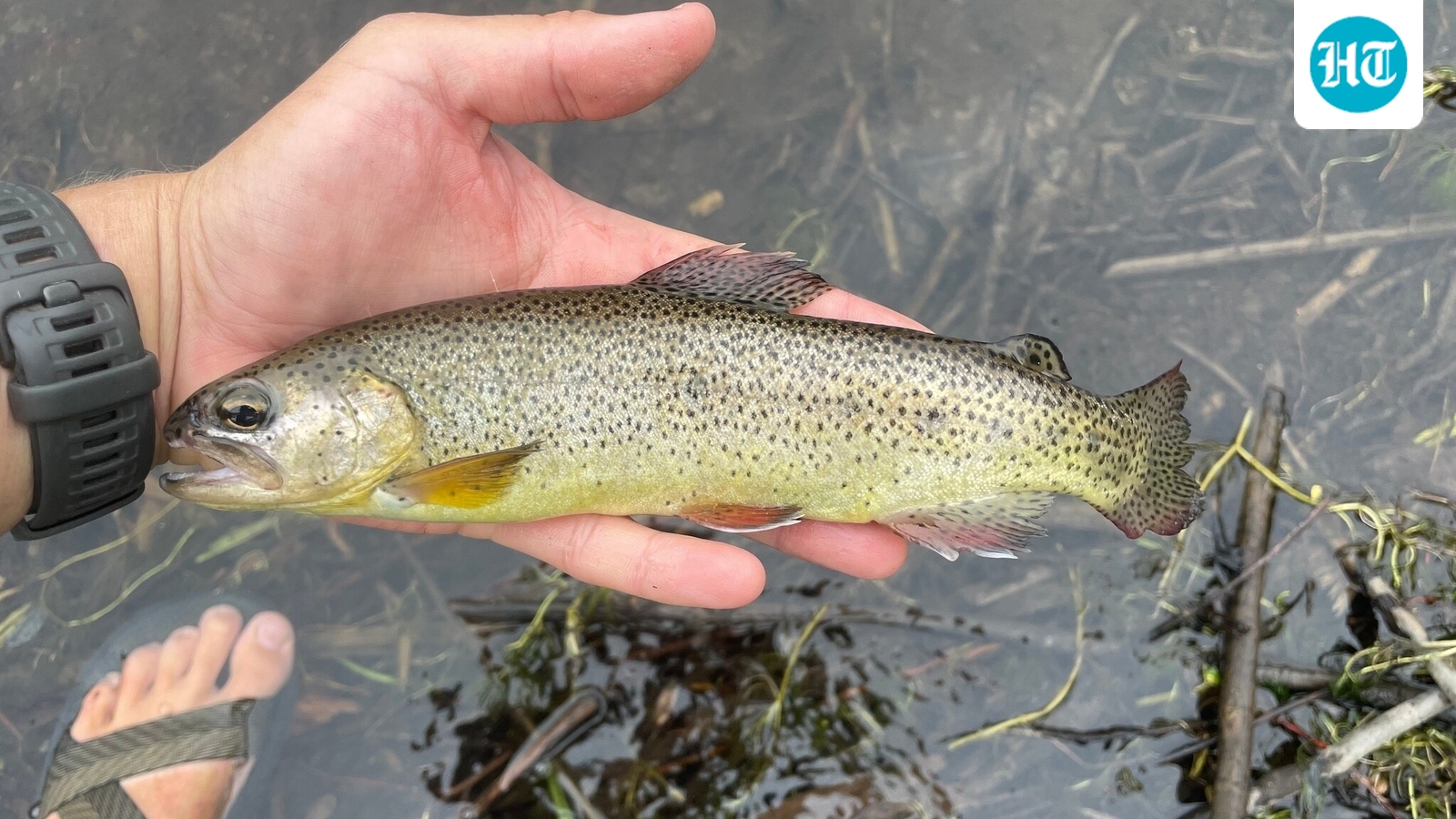
In September 2024, the U.S. Fish and Wildlife Service removed the Apache trout from the endangered species list. In 1979, nonnative trout pushed the species into 30 stream miles. Today, 30 populations occupy 175 miles. This recovery happened because many groups worked to control nonnative fish and protect their habitat.
The White Mountains of Arizona are home to a trout species found naturally nowhere else. The U.S. Fish and Wildlife Service's 2022 species status assessment places the Apache trout's native range within the White and Black River drainages and the Little Colorado River basin, historically at elevations of about 5,900 to 6,900 feet and above. Biologists did not formally distinguish the species from Gila trout until 1972, in part because Apache trout have larger but fewer spots. During summer, they feed almost exclusively on caddis flies and terrestrial insects, according to a diet study cited in the assessment. Although they can live up to nine years, five years is more typical.
Federal biologists have identified 38 populations across roughly 250 miles of river habitat. Of these, 30 are considered genetically pure and occupy about 175 miles, while the remaining eight are hybridized or suspected of hybridization. These genetically pure populations count toward recovery goals that have long required at least 30 populations with suitable habitat conditions.
How conservation expanded the trout's range
In 1979, only 14 Apache trout populations remained across about 30 miles of habitat. When the U.S. Fish and Wildlife Service announced the species' removal from the endangered species list in September 2024, it described the achievement as the first delisting of a trout species and a sport fish resulting from recovery.
The recovery effort relied on sustained habitat protection and control of nonnative fish. Apache trout were listed as endangered in 1967 and reclassified as threatened in 1975. One major threat came from rainbow trout, which interbreed with Apache trout and dilute their genetic identity. Nonnative brook and brown trout also compete with them for resources and prey on them.
The 2022 assessment identifies two principal approaches to controlling these threats: installing barriers that prevent nonnative fish from moving upstream and removing established fish through chemical treatments and electrofishing. Of the 30 genetically pure populations, 26 occur upstream of barriers, and 19 have no nonnative trout present.
Wildfire tested these protections in 2011, when the Wallow Fire sent ash and debris into streams, killed fish, damaged barriers, and removed vegetation that shaded the water. Since then, managers have rebuilt, replaced, or maintained barriers while streamside habitats recover. In 2025, the replacement of the Big Bonito Creek barrier was completed, adding protection for 22 miles of stream habitat against the upstream movement of nonnative trout.
Funding and collaboration have also been essential. The Fish and Wildlife Service reported that more than 50 years of work by federal, state, and tribal partners, supported by $5.1 million in federal funding, helped reopen more than 60 miles of habitat. The White Mountain Apache Tribe, which considers the fish sacred, spearheaded two of the funded fish passage projects.
Why the fish still needs help
Removal from the endangered species list does not eliminate the need for conservation. In its 2022 assessment, the Fish and Wildlife Service assigned the species an average condition score of 2.53 out of 4, equivalent to a B-minus. Genetically pure populations scored an average of 2.91, or a B. Small population sizes contributed to the lower overall assessment, with most populations containing fewer than 500 adult fish.
For its 30-year outlook, the agency considered scenarios involving current and reduced management. Scientists consulted for the assessment expected the species to remain stable under current management and decline if management efforts were reduced, although they considered population extinctions unlikely under either scenario. That projection does not mean the fish is free from serious threats. Its limited geographic range makes it vulnerable to major wildfires and other events that could damage several populations or their habitats at once. The assessment therefore describes the species as conservation-reliant, meaning continued management is needed to sustain its recovery.
The Fish and Wildlife Service, U.S. Forest Service, White Mountain Apache Tribe, Arizona Game and Fish Department, and Trout Unlimited are among the partners involved in long-term management. Their work focuses on maintaining barriers, preventing hybridization, and protecting the habitat needed to sustain genetically pure populations. The 2025 Big Bonito Creek barrier replacement represents a further step in that ongoing effort.
Anglers also have a role in the species' management. The Arizona Game and Fish Department regulates sport fishing for Apache trout outside tribal lands, while the White Mountain Apache Tribe sets fishing regulations within the Fort Apache Indian Reservation. Maintaining suitable cold-water habitat, preventing the introduction of nonnative trout, and continuing coordinated conservation efforts remain central to protecting Arizona's state fish.