
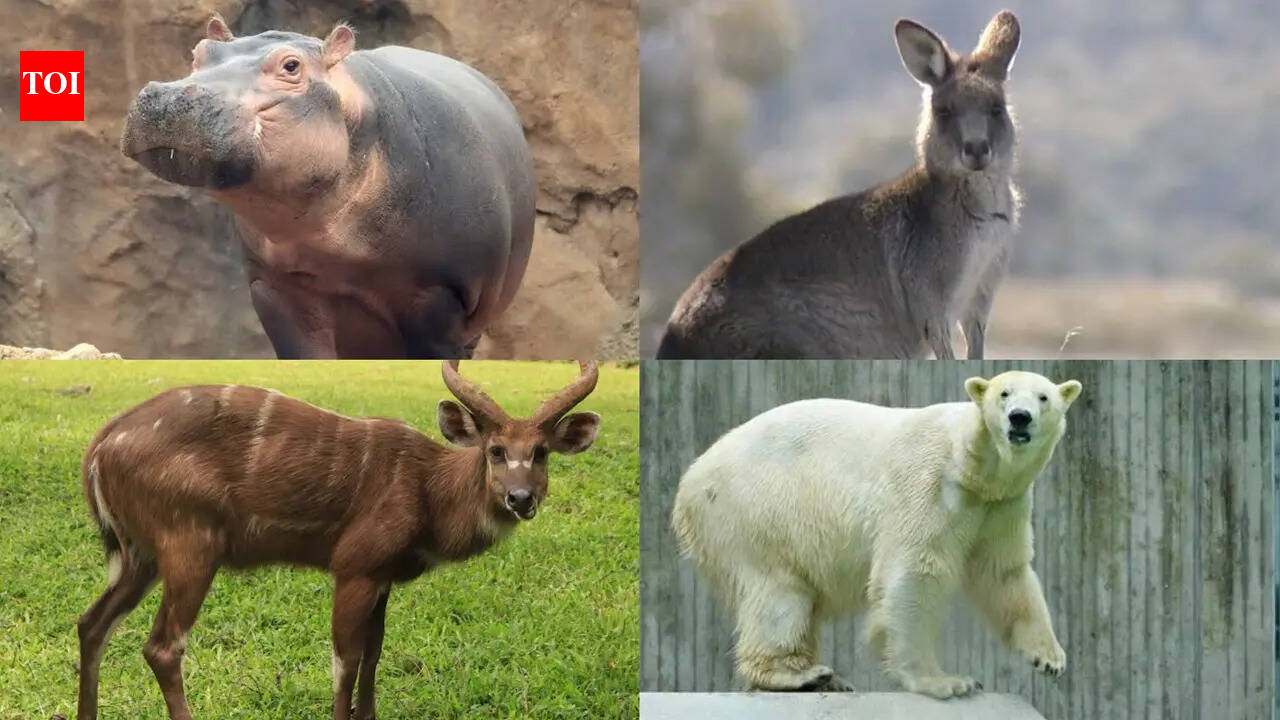
The Cincinnati Zoo announced that Fiona the hippo died on 19 November after swallowing a visitor’s hat. This tragic event highlights how human actions impact zoo animals. The zoo’s director said, "She fought until she couldn't anymore." Many similar accidents have occurred, showing why visitors must follow enclosure rules.
A zoo can feel like a world of wonder for visitors, but for the animalsis home, and home has rules that exist for a reason. This week the Cincinnati Zoo announced that Fiona, the hippo who won the world's heart as a premature calf, has died after swallowing a hat that landed in her enclosure. Her story echoes other zoo tragedies, from a polar bear in Germany to an antelope in Tennessee. Not every case involved bad intent, and some were genuine accidents. But each shows how small human actions near an enclosure can have enormous consequences. Here are five such cases.
Fiona was born six weeks early in 2017, and her fight for survival turned her into a global favourite. She was nine when she died on 19 November. She swallowed a knit hat on 8 November after a visitor tossed it in the air and a ceiling fan deflected it into her enclosure through an opening above the viewing windows, and the zoo called it an accident. Vets tried for days to help her pass it, but specialists told the zoo that surgery was not an option for full-grown hippos. The zoo's director said, "She fought until she couldn't anymore." Some fans urged others not to direct their anger at the visitor's family.
Anton, aged 25, lived at Germany's Wilhelma zoo. Keepers realised something was wrong when he began vomiting pieces of fabric, and he died on 10 February 2014 from severe intestinal injuries after apparently swallowing a jacket or bag dropped in by a visitor. He could have lived another 15 years. The zoo said it was unclear why he swallowed the item, since he usually tore such things apart, and keepers suspected there was something tasty inside. Around 200 children's shoes had been found in the polar bear area alone over 25 years.
Lief was a seven-year-old sitatunga, a rare swamp-dwelling antelope that the zoo described as friendly and curious about people. In June 2024, he died after choking on the plastic cap of a squeezable fruit pouch, an item the zoo does not allow on its grounds. The zoo's director said a keeper noticed Lief behaving oddly, and a vet removed the cap, but his airway had been blocked for too long, and he died shortly afterwards. The zoo explained that to an animal, the bright cap looks like food. It added that guests are free to eat snacks in the parking lot and come back in.
In April 2018, a 12-year-old female kangaroo at Fuzhou Zoo in Fujian province died after visitors pelted her with stones. Reports said a sharp stone injured her left foot, and an autopsy suggested she died of a ruptured kidney after keepers treated the foot without realising she was bleeding internally. A keeper said some adults saw the kangaroos sleeping and threw rocks at them, and that when the display area was cleared of stones, people found them elsewhere. Days later, a visitor allegedly threw part of a brick into the enclosure and injured a five-year-old male, who was expected to recover. The zoo then showed only three kangaroos to the public.
Harambe's death is the best-known case here, and it needs careful wording. On 28 May 2016, a three-year-old boy climbed through a public barrier at the Gorilla World exhibit and dropped about 15 feet into a shallow moat, where the 17-year-old silverback was. Harambe was shot by the zoo to protect the child. Several primatologists and conservationists later wrote that the zoo had no other choice and that the case showed the danger of animals near humans. Others held the parents or the zoo responsible. It happened at the same zoo where Fiona later lived.