
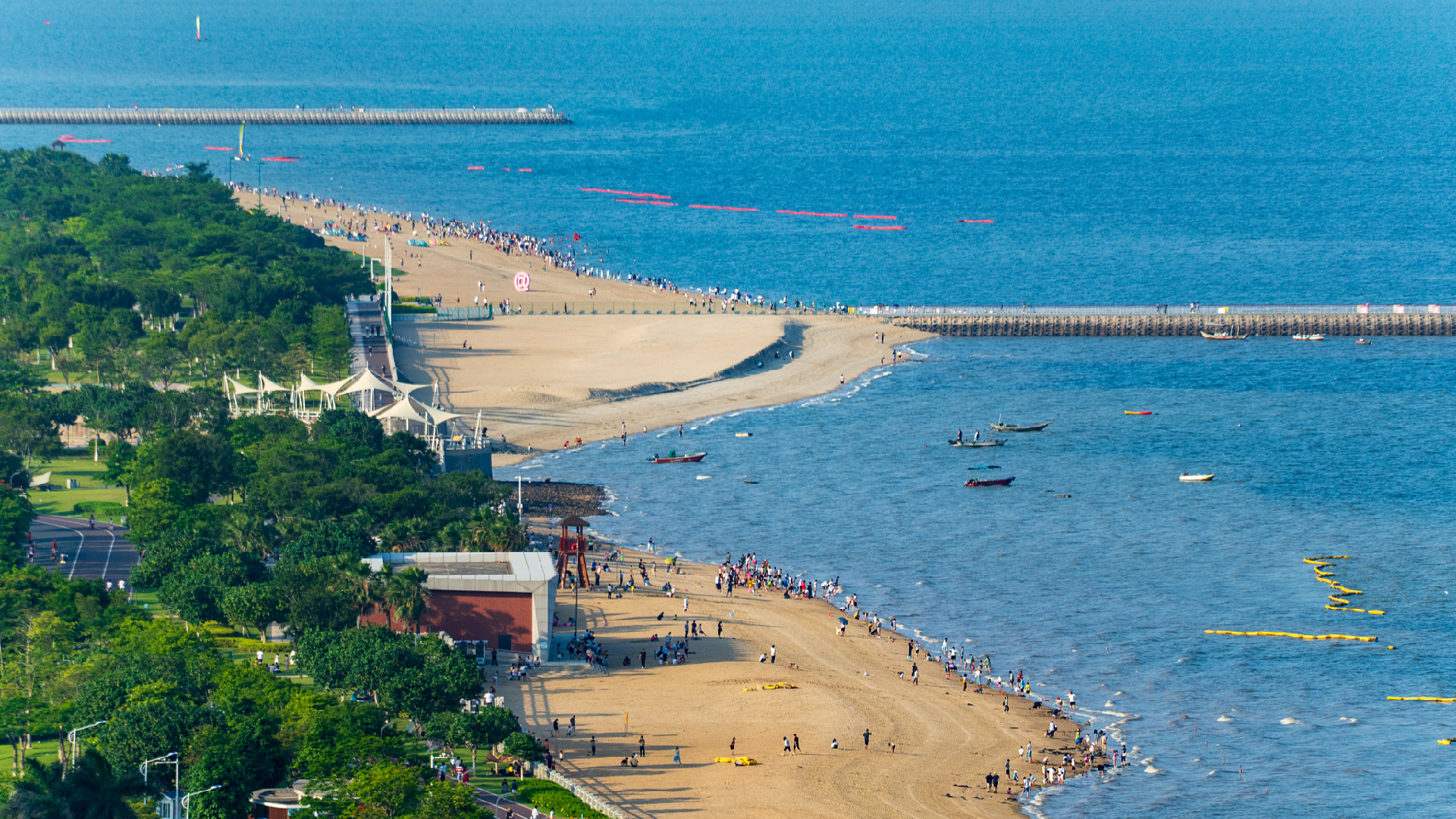
Xiamen transformed Tong'an Bay from a polluted area into a vibrant coastal destination. Starting around 2015, authorities removed sediment and phased out aquaculture to help marine life return. In 2017, they built the 50.6-kilometer Huandong Romantic Line, which now offers beautiful trails and beaches for many people to enjoy today.
Once a thriving fishing ground, Tong'an Bay, the largest urban bay in Xiamen, southeast China's Fujian Province, suffered serious ecological degradation. Unregulated aquaculture and direct wastewater discharge polluted the waters and silted up the tidal flats, driving away marine life such as yellowfin seabream and Chinese white dolphins.
To reverse the decline, Xiamen launched a major coastal restoration project. Around 2015, more than 40,000 fishermen transitioned away from fishing as aquaculture operations were phased out and tidal flats were dredged. More than 200 million cubic meters of sediment were removed, increasing the bay's tidal capacity by over 40 million cubic meters and improving its water exchange capacity by around 30%. With the marine environment gradually recovering, marine life began to return.
Building on these restoration efforts, Xiamen launched a coastal new town development project in 2017, alongside the construction of the Huandong Romantic Line, a 50.6-kilometer coastal ecological and tourism corridor stretching along Tong'an Bay and the city's eastern shoreline. The project combines ecological features, including restored artificial beaches, mangroves and coastal structures that help protect the shoreline and stabilize sediment, with public amenities such as marathon trails, green spaces, sports facilities and seaside attractions. Today, the Huandong Romantic Line has become a popular tourism landmark in Xiamen.