
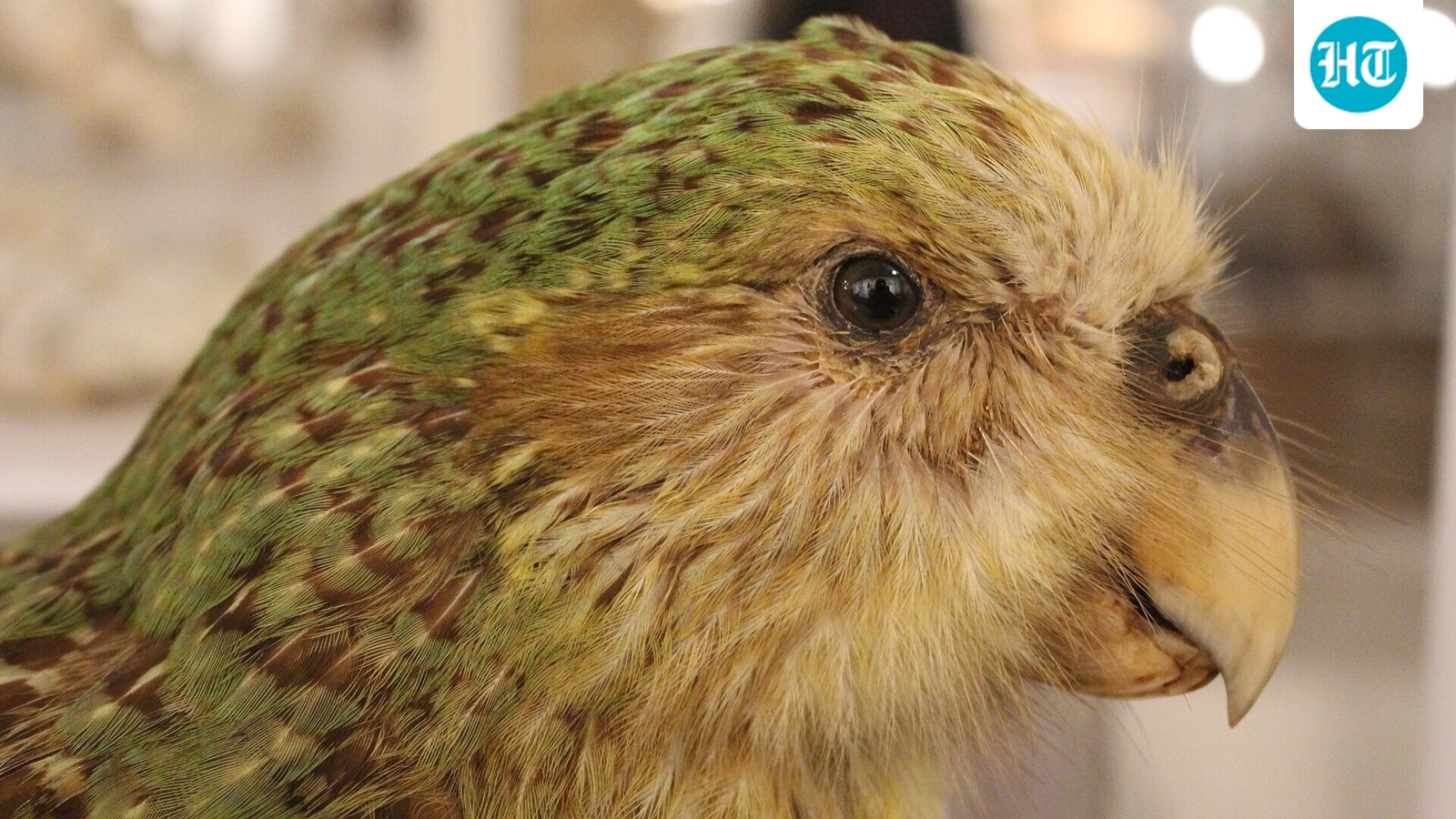
New Zealand’s flightless kākāpō population fell to 51 birds in 1995. To save the species, the Department of Conservation moved them to island sanctuaries and started managed breeding programs. These efforts worked well, and the total number of these unique parrots grew to reach 325 birds by September 1, 2026.
The Department of Conservation relocated kākāpō to Codfish Island, Maud Island, and Te Hauturu-o-Toi, also known as Little Barrier Island, to reduce their exposure to predators. However, rats continued to threaten young chicks. The department's recovery history records that at least 12 chicks had been produced by 1995, but only three survived. By that year, the total population had dwindled to 51 birds, prompting changes to the conservation strategy.
The kākāpō, a bird native to New Zealand, is a large, flightless parrot that spends much of its time on the forest floor and is most active at night. It evolved in an ecosystem without native mammalian predators, but hunting by humans and predation by introduced animals, including dogs and cats, contributed to its decline. Human settlement also altered its habitat. According to the New Zealand Department of Conservation's kākāpō recovery history, the population had fallen to just 51 birds by 1995. Three decades of conservation efforts, including predator control, protected island habitats, and managed breeding, helped the population reach 325 birds by September 1, 2026, according to the department's population milestone announcement.
Recovery required more than moving the birds to safer habitats. Introduced predators, particularly rats, posed a serious threat to eggs and chicks. Nest monitoring, supplementary feeding, and, when necessary, artificial incubation and hand-rearing help conservationists manage breeding and improve chick survival. Despite the population increase, the species remains critically endangered.
How the kākāpō became endangered
The Department of Conservation traces the species' decline to the arrival of Polynesian settlers in New Zealand about 700 years ago. People hunted kākāpō for meat, while humans and dogs also took their feathers. By the time Europeans began settling in New Zealand in the early 1800s, the birds had disappeared from many parts of the country and survived in more limited areas.
European settlement intensified the pressure over subsequent decades. Forest clearance reduced available habitat, while introduced deer and possums later added to the strain on native vegetation. Cats, stoats, and introduced rat species also threatened the birds. Because kākāpō evolved without many mammalian predators, their ground-dwelling habits and inability to fly left them especially vulnerable to introduced animals.
Efforts to protect the species began in 1894, when conservationist Richard Henry relocated hundreds of kākāpō to Resolution Island in Fiordland. The effort failed after stoats reached the island about six years later and killed the introduced birds. Subsequent expeditions to Fiordland found some survivors, but 60 searches conducted between 1949 and 1973 resulted in the capture of only six males.
In 1977, a substantial population was discovered on Rakiura, also known as Stewart Island. The discovery of females in 1980 raised hopes for breeding, but feral cats continued to prey on the birds. Conservationists subsequently moved surviving kākāpō to offshore island sanctuaries during the 1980s and 1990s, as suitable predator-free refuges became available.
Why the island sanctuaries needed additional protection
The Department of Conservation relocated kākāpō to Codfish Island, Maud Island, and Te Hauturu-o-Toi, also known as Little Barrier Island, to reduce their exposure to predators. However, rats continued to threaten young chicks. The department's recovery history records that at least 12 chicks had been produced by 1995, but only three survived. By that year, the total population had dwindled to 51 birds, prompting changes to the conservation strategy.
Removing introduced predators became a central part of the recovery program. The department records that cats were eradicated from Little Barrier Island in 1980, followed by rats in 2004. On Codfish Island, weka and possums were eradicated by 1986, and rats were removed in 1998. Stoats were eradicated from Anchor Island in 2001. These measures helped establish safer refuges where kākāpō could breed with less risk from introduced mammals.
Predator removal was only one part of the program. Radio tracking, nest surveillance, supplementary feeding, and, when necessary, artificial incubation and fostering allow conservationists to monitor breeding and respond to problems. These interventions help protect eggs and chicks, whose survival is important to the recovery of such a small population.
The record breeding season brings the total to 325
In its population milestone announcement, the Department of Conservation reported that the official kākāpō population had reached 325 birds. The total included 90 chicks from the 2026 breeding season that had reached the 150-day age threshold for inclusion in the count.
The 2026 breeding season followed a four-year gap since the previous season and produced a record 90 chicks. Since the recovery program began in 1995, kākāpō have experienced 13 breeding seasons, according to the department. It also noted that the program had taken 16 years to produce a cumulative total of 90 chicks during its earlier period, highlighting the scale of breeding output recorded in 2026.
The increase does not resolve every challenge facing the species. Low genetic diversity remains a concern, and breeding success depends on suitable conditions and the survival of eggs and chicks. Conservationists must also maintain predator-free refuges as the population grows and ensure that the birds have safe places to breed.
The recovery program is also exploring ways to reduce the need for some intensive interventions, including remote nest-monitoring technology and changes to supplementary feeding. Expanding suitable protected areas is another objective, while efforts to control predators on Rakiura could eventually allow kākāpō to return to parts of their former range. Maintaining these safeguards, alongside careful genetic and breeding management, will be essential to sustaining the population beyond the milestone reached in 2026.