
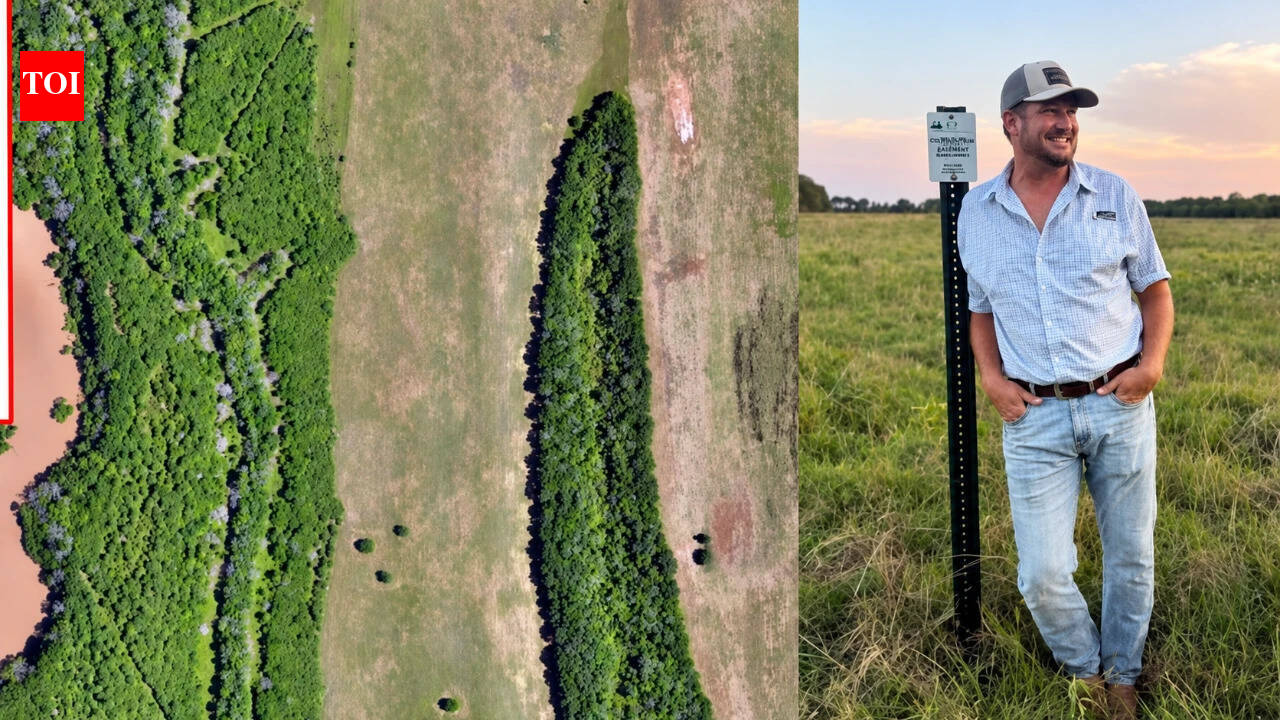
A Louisiana landowner bought 300 acres to raise cattle, but repeated floods changed his plans. Michael Liles got help from the NRCS to restore wetlands in Franklin Parish. He started planting 183 acres of forest in February 2026. This project now connects wildlife habitats for bears and many other species.
A Louisiana landowner planned to raise cattle and grow soybeans on his property. However, repeated flooding from the Boeuf River made farming difficult. Michael Liles, who runs the land-development business 5L Land Development, turned to wetland restoration with help from the US Department of Agriculture's Natural Resources Conservation Service (NRCS). The project covers more than 300 acres in Franklin Parish. It includes restoring water movement across 9.2 acres and establishing 183 acres of bottomland hardwood forest in February 2026. The restored land connects existing wildlife corridors and is intended to benefit species such as the Louisiana black bear and the endangered northern long-eared bat.
How repeated floods changed a Louisiana landowner's plans for 300 acres
Liles initially intended to use the flood-prone land for cattle grazing and soybean farming. However, repeated flooding made it difficult to turn those plans into a viable operation. Having experience with land development and conservation programmes, he explored an alternative that would allow the property to support wetland habitat and wildlife.In January 2023, Liles applied to enrol the property in the Agricultural Conservation Easement Program's Wetland Reserve Easement component, known as ACEP-WRE.
The land lies in Franklin Parish, near the Boeuf River, Boeuf Wildlife Management Area and other properties already enrolled in wetland conservation programmes.
The property was selected for programme funding in 2024. NRCS subsequently worked with Liles to complete the easement acquisition and develop a restoration plan. The agency closed the acquisition in April 2025, 303 days after the agreement to purchase, compared with an average of roughly 564 days over the preceding decade.
How 183 acres of forest were established
Liles, who owns the land-construction business 5L Land Development, requested to carry out the restoration work himself through a landowner contract. NRCS collaborated with him on the planning and design, discussing restoration options and approving the work to be undertaken.The planning and design phase was completed in May 2025. Tree-site preparation followed in August, with hydrology restoration carried out across 9.2 acres. The project reached another milestone in February 2026, when 183 acres of bottomland hardwood forest were established.Bottomland hardwood forests are adapted to low-lying areas that experience periodic flooding. Restoring this type of forest can help recreate habitat suited to river landscapes, while wetland restoration can recover natural water movement and other wetland functions.The project's different components serve distinct purposes. The hydrology work focuses on water movement, while the forest establishment provides wooded habitat across a much larger area. Together, they form part of a broader effort to restore the ecological value of land that proved difficult to use for conventional farming.
How the restoration could benefit wildlife
According to NRCS, the restored property connects and extends existing wildlife corridors, creating additional habitat connectivity for wildlife in the region. The agency identifies the Louisiana black bear and northern long-eared bat among the species that can benefit from these connections.The northern long-eared bat is federally listed as endangered in the US, following severe population declines associated largely with white-nose syndrome, a disease that affects bats. The Louisiana black bear, meanwhile, was removed from the federal Endangered Species Act list in 2016 after its recovery, although it remains protected under Louisiana state law.Wetland Reserve Easements are designed to protect, restore and enhance wetlands that have previously been degraded, including through agricultural use. NRCS says such projects can provide habitat for fish and wildlife, improve water quality by filtering sediments and chemicals, help reduce flooding, recharge groundwater and support biodiversity.The restoration of Liles's property also builds on conservation work in the surrounding landscape. Its proximity to the Boeuf Wildlife Management Area and other conservation-enrolled land gives the project a role in extending habitat connections beyond the property itself.For Liles, the project was also an opportunity to create something lasting for his family. NRCS said he wanted to share his connection to the land with his wife, Kristi, and their five children: LillyMae, Trace, Levi, Gus and Charlotte.Rather than continuing to try to turn flood-prone land into something it was poorly suited for, he worked with conservation officials to restore its wetland and forest functions.