
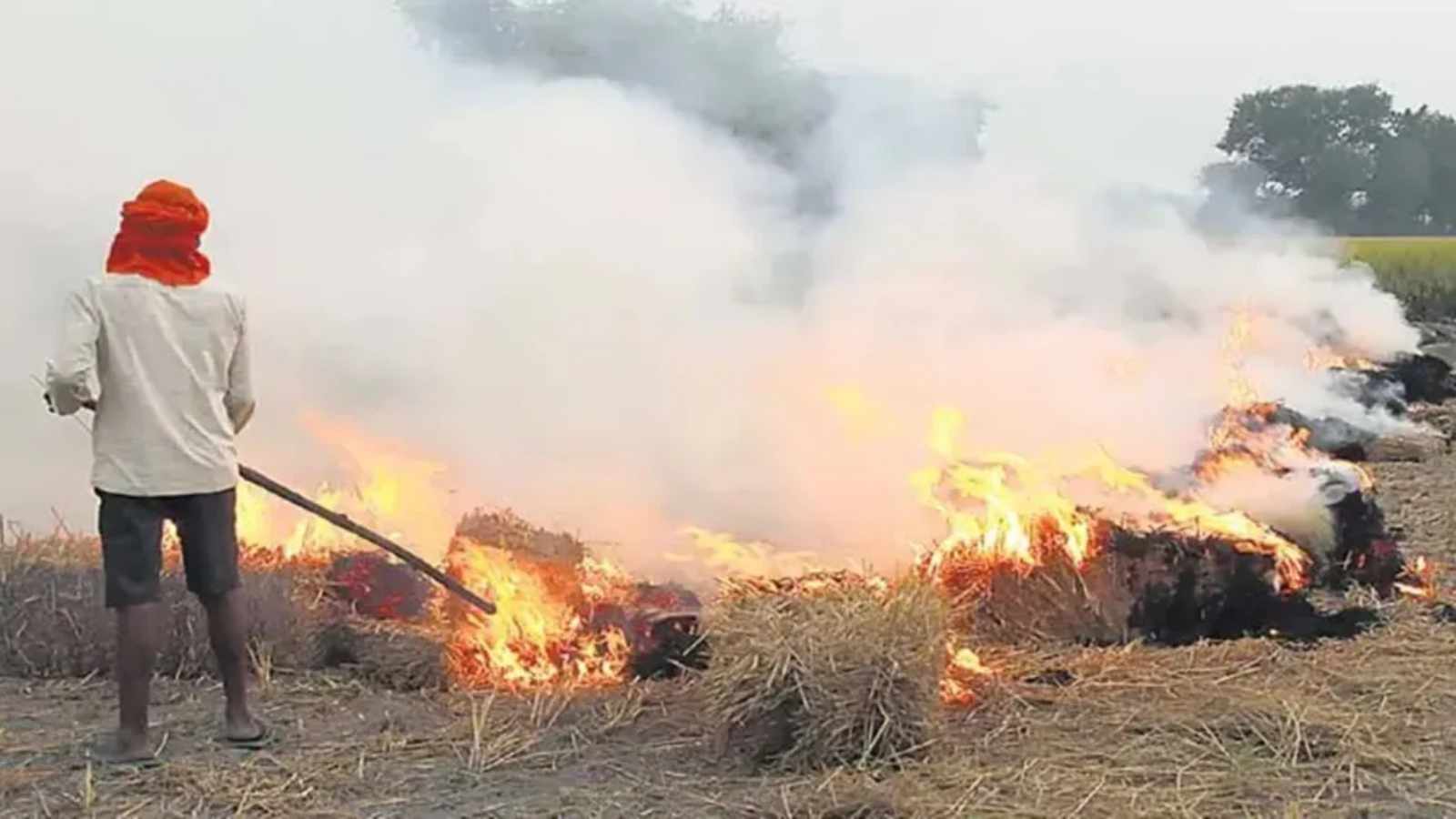
The Commission for Air Quality Management started a 15-day ban on construction and a 50% work-from-home mandate in Delhi and five NCR districts. Officials said, "For the first time, we have tried such pre-emptive actions." These curbs aim to tackle pollution from farm fires, Diwali, and changing weather conditions.
The order by the Commission for Air Quality Management (CAQM) in National Capital Region and Adjoining Areas for a 15-day ban on dust-generating demolition and outdoor construction activities and a 50% work-from-home mandate in Delhi and five NCR districts is perhaps the first time that such a measure has been adopted outside the scope of the Graded Response Action Plan (GRAP). While emergency measures under GRAP are enforced based on deterioration of air and forecast for poor air quality, usually following the onset of winter, the fresh curbs have been cited explicitly as "precautionary" and "anticipatory" measures.
The CAQM order was issued two days before Delhi's 10-point winter pollution plan kicks off on Sunday, which enforces curbs on entry of vehicles, dust control, fuel dispensing, staggered office timings, higher parking fees, and construction curbs.
The latest curbs have been issued under Section 12 of the CAQM Act, 2021, which empowers the watchdog to take such measures and issue directions as it considers necessary or expedient for protecting and improving the quality of air in NCR and adjoining areas.
Officials aware of developments explained that following assessment of multiple factors, ranging from meteorological factors, paddy harvest progress in Punjab and Haryana, and historical peak data, pre-emptive curbs were announced for sectors where pollution sources could be controlled easily.
It is expected that air quality across the region will gradually worsen through the coming week.
After the respite of a rare 'Satisfactory' air quality index (AQI) late October, driven chiefly by rain, the AQI worsened on Saturday to 'Moderate'. By November 2, it is expected to turn 'Poor'.
Among the factors considered before Friday's order were a gradual turn towards unfavourable meteorological conditions, the upcoming Diwali festival and pollution from firecrackers, and paddy stubble burning during the remainder of the harvest season.
So far, around 55-60 % paddy harvesting in Punjab and 50% in Haryana has been completed, officials said, and efforts are underway to ensure farmers get the right machinery and help to manage paddy stubble disposal.
"For the first time, we have tried such pre-emptive actions. The Chief Secretaries across states would have to coordinate with municipal commissioners and district magistrates to enforce the construction ban and work from home mandate," a CAQM
official said.
This October, Delhi-NCR has experienced better air quality than last year during the same month, largely due
to favourable meteorological conditions.
With an AQI of 60, Friday was the cleanest October air day since October 10, 2022 just a day after the Capital saw a 'Poor' air day, The Indian Express reported on Saturday.
With an AQI of 230, the Capital recorded the worst 'air' day on October 23 in the 'Poor' category.
The AQI has not worsened to 'Very Poor' or 'Severe' through the month. In comparison, last October, the worst air quality was recorded on October 30, 2025, when AQI was 373 in the 'Severe' category.