
The Wadden Sea faces a move to the Unesco world heritage in danger list due to rising ecosystem stress. Marine biologist Wouter van der Heij said, "The numbers of birds are going down, the amount of fish is going down." Human activities like fishing and gas extraction caused this.
Along the coasts of the Netherlands, Germany and Denmark, its intertidal flats host a wealth of marine life and birds. But extraction industries, tourism and fishing are taking their toll
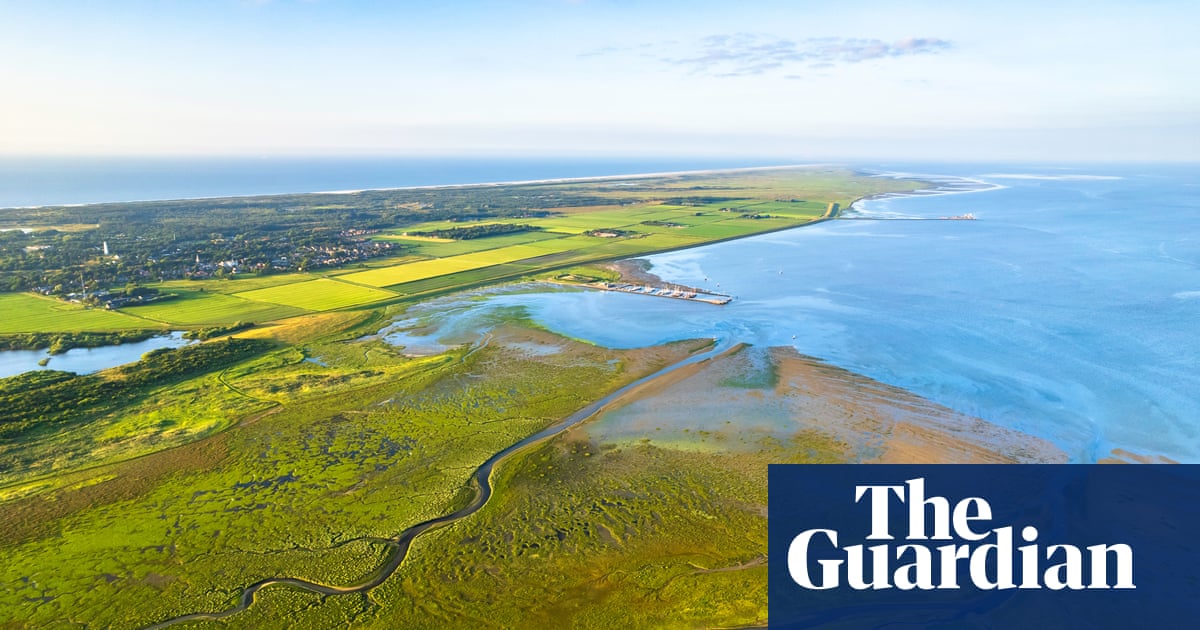
Stand on the coastline at high tide and you look out over unbroken water, with sandy islands rising a few miles offshore. A few hours later and the view across the Wadden Sea has transformed into a maze of deep channels, drying sandbanks, salt marshes and mud flats.
As the largest unbroken system of intertidal sand and mud flats in the world, this ever-changing habitat stretches hundreds of miles along the north European coasts of Germany, Denmark and the Netherlands and was awarded world heritage status by Unesco in 2009.
But, 17 years later, the Wadden Sea is a step closer to finding itself on Unesco's world heritage in danger list. As a result of "continuing uncertainty surrounding the cumulative impacts of multiple pressures affecting the property ... as well as indications of increasing ecosystem stress and ecological degradation", the UN body is expected to send a joint inspection mission with the International Union for Conservation of Nature (IUCN) to the Wadden Sea in 2027 to assess the state of its conservation.
Squeezed behind a string of islands, from Fanø in Denmark to Texel in the Netherlands, the Wadden Sea is a vital staging post on the migratory route of millions of birds, and hosts thousands of species of marine creatures and plants.
It is also, across the three countries, home to hundreds of thousands of people on many islands, as well as towns and villages on the mainland.
But, according to experts, human activities, from salt and gas extraction to fishing, tourism and even military exercises (there is a Nato bombing range on the Dutch island of Vlieland) are putting pressure on the Wadden Sea.
For Wouter van der Heij, a marine biologist who works for the Dutch environmental organisation Waddenvereniging, it adds up to "a very vulnerable situation".
"The numbers of birds are going down, the amount of fish is going down, the biodiversity on the mudflats, it's going down," he says.
If the Wadden Sea joins the danger list, it would be among just a handful of European sites, which would be a huge embarrassment for the authorities and a serious blow to the many residents, particularly on the islands, who make their living from tourism.
Aant van der Veen has lived on Vlieland, which has a population of just over 1,000 people, his whole life. One of his businesses takes tours around the island.
"If we lose the tourism on the islands, then it doesn't matter what you're doing, everybody's going bankrupt," he says.
Van der Veen is sitting outside parliament in The Hague, as part of a group representing residents across the Dutch Wadden Sea that has been meeting members of the House of Representatives, the lower house of the Dutch parliament.
Earlier this year, maps were circulated, apparently showing that large parts of the Wadden could be closed off to islanders and visitors in order to reach conservation targets.
A post from Van der Veen on Facebook sparked a "We are the Wadden" campaign, with flags and banners adorning villages across the islands at the height of holiday season. It generated lots of media attention and a petition signed by more than 50,000 people - hence the parliamentary meeting.
"Six months ago, we did not have a voice," he says. "Now we have the voice of almost 52,000 people."
The Dutch authorities have acknowledged a failure of communication and promised to involve local people more fully in future decisions.
"People have lived and worked in and alongside the natural environment of the Wadden Sea for centuries," a Dutch government spokesperson said. "The starting point is that this will remain possible in the future and that this balance will not be fundamentally altered."
But, they added: "The area must remain livable for future generations, and multifunctional use must continue to be possible.
"World heritage status was granted in 2009, encompassing all activities that were already taking place at that time. We will continue to advocate this fact to Unesco."
The Dutch aren't the only people with responsibility for the Wadden Sea. Management is the joint responsibility of the Netherlands, Germany and Denmark. But there are many layers of regulation and protection, at local, regional, national and European level, and huge differences in how, and by whom, they are enforced.
Mona Friedrich is a campaigner with the Environmental Justice Foundation, which is taking legal action in part of the German Wadden Sea to try to enforce European regulations on assessing the environmental impact of bottom trawling.
"[The Wadden Sea] has multiple layers of protection on paper - it's a national park, a Unesco world heritage site and it's part of the Natura 2000 network - and still bottom trawling continues to be authorised," she says.
"It is very complicated to find out who's responsible for what agency, what's done at federal level, what's done at state level. It always takes a long time to figure out who is responsible for what."
Van der Heij says one of the greatest threats to the ecology of the Wadden Sea is that rising sea levels and subsidence from extraction could lead to the mudflats remaining covered, even at low tide.
"If they are no longer dry during low tides and no longer available for migratory birds to find their food, [then their] route, the East Atlantic Flyway, will be in danger because the birds are no longer able to migrate all the way," he says.
Van der Heij adds that taking gas and salt from under the Wadden Sea can lead to subsidence, potentially threatening the drying banks, which is why the Waddenvereniging recently coordinated an "Urgent call for help" to Unesco.
It asked the UN body to "take a strong stand" against draft approval for proposals to extend salt extraction under the sea near Harlingen. A final decision is expected shortly from the Dutch authorities, who point to the "hand-on-tap" method of monitoring subsidence - in other words, if it goes beyond set limits, work must be stopped.
The government recently refused permission for gas to be taken from the Ternaard field, which lies between the Dutch coast and the island of Ameland, despite pressures on European energy supplies, a decision welcomed by Unesco and campaigners.
But renewable energy projects also pose a threat to the mudflats, say campaigners. The huge windfarms being built offshore in the North Sea need to be connected to the grid, and that means laying cables across the mudflats and under (or through) islands such as Schiermonnikoog in the Netherlands or Baltrum and Langeoog in Germany.
Despite protections built into the system, which limit where and when work can take place, it is another pressure on the Wadden Sea, says Van der Heij.
"If you introduce these activities, but are stopping others, then it would be a transition, but at this moment it's just adding [to] what's already happening," he says.
"So they are still mining for gas and salt. They are still fishing. They are still dredging the gullies for shipping lanes. So you end up with, again, a new activity with harmful effects on nature."
It is that cumulative effect that concerns Van der Veen and his fellow islanders - and the possibility that their needs might be sacrificed.
"I think one of the biggest concerns is that they will allow all those big things to happen and then say, 'Oh, but we can compensate [by] restricting the area for the people that live there, or the tourists,'" he says.