
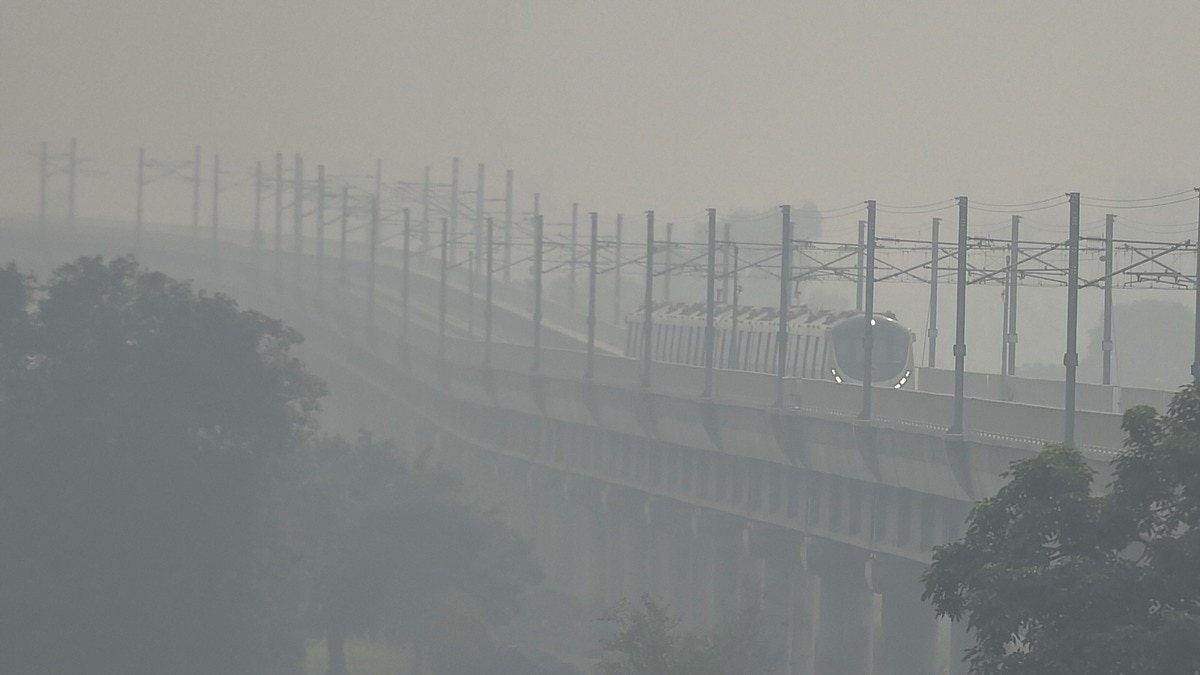
Delhi’s AQI was reported at 167 at 7 am IST on October 27, placing it in the moderate category. India uses six pollution categories ranging from good to severe. Officials said the final number is not a simple average, as one pollutant can drive the overall reading for a specific location.
India’s AQI bands are Good (0–50), Satisfactory (51–100), Moderate (101–200), Poor (201–300), Very Poor (301–400) and Severe (401–500). Each category places the numerical reading within a defined range for public information.
AQI considers PM2.5, PM10, nitrogen dioxide, sulphur dioxide, carbon monoxide, ozone, ammonia and lead. Their measured concentrations are converted into individual sub-indices, turning different pollutant readings into values on a common scale.
Delhi’s AQI was reported at 167 at 7 am IST on October 27, placing it in the moderate category. That reading is a morning snapshot; the latest local update is needed to assess conditions later in the day.
The reported AQI is determined by the highest relevant pollutant sub-index. One pollutant can therefore drive the overall category even when the others are lower; the final number is not a simple average of them all.
A station reading describes a particular location, while a city summary covers a wider area. Check the monitoring site and timestamp before comparing numbers. A photograph of haze alone cannot establish the AQI category.