
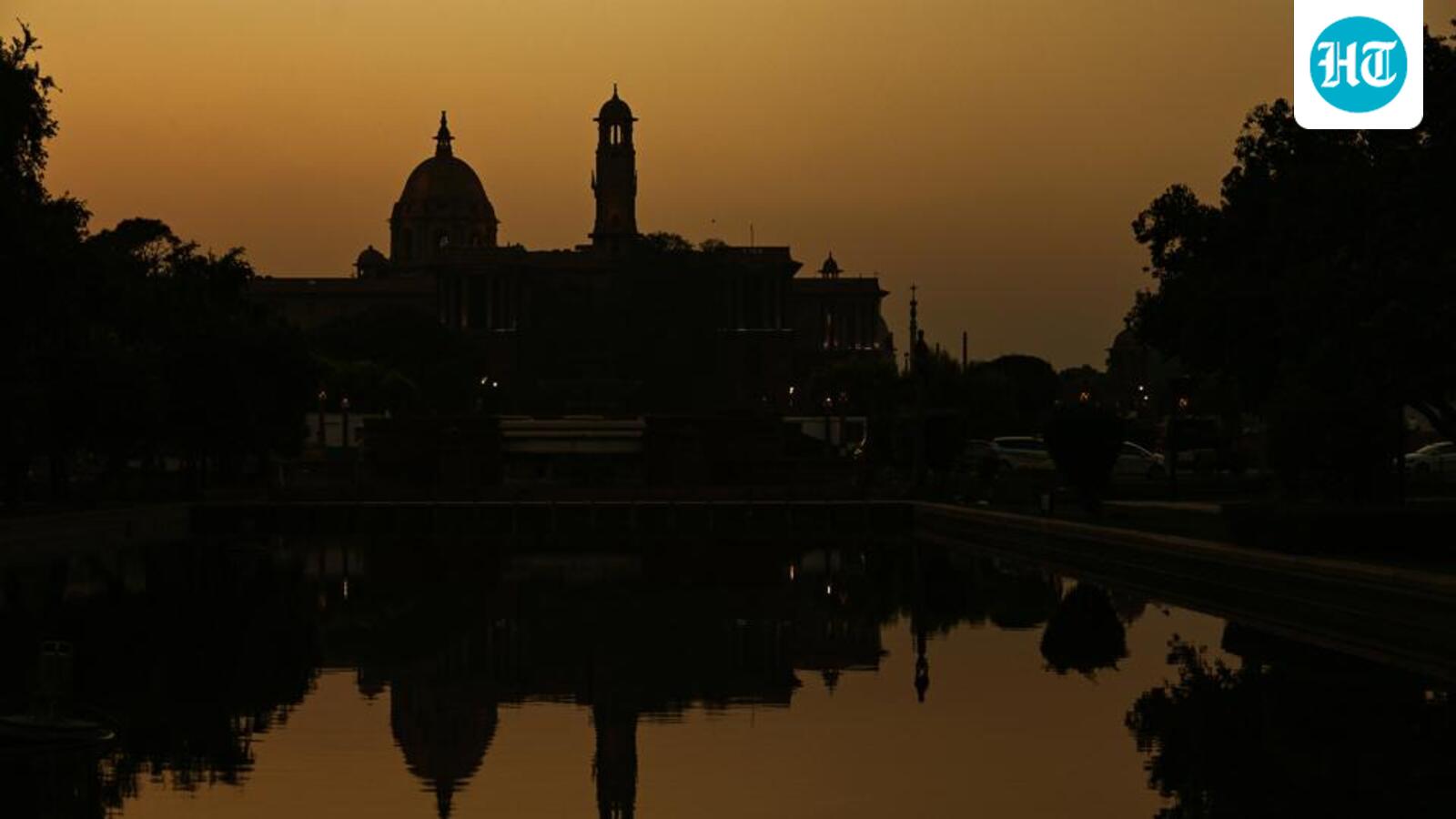
Delhi recorded its coldest morning of the season on Tuesday as the minimum temperature at Safdarjung fell to 15.3°C. While the city felt a chill, the air quality remained in the moderate category. Many stations showed poor air levels, and officials said PM2.5 is the main pollutant this winter.
Delhi recorded its coldest morning of the season on Tuesday, with the minimum temperature dipping to 15.3°C, or 1.9 degrees below normal, at Safdarjung, the base weather station, while the air quality remained in the moderate category.
Ayanagar recorded the lowest minimum temperature among the weather stations at 15.2°C, two degrees below normal. The minimum temperature (15.5°C) at Palam was 2.3 degrees below normal. It dropped to 15.6°C, or 0.4 degrees below normal, at Lodhi Road. The Ridge recorded a minimum of 16.2°C, 2.3 degrees below normal at 8.30 am on Tuesday.
On Monday, a maximum temperature of 31.4°C was recorded at Safdarjung and Lodhi Road and 29.3°C at Palam. The maximum temperature was 31°C and 31.1°C at the Ridge and Ayanagar.
The minimum temperature at Safdarjung fell by 0.9 degrees over the 24 hours. Palam recorded a decline of 0.8 degrees, while Lodhi Road, the Ridge and Ayanagar registered drops of 0.4, 0.4 and 0.5 degrees.
No rainfall was recorded at any of the five stations during the 24 hours ending at 8.30am on Tuesday.
An air quality index (AQI) of 170 was recorded at 9.05am, with 15 stations out of 55 recording the poor category, including Jahangirpuri, Rohini, Mundka and Siri Fort. Only one station, Ghoga, recorded a satisfactory AQI of 76.
The 24-hour AQI was 174 on Monday and 153 on Sunday, both in the moderate category.
At 7am, the Central Pollution Control Board listed PM2.5 as the main pollutant at 29 of Delhi's 57 stations and PM10 at 27. At the same hour a day earlier, the counts were 30 and 23, out of 55.
Air quality in Delhi and the National Capital Region (NCR) starts worsening from mid-September, with stubble burning acting as a precursor to winter pollution. Smog chokes the Capital every winter. Subsequent fireworks during the festive season, especially around Diwali, worsen the situation despite curbs, which are violated every year.
PM2.5 is the dominant pollutant affecting air quality. Secondary particulates formed from emissions from transport, industries, power plants, and biomass burning are among the major pollution contributors during winter.
American space agency NASA detected 702 farm fires in Punjab and Haryana from October 1 to 26, with 69 of them on October 26. Over the same dates last season, it counted 979.
NASA's satellite count of farm fires in Punjab and Haryana is now a large undercount. NASA counted 4,824 fires in the two states between October 1 and November 30, 2025, 94% fewer than over the same period in 2021, while the area burned fell only 19%, according to iFOREST, a research group that maps it from before-and-after satellite images. Most of the burning now happens after NASA's satellite passes over the region at about 1.30pm.
An HT analysis of data from Meteosat, a European weather satellite that scans the region every 15 minutes, shows the shift. In 2021, about 40% of the fire heat Meteosat recorded came between 1pm and 3pm. In 2025, less than 1% did, and 98% came after 3pm.
India's INSAT-3DS satellite, which scans every half hour, shows the same: from October 16, 2025, 99% of the fire pixels it flagged in Punjab and Haryana came after 3pm.