
Delhi pollution curbs start from November 1, 2026, and will run until January 31, 2027. These revised rules target vehicle emissions and construction dust to improve air quality. Officials said, "Even if the AQI forecast does not indicate the AQI of Delhi to be breaching a particular threshold, that stage applies."
Yes. Restrictions under GRAP-1 are already in place since October 21.
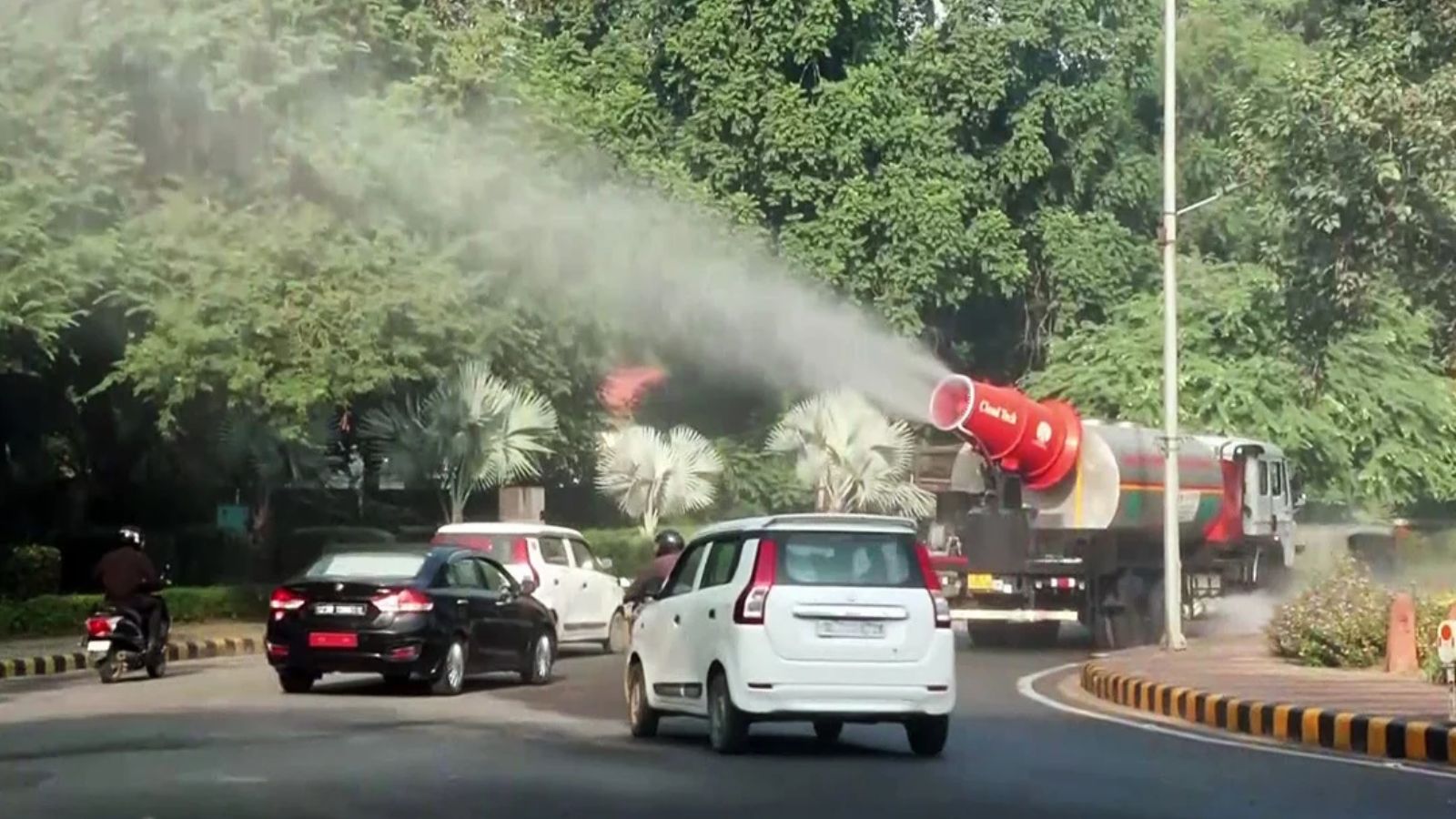
Under GRAP Stage I, dust-mitigation measures are bolstered and existing rules on construction and demolition activities, waste management and other pollution sources are strictly enforced.
This includes measures to contain damage to environment due to vehicle emissions, diesel generator sets, public transport, industrial emissions, and the use of coal and firewood in tandoors.
GRAP is a set of emergency measures that kick in to prevent further deterioration of air quality once it reaches, or is forecast to reach a certain threshold in the Delhi-NCR region.
Following Supreme Court directions in December 2016, the Ministry of Environment, Forest and Climate Change notified the Graded Response Action Plan (GRAP) on January 12, 2017, assigning its implementation to the Environment Pollution (Prevention and Control) Authority (EPCA). The plan established graded measures to address different levels of air pollution in Delhi-NCR.
GRAP is incremental in nature with stage 4 being the strictest of all.
The major change in the revised rule takes into account a forecast of AQI, rather than wait for the actual level to breach a particular level.
These Delhi pollution curbs target vehicles, especially those registered outside the capital. Non-compliant interstate buses face restrictions, and so do tractors. The restrictions run from November 1, 2026, till at least January 31, 2027, unless exemptions are notified.
The CAQM notification of the revised GRAP rules states that based on the dynamic model and weather forecast on a day-to-day basis, actions under Stages I, II, III and IV shall be invoked ahead of the AQI reaching to the projected levels of that stage, also provided that the higher projected AQI levels are likely to sustain for a long period.
"Even if the AQI forecast does not indicate the AQI of Delhi to be breaching a particular threshold and under extreme meteorological conditions or due to any episodic event the AQI breaches the threshold, that particular stage of the GRAP shall be invoked with immediate effect in respect of actions / measures that can be invoked immediately," the notification reads.
Because the numbers moved fast. CAQM said Delhi's AQI jumped from 179 ('Moderate') on October 20 to 244 ('Poor') at 2 pm on October 21. Forecasts also pointed to the 'Poor' category continuing in the coming days. It was the first time this winter that Stage I measures were imposed.
To keep Delhi pollution curbs credible, officials are leaning on technology and policing. Border checks will use automatic number plate recognition (ANPR) and RFID.
The sub-committee on GRAP shall meet frequently to plan action and issue necessary orders for invoking various provisions of the GRAP, based on the prevalent air quality and the AQI forecast to be provided by IMD from time to time. It shall also review if the restrictions under the prevalent GRAP stage are being strictly imposed by various agencies.
The Chief Secretaries of the national capital region states and the Government of the National Capital Territory of Delhi (GNCTD) shall frequently review the actions and implementation of the GRAP.
GRAP in Delhi is incremental. The worse the air gets, the harder the rules bite. Stage I applies when the AQI is between 201 and 300. Stage II covers 'very poor' air at 301 to 400, and Stage III covers 'severe' air at 401 to 450. Stage IV is triggered when Delhi's AQI crosses 450. Earlier measures stay in force when a higher stage is invoked.
So what is new this year? CAQM revised the GRAP schedule in September and moved certain restrictions on older interstate buses from Stage II to Stage I, so they can be enforced earlier. The revised framework also extends Stage III curbs on BS-III petrol and BS-IV diesel light vehicles to Sonipat in Haryana. It removes an exemption for certain goods vehicles carrying essential commodities under Stages III and IV, and widens the rules on construction and demolition.
The restrictions for Delhi pollution act as a filter at the border.
Petrol and diesel vehicles registered outside Delhi that do not meet BS-VI norms will remain barred from November 1, 2026, to January 31, 2027. Electric and CNG vehicles are exempt from the restriction. A traffic police advisory added that vehicles without a valid Pollution Under Control Certificate may also face restrictions.
Commercial goods vehicles, which are registered outside Delhi and are not BS-VI compliant, will not be allowed entry from November 1.
CAQM has directed that buses entering Delhi under various permit categories, including tourist and contract carriage, must run on BS-VI diesel, CNG or electricity.
Trucks, bound for other destinations but passing through Delhi, must use the peripheral expressways.
BS-VI, CNG and electric vehicles, and those covered by official exemptions, can enter Delhi, subject to the applicable rules. Delhi-registered commercial goods vehicles face no restriction under this order. Nor do goods vehicles running on BS-VI diesel, CNG, LNG or electricity. Buses registered in Delhi are also exempt.
However, stage-wise GRAP limits on goods vehicles still apply whenever a particular stage is in force.