
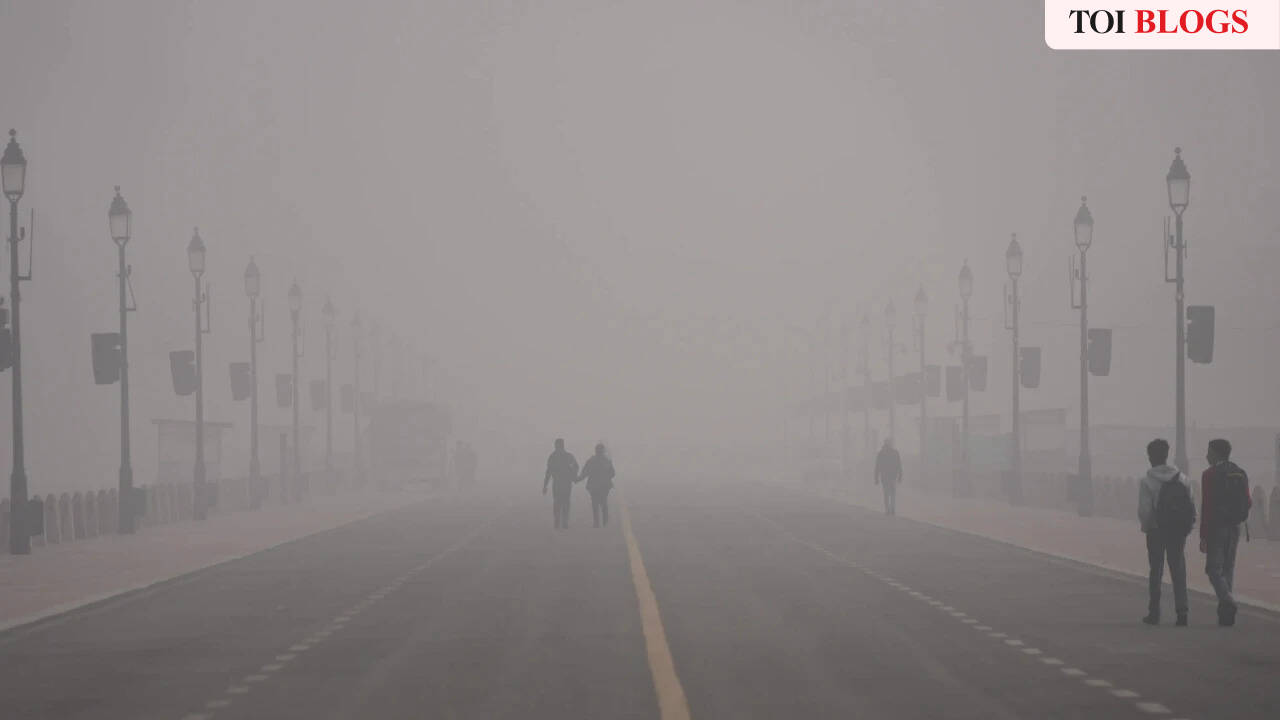
Delhi continues to chase convenient villains for its pollution crisis instead of fixing core issues. Officials stopped 14,930 vehicles, but many were allowed through, causing massive traffic jams. Experts argue that focusing on borders ignores road dust and industrial waste. Pollution does not stop at borders, so we need better.
Almost a year ago, I wrote about Delhi's knee-jerk approach to pollution, vehicle-age bans, border checks that create jams, weak PUC testing, road dust and the tendency to reach for the most visible action rather than the most effective one.
Almost nine out of ten were eventually allowed through. Meanwhile, thousands of vehicles crawled, idled, braked and accelerated in long queues.
Here's a crude back-of-the-envelope calculation. Delay those 14,930 vehicles by just ten minutes and, assuming around 0.8 litre of fuel an hour while idling or crawling, nearly 2,000 litres of fuel are burnt.Now assume the 1,539 vehicles turned back would each have travelled another 20 km inside Delhi at 16 km to a litre. The fuel saved is also roughly 1,900 litres.No, this is not a proper PM2.5 or NOx calculation. Which is precisely the point.So, has anyone done the proper calculation?And where does a vehicle turned back go? It doesn't disappear. It drives back into Gurugram, Noida, Ghaziabad or somewhere else in the same NCR airshed. Pollution, unfortunately, does not recognise Delhi's border.And this is where the search for one convenient villain starts looking even more questionable.Look at our roads. Broken shoulders, loose soil, dust-covered pavers, construction debris, soil spilling from medians. CAQM itself puts road, soil and construction dust at around 15 per cent of winter PM2.5.Then there is stubble. Punjab recorded more than 71,000 farm fires in 2021. The entire 2025 season saw just over 5,000. This year, till November 3, there were 2,196, lower than the 2,518 at the same stage last year. Yes, November 3 saw a sharp spike of 584 fires, so stubble clearly matters. Sometimes substantially.But it is not the whole story either.CAQM's own assessment says winter pollution comes from transport, biomass burning, road and construction dust, industry and secondary particulates.That is really the point. There is no one villain.So fix the roads. Control the dust. Measure actual vehicle emissions. Catch genuine super-polluters. Stop waste burning. Enforce industrial norms across NCR. And treat Delhi-NCR as the single airshed it is.Winter does not suddenly manufacture our pollution. It merely traps what we have been producing all along.Before announcing how many vehicles were stopped or turned back, perhaps there is one much more useful number we should be asking for:How much pollution did the measure actually remove, net of the pollution it created?