
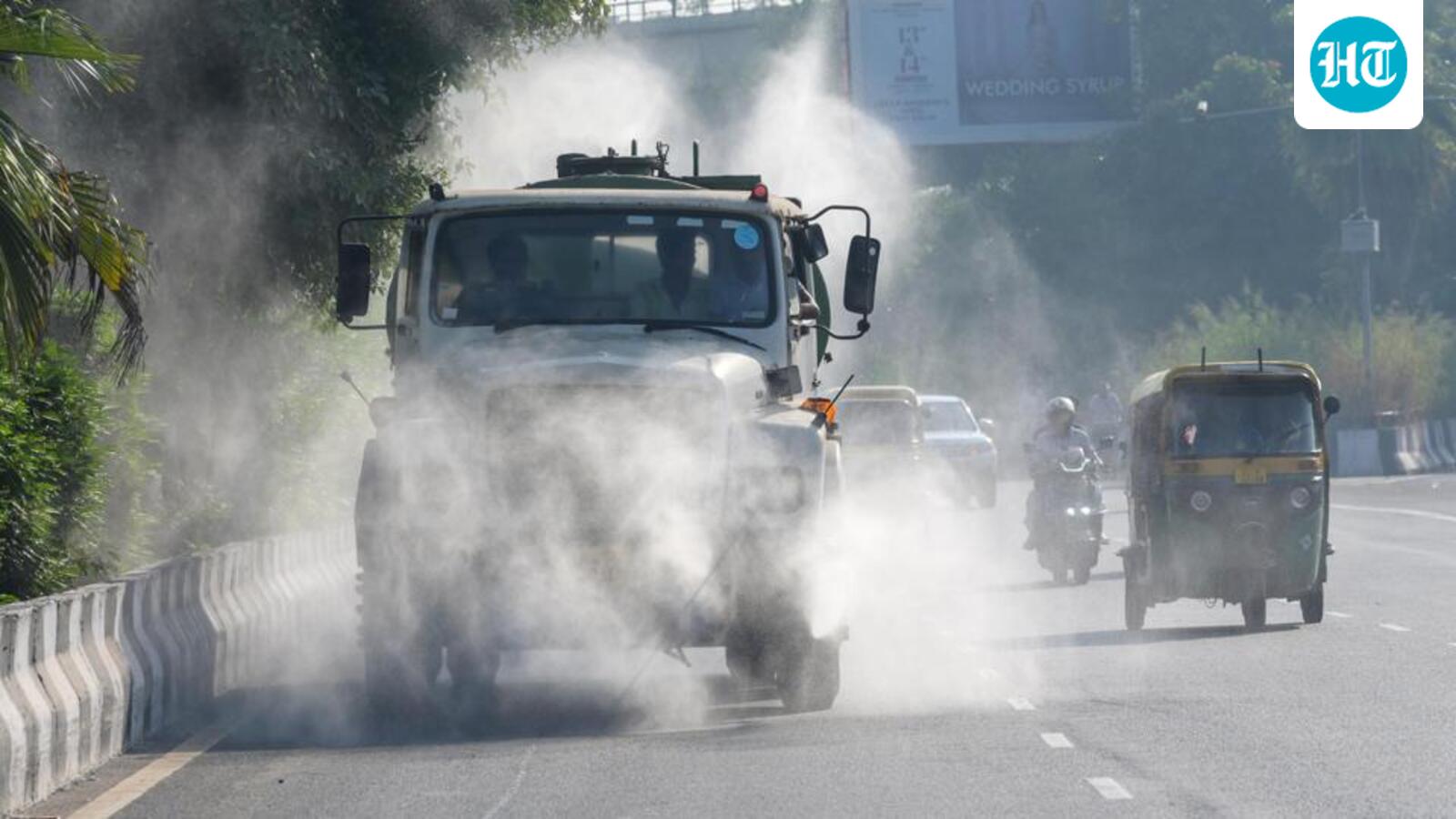
Delhi environment minister met NCR police officers to discuss pollution-control measures. Officials said, “Traffic movements will be synchronised, and adequate traffic personnel will be deployed.” They focused on better traffic management and strict vehicle checks. Authorities also enforced rules on heavy trucks and buses to reduce emissions this winter.
The meeting focused on strengthening inter-state coordination and ensuring effective implementation of pollution-control measures under the Graded Response Action Plan (GRAP) and directions issued by the Commission for Air Quality Management (CAQM).
Delhi government officials said that five key areas of cooperation were discussed in the meeting with focus on improved traffic management. “Traffic movements will be synchronised, and adequate traffic personnel will be deployed at identified high-traffic corridors and congestion-prone locations, particularly near NCR border areas, to ensure smoother traffic flow and minimise vehicular emissions caused by prolonged congestion....Visibly polluting vehicles will be stopped, and strict action will be taken, including impounding of vehicles and imposition of the maximum permissible penalties, wherever applicable,” an official said.
The implementation of the directions of the Supreme Court regarding the diversion of truck traffic not destined for Delhi through the Eastern and Western Peripheral Expressways will also be “strictly enforced” to reduce unnecessary heavy-vehicle movement through the city, the official further said, adding, “The applicable orders of the National Green Tribunal (NGT) and the Supreme Court concerning restrictions on the plying of overage diesel and petrol vehicles, along with other restrictions prescribed under the prevailing rules and regulations, will be strictly implemented.”
Buses operating in Delhi-NCR from cities and towns outside Delhi will be required to comply with the applicable fuel and emission standards. “Buses other than those running on electric power (EV), Compressed Natural Gas (CNG) or BS-VI-compliant diesel will not be permitted to ply in Delhi-NCR. The transport department and concerned agencies will ensure prominent banners, display boards and public information material at border checkpoints to inform motorists and interstate transport operators about applicable pollution-control restrictions,” official added.
Under the winter action plan, vehicles registered outside Delhi that do not meet BS-VI emission standards are barred from entering the capital from November 1 to January 31. To curb private vehicle use and reduce pollution, authorities have also introduced doubled parking fees at authorised municipal lots from November 1 to February 28, 2027, along with staggered office hours and a 50% work-from-home mandate for government and private offices.
Sirsa said that air pollution is a regional issue that requires coordinated action by Delhi and neighboring NCR states. Senior officials from Noida, Faridabad, Gurugram, Sonipat and Bahadurgarh participated in the meeting.
“Our objective is to ensure that pollution-control measures are implemented not only within Delhi but also in coordination with adjoining NCR districts. Effective border management, strict enforcement, smoother traffic movement, cleaner public transport and coordinated action against non-compliant vehicles will remain important components of Delhi’s winter pollution-control strategy,” he added.
Delhi Traffic Police informed the meeting that enforcement against traffic and pollution violations has already been intensified. On average, more than 10,000 challans related to traffic and pollution violations are being issued every day as part of the ongoing enforcement drive, officials added.