
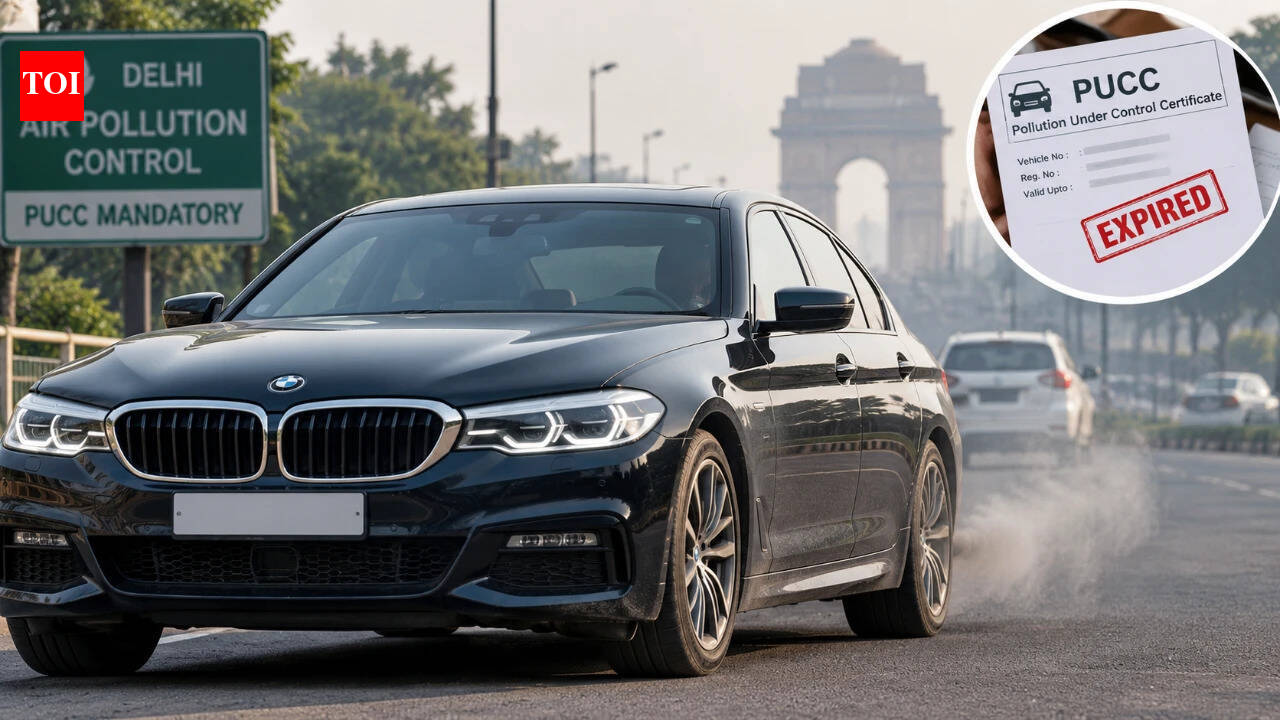
A BMW got 42 challans in Delhi for driving without a valid pollution certificate since 2019. The car received 24 fines this year alone. A traffic police officer said, “Cases with more than 10 pending PUCC challans reflect a clear disregard for the law.” Many other vehicles also show similar patterns.
(AI image) A BMW has accumulated 42 fines for not having a valid pollution under control certificate since 2019
NEW DELHI: A BMW has been fined 42 times for driving without a valid pollution under control certificate (PUCC) since 2019, but the penalties have apparently done little to prompt compliance. The 2019-model luxury car alone has received 24 challans this year, while its pollution certificate has remained expired since 2024, highlighting the challenge of enforcing emission-related rules in the capital. The repeated violations come even as Delhi has invoked Stage-I measures under the Graded Response Action Plan (GRAP) and made a valid PUCC mandatory. With air pollution remaining a concern, the record of repeat offenders raises questions about whether repeated fines are enough to make motorists comply with pollution-control requirements. The BMW tops the list of vehicles repeatedly caught driving without a valid certificate. It is followed by several two-wheelers, indicating that the problem extends beyond luxury vehicles. A 2023-model Suzuki motorcycle has accumulated 33 PUCC challans, including 29 this year. The vehicle now has a valid certificate, though it took numerous penalties before compliance was recorded. An Activa has received 32 challans, 26 of them in 2026, but its PUCC remains expired. A 2012-model Ace has been challaned 28 times, while a 2025-model TVS Raider has received 24 challans, all this year. Both vehicles continue to have expired certificates. The figures point to a pattern in which repeated enforcement action does not always translate into timely compliance. While one vehicle eventually obtained a valid certificate, others continued to attract penalties without renewing theirs. Delhi Traffic Police said repeated violations were treated as habitual rather than accidental. “Vehicle owners are equally responsible for ensuring valid PUCC. Cases with more than 10 pending PUCC challans reflect a clear disregard for the law. Cases where an immediate challan is not possible are pursued through courts,” a traffic police officer said. What the rules say Section 190(2) of the Motor Vehicles Act, 1988, provides for penalties for vehicles that violate prescribed emission standards. Under the Central Motor Vehicles Rules, 1989, vehicles must carry a valid PUCC issued by an authorised testing centre. New vehicles are required to obtain a pollution certificate one year after registration. Older vehicles generally need to renew their certificates every six months, while more frequent testing may apply to certain high-polluting vehicles, depending on the applicable rules. A PUCC establishes whether a vehicle's emissions meet the prescribed limits when tested. However, the absence of a valid certificate does not, by itself, establish that the vehicle is emitting pollutants beyond those limits. Awareness and enforcement remain key Transport expert Anil Chhikara said awareness of vehicle-related legal requirements remained uneven, with some owners not fully familiar with their obligations regarding pollution certificates and insurance. He said government communication on pollution prevention had not reached everyone on the ground and suggested that the ‘no PUCC, no fuel’ policy could encourage more motorists to obtain valid certificates. Chhikara also cautioned against equating an expired certificate with proven excessive emissions. “A physical emissions test is needed to establish whether exhaust emissions breach the standards,” he said, stressing the need for effective testing and enforcement. The repeat-offender figures underline the challenge facing authorities: while challans can penalise violations, ensuring that motorists renew their certificates and comply with emission requirements remains a separate task.