
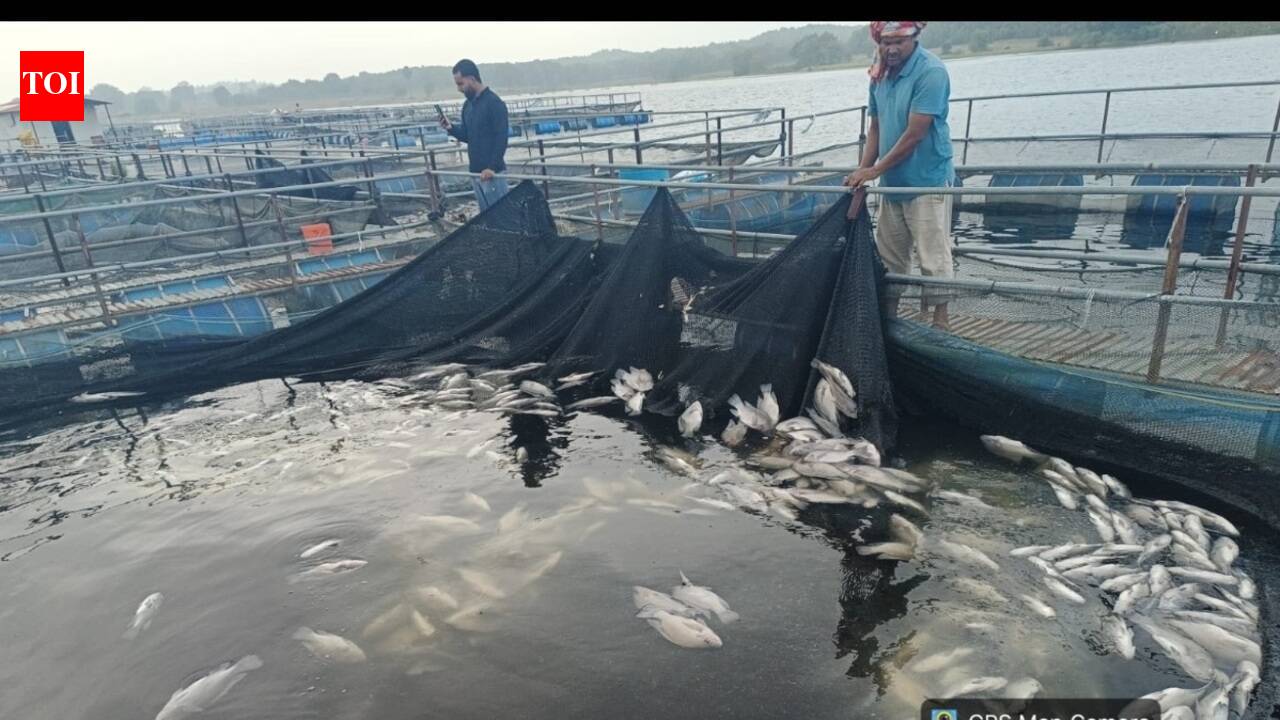
Cyclone Arnab caused heavy rain on Thursday and Friday, killing 35 tonnes of fish in Koderma’s Panchkhero reservoir. The loss reached Rs 1 crore for local farmers. District fisheries officer Vijay Kumar Singh said, "Persistent cloud cover reduced sunlight and lowered dissolved oxygen levels," which caused the fish to suffocate.
Around 40 to 50 local farmers depend on cage-based fish farming at Panchkhero
Koderma: Continuous rain triggered by cyclone Arnab on Thursday and Friday disrupted normal life across Koderma and caused extensive losses to fish farmers at the Panchkhero reservoir in Markachho block. Persistent cloud cover and poor weather sharply reduced dissolved oxygen levels in the fish cages, resulting in the mass mortality of nearly 35 tonnes of cage-reared fish. The losses are estimated at around Rs 1 crore. Around 40 to 50 local farmers depend on cage-based fish farming at Panchkhero for their livelihood. Three cooperatives operate 80 cages and collectively produce nearly 2,000 tonnes of fish annually. Among the worst affected was Sikander, who has been engaged in fish farming since 2014. He lost around 25 tonnes of fish. Another farmer, Maheshwari, said growers invest heavily in fish fry and spend months nurturing them, only to see their investment and labour wiped out within hours. Affected farmers, including Ajit Barma, Kamdev Barma, Munshi Barma, Mahendra Kushwaha, Rajendra Kushwaha and Solti Barma, said fish farming was their sole source of livelihood and supported their families. District fisheries officer Vijay Kumar Singh told TOI that the persistent cloud cover reduced sunlight and lowered dissolved oxygen levels inside the cages, causing the fish to suffocate. He said Koderma has 7,900 registered fish farmers who produce 22,000 metric tonnes of fish annually. The department is also working on introducing insurance provisions to protect farmers from similar disasters in the future. Farmers have sought a swift assessment of the damage, compensation and long-term safeguards for the reservoir-based aquaculture economy.