
Experts at a Lucknow workshop urged a 25% cut in groundwater extraction to restore the Gomti river. Ravindra S Sinha said, "Aquifer restoration was critical because groundwater base flow sustains rivers such as Gomti." Experts also suggested protecting wetlands and using treated wastewater to help the river flow again.
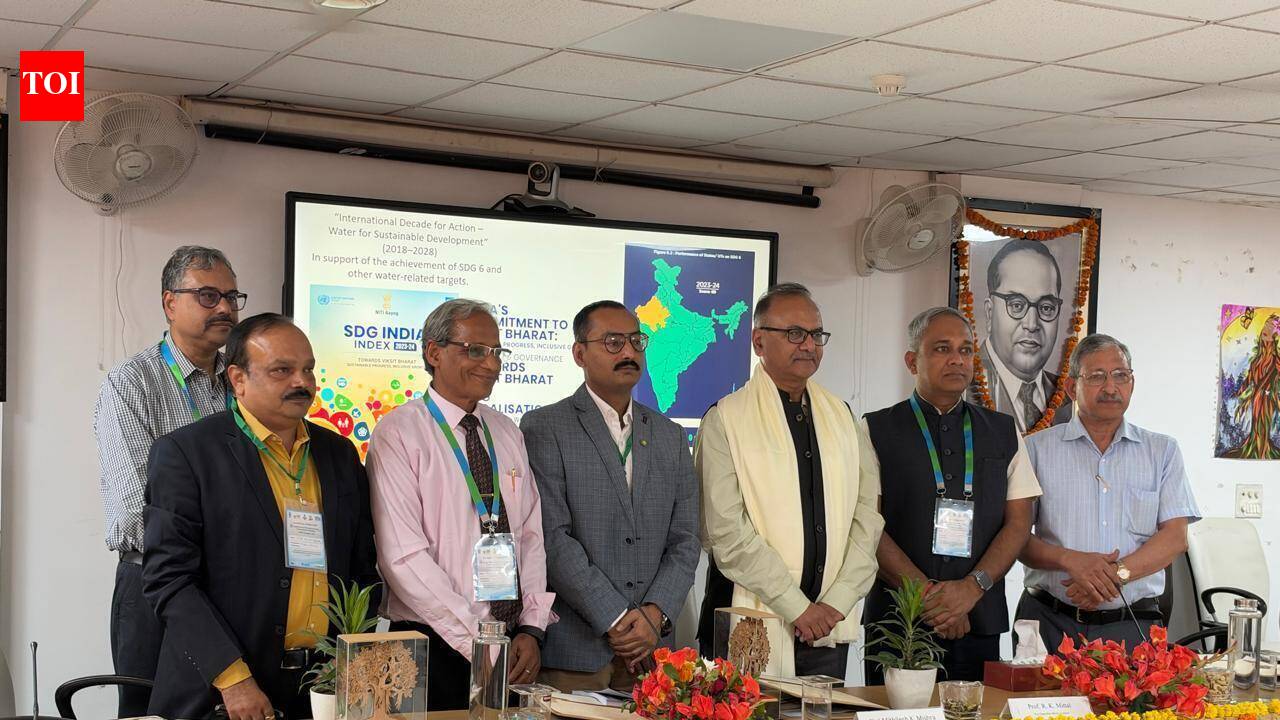
Lucknow: Cut groundwater extraction by at least 25%, prohibit withdrawal within 200-300 metres of riverbanks, revive tributaries from head to tail and protect floodplains, wetlands and natural recharge zones.Experts have outlined these measures to restore Gomti, arguing that cleaning its surface water alone will not sustain the river. Ravindra S Sinha, convener of ground water action group, said aquifer restoration was critical because groundwater base flow sustains rivers such as Gomti.At a national workshop on smaller river restoration using nature-based solutions at Babasaheb Bhimrao Ambedkar University, Sinha called for scientific mapping of the river basin using remote-sensing data to identify drainage networks, seasonal and perennial streams, river terraces, palaeochannels, wetlands, ponds and lakes. Besides reducing groundwater extraction, Sinha advocated regulation and reuse of treated wastewater. He recommended check dams, farm ponds, recharge basins, contour bunds, trenches, gabion structures and percolation pits to increase rainwater infiltration.Urban concretisation, he said, was also restricting recharge. Replacing conventional tiled pavements with perforated tiles, along with properly designed percolation pits and recharge trenches, could allow more rainwater to enter the ground.
Sinha cautioned, however, against injecting untreated or contaminated stormwater directly into borewells as it could affect aquifer water quality. Recovery could take several years and interventions should be designed according to local geology, soil, rainfall and extraction levels, he said.Prof Venkatesh Dutta said an examination of Gomti flow data from 1978 onwards showed around a 40% decline in lean-season discharge despite no significant change in rainfall. He attributed the fall to increased abstraction, encroachment and disruption of recharge.Some tributaries have dried up along nearly 30-40% of their stretches, Dutta said, while others, including Beta, Sai, Katina, Sarayan and Reth, continue to survive on rainwater and groundwater. He called for mapping tributaries and their land records, restoring channels from head to tail and notifying floodplains. Prof Prabhat Kumar Singh of IIT-BHU, Varanasi, called for decentralised wastewater management, saying communities using water should take responsibility for treating and reusing it locally rather than relying solely on pumping sewage elsewhere.
Citing historical precedent, former scientist PK Srivastava presented science toons, underscoring how neglect of minor waterways can disrupt civilisations.