
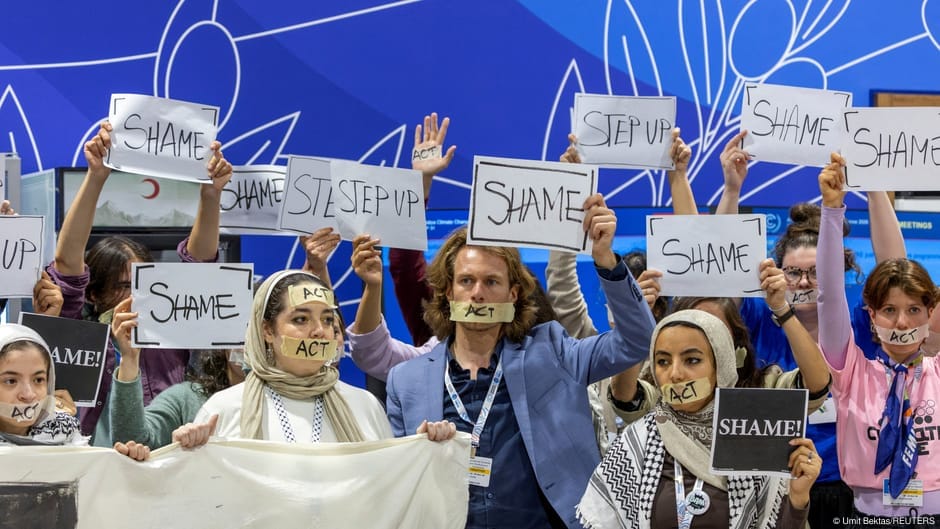
The third draft at the COP31 climate summit in Turkey still makes no mention of fossil fuels. Nations remain divided as the deal pushes for 35% electricity use by 2035. Teresa Anderson said, "This text will help elites to profit while leaving people in the dark," as negotiations continue.
Countries are still deeply divided despite weeks of negotiations. Nations are now mulling over a new draft text that still doesn't mention fossil fuels, the main cause of global warming. DW has more.
The third draft makes no mention of the words "fossil," "oil," "coal," or "phase out."
However, as in the second draft, the latest version retains a goal to boost electricity's share of global energy use to 35% by 2035, as well as efforts to expand the use of "clean energy."
The draft text also does not stipulate that the "35-by-35" electrification target should be met using renewable energy sources.
It also urges countries to "accelerate" carbon capture and storage -- a controversial technology backed by the fossil fuel industry.
Welcome back to our coverage of the UN's COP31 climate summit in Turkey.
The latest, and potentially final, version of the deal still makes no explicit mention of fossil fuels.
It does refer to a 2023 agreement that committed the world to transitioning away from fossil fuels -- but stops short of naming them directly.
The third and presumably final draft text to emerge from negotiations at COP31, which lacks any mention of fossil fuels or how to transition away from them, has been rejected by NGOs.
In a statement, Teresa Anderson, Climate Justice Lead at ActionAid International, said the people who will benefit most from the new "35-by-35" electrification targets and carbon capture "are the fossil fuel, nuclear, data and CCUS (carbon capture, use and storage) industries.
"This text will help elites to profit while leaving people in the dark," Anderson said.
Brandon Wu, AAUSA's Director of Policy and Campaigns, said: "Rich countries came to the COP31 talks with nothing to offer other than red lines.
"They put forward meaningless fossil fuel transition roadmaps that were nothing more than restatements of inadequate existing policy, then hypocritically blamed developing countries for failing to take action on phasing out fossil fuels.
"This is the behaviour of an arrogant bully who cares about nothing but himself and it is no way to have a proper negotiation. COP31 was one of the worst COPs ever, and it's because the EU and other developed countries came with zero spirit of solidarity, cooperation or compromise."
As COP31 extends into a second day of overtime, we are pausing our coverage.
In the early hours of Sunday, COP31 President and Turkish Environment Minister Murat Kurum informed delegates at a plenary that a third and "final" text would be sent to them for review.
He added that negotiators would have until 6:00 am (0400 GMT) "to come to us with agreement on the text" and that a closing plenary would then be convened at 9:00 am local time.
Stay tuned for more news in the coming hours.
The shift to green tech is already in full swing, including electric cars, electric buses, solar panels and heat pumps. But what is so electrifying about the latest wave of electrification?
Harjeet Singh, the global convener of the Fill the Fund campaign and strategic advisor to the Fossil Fuel Treaty Initiative, said that COP31 could be a failure due to a lack of funding.
"COP31 is stuck for one simple reason: money. Europe and other rich countries came to Antalya with empty pockets," he wrote in a statement shared with multiple reporters.
"They've spent two weeks pushing electrification targets and demanding more ambition from developing countries, while refusing to pay for any of it," he added.
Singh accused wealthy countries of blocking a just transition mechanism and of ignoring calls to increase funding for the Adaptation Fund and the Loss and Damage Fund.
"You can't ask developing countries to transform their economies while they're drowning in disasters and debt," he wrote.
The climate activist stressed that the reason this COP failed wasn't a lack of solutions. It was due to "a lack of money and a lack of will from those who caused this crisis," he said.
Leaders from Africa, one of the continents worst hit by climate change, have spent years lobbying for hundreds of billions of dollars to help adapt to the rising impacts of global warming.
The rest of the world relies on African nations for their abundant natural resources, many of them used in clean energy production.
Yet at COP31, wealthy nations have so far failed to commit to the financing needed to help developing nations make a just transition.
Read our report from DW's Kathy Wood.
The head of Peru's delegation at COP31, Andres Martin Garrido Sanchez, warned that the UN climate summit was unlikely to end with a concrete deal on climate financing or cutting fossil fuel use.
Garrido Sanchez lamented that the outcome "would be very limited."
He reiterated how "geopolitical divisions" were stopping any final deal from mentioning reducing reliance on oil, gas and coal.
The Peruvian delegate singled out major oil producers, such as Gulf Arab states and Russia, as showing significant opposition.
He noted that while Latin American neighbor Panama had also signaled objection to including the term fossil fuels in the final text, Peru was "not so radical" and is keen to attract investment to "ensure our energy security" through renewables.
China has backed a plan proposed by COP host Turkey to raise global electricity demand to 35% by 2035 -- up from the current 20%.
In a joint statement with Australia, which is leading negotiations between almost 200 nations at the COP31 summit in Turkey, Beijing said it welcomes "growing international ambition and cooperation ... to increase electricity's share of global final energy consumption to 35 per cent by 2035 on a voluntary basis."
The statement goes on to highlight the benefits the transition can bring for the economy, jobs, energy security, public health and households.
The two partners also "acknowledge the importance of inclusive climate action that ensures no one is left behind," the text continued.
Dozens of countries, including EU states, Japan, South Korea and Canada, have so far signaled support for the voluntary goal, which aims to boost clean energy use.
Yet, environmental groups have warned that the draft text doesn't stipulate the use of solar, wind and other renewable energy sources, which could allow power plants using natural gas and coal to be included.
Good morning, and welcome back to DW's coverage of the UN's COP31 climate summit in Turkey.
Negotiators from nearly 200 countries worked through the night to finalize a deal, after a draft text dropped all mention of fossil fuels -- the leading cause of climate change.
COP31, being held in the Mediterranean city of Antalya, was due to wrap up on Friday, but has run over time amid deep divisions over fossil fuels.
Hopes are fading that negotiators will finalize concrete plans to drastically slash the use of oil, gas and coal and a deeper commitment to renewable energy.
Stay tuned as we bring you the latest from the closing stages of UN climate summit.
The UN climate summit in Antalya, Turkey, has gone into overtime, with countries still divided over key issues, including fossil fuels and climate financing.
The talks were scheduled to end on Friday evening, but negotiators have yet to reach an agreement. Germany and several other countries are pushing for a clear commitment to phase out fossil fuels, while poorer nations are demanding more concrete financial support to cope with climate change.
Negotiations are expected to continue into the weekend. We are pausing our live coverage for now and will bring you further updates as talks progress.
While Turkey hosts COP31 in Antalya, a growing climate threat is unfolding on its Mediterranean beaches. Rising sand temperatures are causing most newly hatched sea turtles to be born female, raising concerns about the long-term survival of local populations.
Conservationists warn that climate change, combined with pollution, coastal development and fishing-related injuries, is putting increasing pressure on the species.
DW correspondent Julia Hahn follows the people working to protect Turkey's iconic loggerhead turtles and shows how the climate crisis is already affecting wildlife far beyond the COP31 conference halls.
The UN climate summit in Antalya is drawing criticism from activists and campaigners who question whether global climate talks can deliver meaningful change while fossil fuel interests remain influential. Turkey and Australia, both under scrutiny for their energy policies, are leading this year's conference.
Activists, including Greta Thunberg, argue COP summits have become increasingly ineffective, while others defend them as a vital space to pressure governments. Climate policy experts say the talks have helped reduce projected warming, but stress that real progress depends on action taken by countries between summits, not just agreements reached at them.
For the Maldives, climate change is already affecting everyday life. Heavy rainfall has forced people from their homes, warmer oceans are damaging coral reefs, and changes in fish stocks are putting pressure on the country's fishing industry. Rising sea levels pose another threat to the low-lying island nation. Meanwhile, global greenhouse gas emissions continue to rise, despite more than three decades of international climate negotiations.
At COP31 in Antalya, Turkey, the Maldives' climate minister Ali Sharif discusses why progress has been so slow, what really happens during climate negotiations, and why moving away from fossil fuels is not as straightforward as it might seem.
For island nations like the Maldives, switching to renewable energy comes with practical and financial challenges. So what would it take to accelerate the transition? And can the UN climate process still deliver meaningful results?