
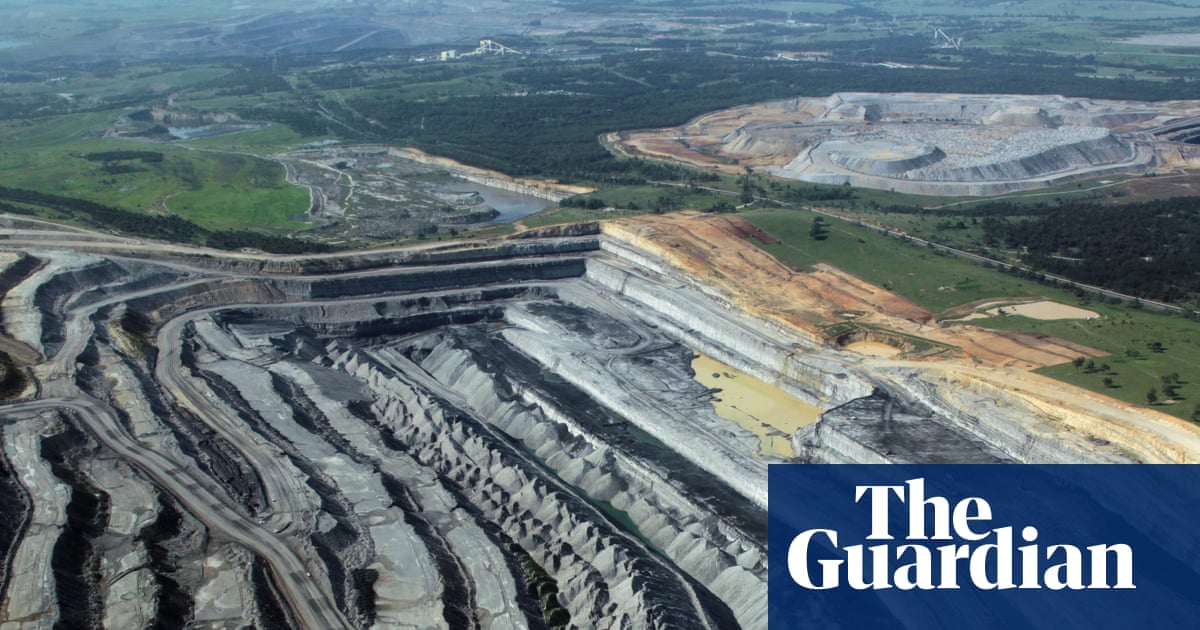
Campaigners are urging the Albanese government to reject the Hunter Valley Operations coalmine expansion in New South Wales. The project would allow 430m tonnes of coal to be extracted. Gavan McFadzean said, "What we export as coal and gas comes back as bushfires, floods, heatwaves and droughts." Minister Watt decides.
Hunter Valley Operations expansion in New South Wales would allow additional 430m tonnes of coal to be extracted and burned
Climate campaigners are urging the Albanese government to heed a "line in the sand" warning on fossil fuels issued by dozens of countries at a UN climate summit and refuse a massive coalmine expansion planned in New South Wales.
A proposed agreement at the Cop31 negotiations in Turkey failed after a list of nations - including European Union members, Panama, the Marshall Islands, Vanuatu, Norway and Belize - said they would not support it unless it included an explicit statement that the world needed to transition away from fossil fuels.
Activists said the government's position on fossil fuels in a changing world would be soon tested when it decided whether to approve the Hunter Valley Operations expansion.
The project that would extend open-cut mining by 19 years at the site to 2045 and allow an additional 430m tonnes of coal to be extracted and burned.
The companies behind the development, Glencore and Yancoal, estimated it could lead to 800m tonnes of greenhouse gas emissions, mostly when the coal is burned overseas.
The Australian Conservation Foundation (ACF) said it would be "reckless" for the federal environment minister, Murray Watt, to approve the proposal.
"Australia is already one of the world's largest exporters of climate-heating fossil fuels. What we export as coal and gas comes back as bushfires, floods, heatwaves and droughts," ACF's head of advocacy, Gavan McFadzean, said.
The expansion was approved by the New South Wales planning commission in September after it heard from workers, unions, climate organisations, scientists and people around the state who had experienced harm as a result of the climate crisis.
The commission ruled that the climate damage caused by the expansion was "outweighed by its benefits to the Hunter region and NSW".
A final decision under federal nature laws now rests with Watt. The national environmental protection agency completed a report making a recommendation about the development earlier this month. It has not been released.
Some longtime observers of UN climate meetings said the results of this year's Cop31 were a sign that countries were prepared to stand up to fossil fuel interests and block a consensus unless it acknowledged action was needed to reduce on coal, oil and gas, the main causes of the climate crisis.
Earlier this year, nearly 60 national governments were represented at a separate conference in Colombia focused on how to reduce reliance on fossil fuels.
Speaking after the Cop31 summit, the climate change minister, Chris Bowen, who led negotiations at the talks, said he "would have been happy with transition away from fossil fuels being in the text, but that was not going to get support". Those opposed to it included Saudi Arabia, Russia and other oil-rich states.
The head of research and investigations at the Lock the Gate Alliance, Georgina Woods, said the outcome of the UN talks was "a global reflection of a dynamic that we will see coming to a head politically here in Australia".
She said the Hunter valley Operations coalmine was "a huge coalmine with enormous global warming consequences, and it should be refused".
"Leaders have preferred to avoid getting stuck into the heart of the issue, that global warming is being driven by the burning of coal, oil, and gas," she said. "There is a use-by date on that tactic and we're living through it.
"As people everywhere suffer mounting impacts from the global warming that is caused by mining and burning coal, oil and gas, they will become less and less willing to accept that those industries should keep on being protected when everyone else is paying the price for their pollution."
Naomi Hodgson, from Rising Tide, a grassroots climate group that holds an annual "people's blockade" at the coal port of Newcastle, said "to make true on nice words about Pacific solidarity and climate action, the Albanese government must immediately reject" the Hunter valley development, which she described as a "climate bomb".
A federal government spokesperson said "the decision-making process is still under way and it would be inappropriate to make further comment".
Hunter Valley Operations declined to comment.