
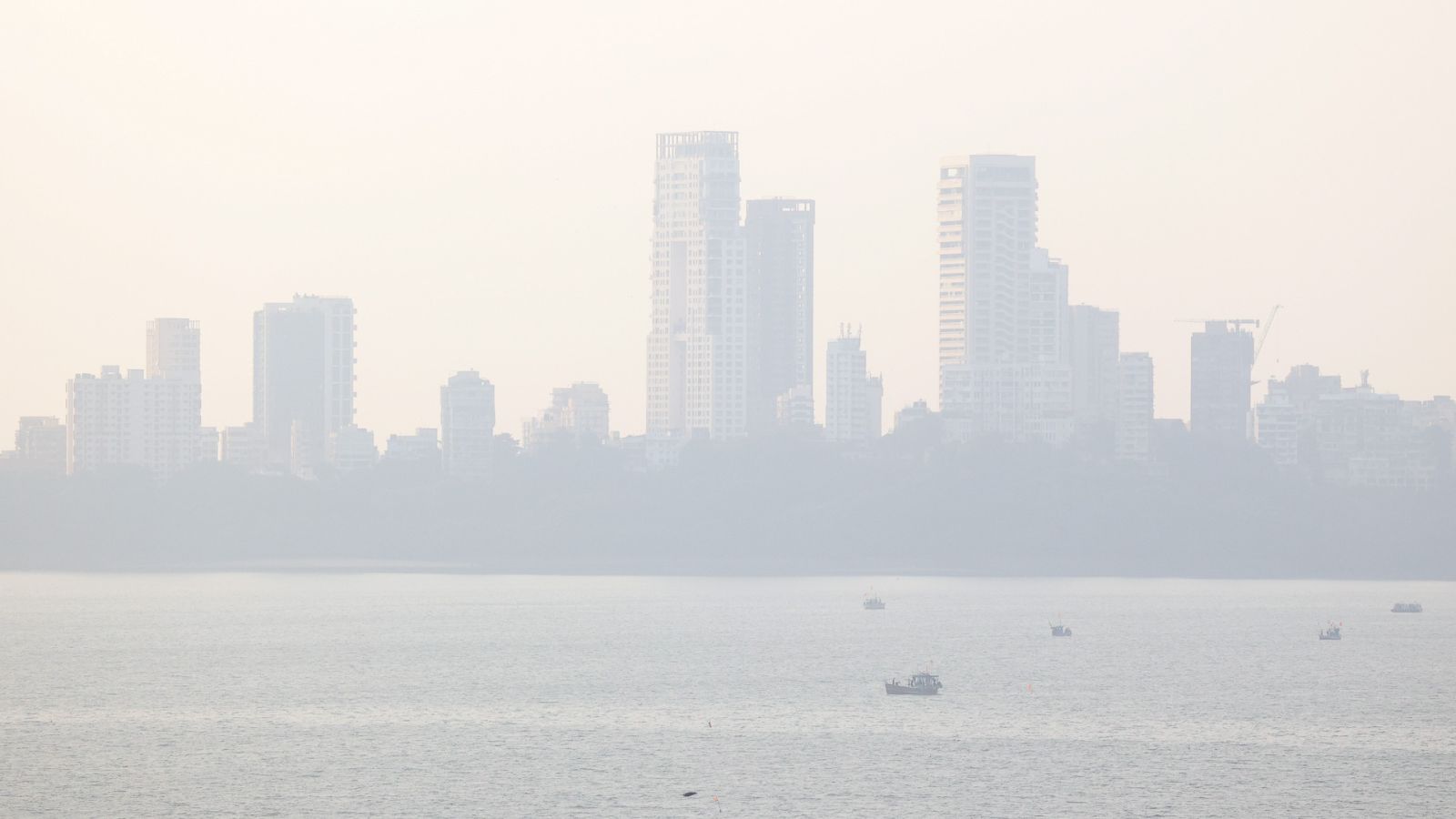
Mumbai jumped from 5th to 3rd place among the most polluted cities in one week. Experts said the ongoing El-Niño pattern slowed wind speeds, trapping pollutants in the lower atmosphere. “This year, Mumbai is experiencing an El-Niño pattern of climate,” said atmospheric scientist Gufran Beig, explaining the rising pollution levels.
Civic officials said that unlike the state and central pollution boards, the sensors used by these private monitoring organisations record real-time AQI numbers by running averages.
“Private monitoring organisations use hourly averages to show more recent changes. A sudden pollution spike may therefore show up sooner on a platform like IQAir,” said additional municipal commissioner Avinash Dhakane, adding that most of them use sensors whose data source is confined within a short span of area only.
However, the monitors used by government bodies such as CPCB record ambient air at a given geographical location.
“Private agencies combine data from government stations and other sources, including low-cost sensors. Their city reading is based on the median of hourly station AQI values; therefore, they reflect a different mix of numbers for Mumbai, which will not be correct to compare,” Dhakane said.
According to experts, rising pollution levels are a direct cause of the ongoing El-Niño — a naturally occurring climate pattern marked by the abnormal warming of surface waters in the central and eastern equatorial Pacific Ocean.
“This year, Mumbai is experiencing an El-Niño pattern of climate, as a result of which the wind speed has slowed down tremendously, while it is hot and humid. This factor is preventing air circulation and, as a result, pollutants are getting settled in the lower atmosphere, leading to a rise in pollution,” Gufran Beig, atmospheric scientist and chair-professor, National Institute of Advanced Studies (NIAS- IISC), told The Indian Express.
Pratip Acharya is a seasoned journalist based in Mumbai reporting for The Indian Express. With a career spanning over a decade, his work demonstrates strong Expertise and Authority in critical urban issues, civic affairs, and electoral politics across Eastern and Western India. Expertise & Authority Current Role: Journalist, The Indian Express (IE), reporting from Mumbai. Core Authority: Pratip's reporting focuses sharply on local democracy and development, specializing in: Urban Governance and Civic Affairs: Providing in-depth analysis of municipal decision-making, city planning, and local infrastructure, essential for informed urban reporting. City Politics and Environment: Covering the political dynamics of Mumbai and surrounding areas, alongside critical environmental challenges impacting the metro region. Electoral Coverage (High-Stakes Experience): He has extensive experience in high-stakes political reporting, having covered major elections, establishing his Trustworthiness in political analysis: National: Lok Sabha elections in 2014 and 2019. State: West Bengal Assembly elections in 2016 and Maharashtra Assembly elections in 2019. Major Assignments (Ground Reporting): Pratip demonstrated commitment during crises by conducting ground reporting throughout the Covid-19 pandemic since its breakout in 2020, offering first-hand accounts and analysis of the public health crisis. Experience Extensive Experience: Starting his career in 2014, Pratip has built his foundation across multiple prominent English dailies: Started at The Times of India in Kolkata (2014). Relocated to Mumbai (2016) and worked with The Free Press Journal and Hindustan Times before joining The Indian Express. Pratip Acharya's diverse experience across major publications, coupled with his specialized focus on the intricate details of urban governance and a track record of covering major electoral and health crises, establishes him as a trusted and authoritative source for news from India's critical metropolitan centres. ... Read More