
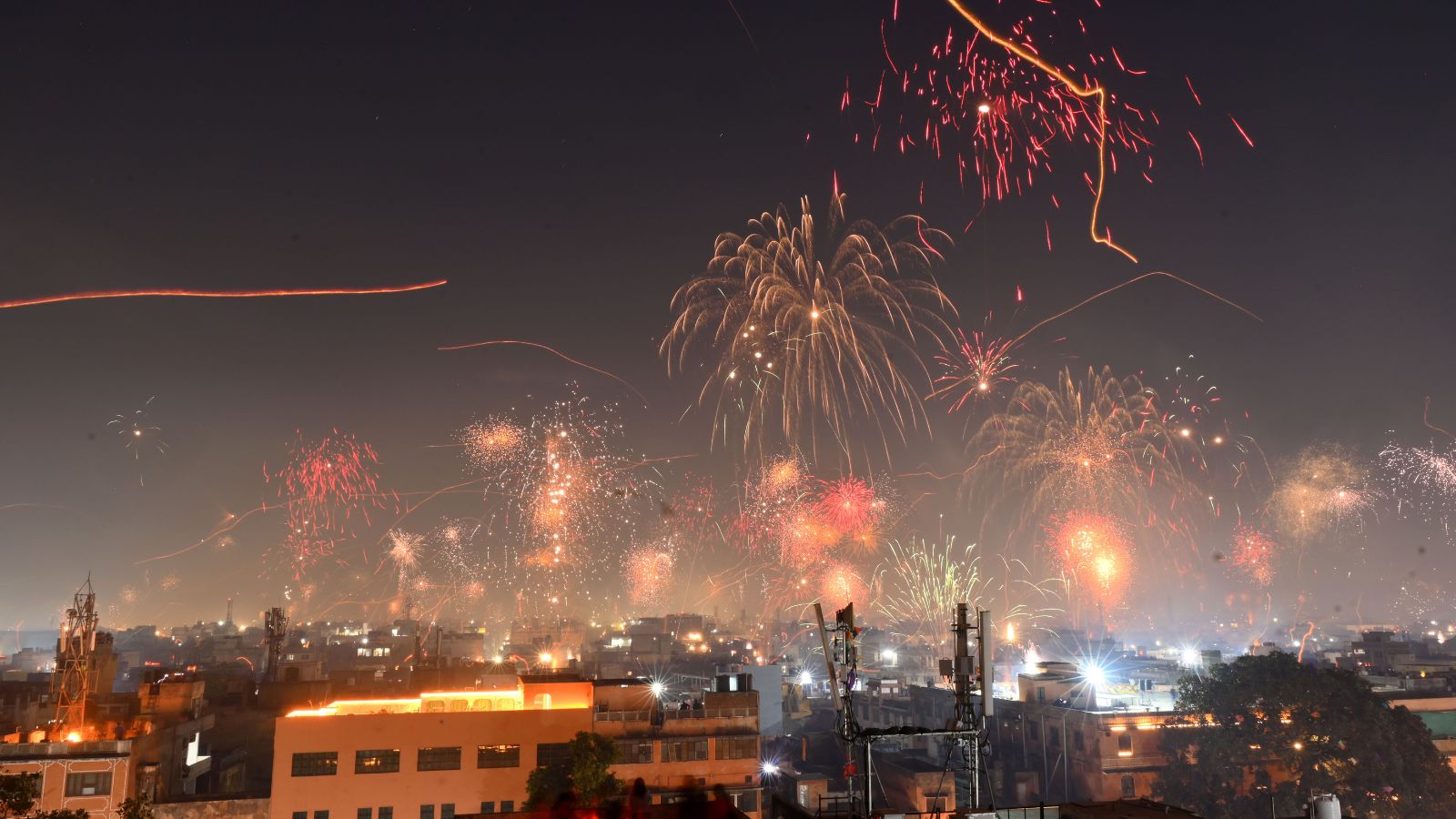
The Bombay HC said on Thursday that the ban on bursting firecrackers on streets applies to all festivals throughout the year. The court noted, “The rights of citizens are paramount.” Authorities must now spread awareness about pollution and ensure that public places remain free from firecracker noise and smoke.
On Thursday, during the hearing, the judges remarked that “toxic pollution” affects senior citizens and children, among others, and becomes “impossible after Diwali,” which needs to change as “times are different.”
“You [state and other authorities] have no control over burning firecrackers. We all are bound by the Constitution, and the rights of citizens are paramount. The problem is the non-following of law,” the judges orally remarked.
The HC noted, “The following order would meet the ends of justice. The order dated September 22, 2026, passed in the present proceeding shall be applicable throughout the year and in respect of all the festivals.”
The bench added that the Brihanmumbai Municipal Corporation (BMC) and the Maharashtra Pollution Control Board (MPCB) shall jointly issue appropriate notices in the news media and on social media platforms stating that the “burning of firecrackers at all public places, namely streets, lanes, and footpaths, shall not be permitted.”
The HC also directed authorities to issue notices to impress upon citizens the “ill-effects of toxicity brought about by burning of firecrackers” and appeal to them to avoid firecrackers that generate noise and air pollution.
The bench ordered the State government, BMC, and MPCB to set up an awareness mechanism within a week, including school-level programmes, public announcements and display boards in trains and buses.
The HC also asked authorities to encourage citizens to use green, low-emission crackers and emphasise a limited time period for bursting firecrackers.
“The whole idea is all of us should contribute. We have neither banned any manufacturing (of firecrackers) nor are we concerned with any sale, and we are not restricting any activity. What we have restricted is what was prevailing for all these times,” the bench orally remarked.