
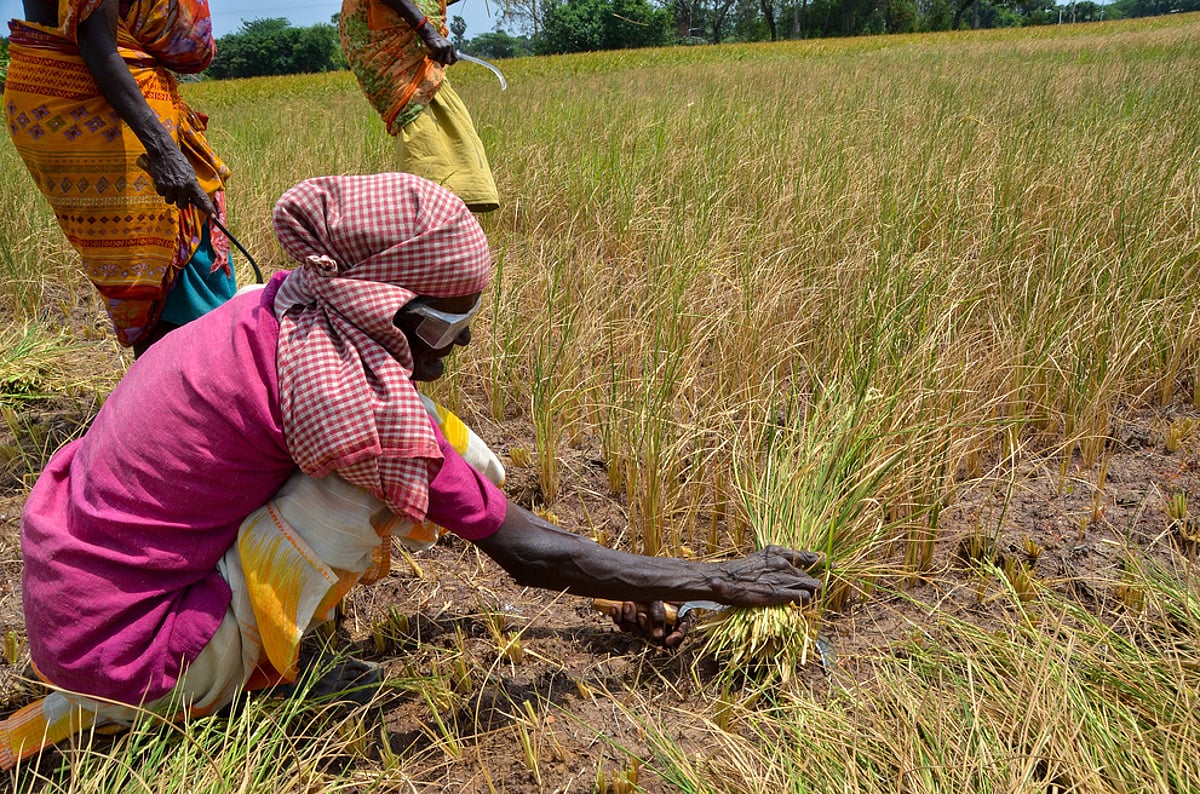
Rama Kundekar, a tenant farmer in Belagavi, faces a financial crisis after drought damaged his paddy crop. He invested heavily in his 1.5 acres but now struggles to pay the Rs 22,500 rent. “This time, I have to be extremely cautious and take every possible measure to minimise losses,” he said.
BELAGAVI: Farming is the only livelihood Rama Kundekar knows. With no agricultural land of his own, the resident of Yellur village in Belagavi taluk was forced to lease 1.5 acres to cultivate paddy. However, the ongoing drought has shattered his hopes, leaving his crop damaged and pushing him into a financial crisis.
Kundekar said he had confidence in his farming skills and invested in seeds, fertilisers and other essential inputs to raise a healthy paddy crop. He arranged the money needed for cultivation, hoping that a good harvest would help him sustain his family. However, the prolonged dry spell and lack of water damaged the crop, which had barely grown, leaving him with mounting losses.
The rent for cultivating kharif and rabi crops amounts to Rs 15,000 per acre. Despite the failure of his kharif crop, Kundekar remains burdened with the obligation to pay rent to the landowner. He said he would have to pay Rs 22,500 for the leased land, irrespective of whether he made a profit or suffered a loss.
“Now that my kharif crop has failed, I have started preparing to cultivate the rabi crop. This time, I have to be extremely cautious and take every possible measure to minimise losses,” Kundekar said, expressing concern over the uncertainty surrounding the next agricultural season.
His plight reflects the difficulties faced by several tenant farmers in Belagavi district, who lease agricultural land to earn their livelihood. These farmers invest their own money and labour in cultivation but often find themselves without financial support when droughts, floods or other natural calamities destroy their crops.
Raju Marve, a senior farmer leader in Belagavi, said many farmers were facing a similar situation. According to him, tenant farmers bear the entire burden of cultivation expenses and crop losses, yet are often unable to claim government compensation because they do not own the land.
He pointed out that landowners remain eligible for compensation, while the actual cultivators, who invest in farming and suffer losses, are left to struggle. In some cases, landowners receive both the compensation and rent payable by tenant farmers, further highlighting the difficulties faced by those cultivating leased land.
With drought conditions threatening their livelihoods, tenant farmers are demanding greater recognition and protection. They need a compensation mechanism that considers the actual cultivator, ensuring that assistance reaches those who invest in crops and bear the financial consequences when nature fails them.