
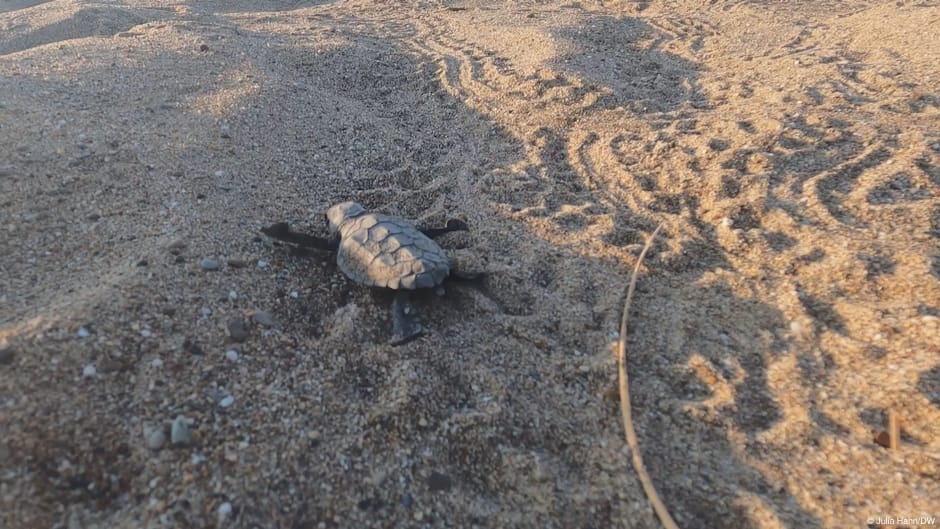
As Turkey hosts COP31 in Antalya, rising sand temperatures on Mediterranean beaches threaten sea turtles. Most hatchlings are now born female, which puts the species at risk. Conservationists said, "climate change, combined with pollution, coastal development and fishing-related injuries, is putting increasing pressure on the species" that need urgent protection.
As COP31 delegates meet in Antalya, sea turtles on Turkey's Mediterranean coast are already feeling the effects of rising temperatures.
As Turkey hosts COP31 in Antalya, a growing climate threat is already unfolding on its Mediterranean beaches. Rising sand temperatures are causing most newly hatched sea turtles to be born female, raising concerns about the long-term survival of local populations.
Conservationists warn that climate change, combined with pollution, coastal development and fishing-related injuries, is putting increasing pressure on the species. Our correspondent Julia Hahn follows the people working to protect Turkey's iconic loggerhead turtles and shows how the climate crisis is already affecting wildlife far beyond the COP31 conference halls.