
Five baby orangutans were found abandoned in an Odisha forest and are now at the Nandankanan Zoo. Officials are working to send them back to Indonesia. This incident highlights how illegal animal smuggling remains a major global problem, as many protected species are trafficked into India despite strict wildlife laws.
Many years ago, I was embraced by a pretty young orangutan called Pinky in Delhi Zoo, while she was being taken for a constitutional by her keeper. She entwined her long arms around my legs and looked up at me and I could feel the steely strength in her arms which ensured I didn't rebuff her. Alas, no girls called Pinky have hugged me since and I have been true to her.
Which brings us to the case of the five baby orangs (three girls and two boys) found abandoned in an Odisha forest recently and are now being taken care of at the Nandankanan Zoo near Bhubaneswar, while ostensibly their paperwork is under way to repatriate them back to their native Indonesia. Questions remain as to how they landed up in the Odisha forest - were they part of the huge numbers of animals smuggled into the country on their way to some clandestine zoo and were they abandoned when the smugglers panicked for some reason?
So far in India, only Mysuru Zoo has two pairs of orangutans, as well as three gentlemen gorillas. Vantara in Gujarat is said to possess an extremely rare tapanuli orangutan, whose immigration status seems extremely dubious considering its rarity. What next? Gorillas in the guestroom?
Worldwide, the smuggling of wildlife is the fourth-largest criminal activity after drugs, firearms and people trafficking, worth more than USD 20 billion annually. The Convention of International Trade in Endangered Species of Wild Fauna and Flora (CITES) to which India is a signatory, decides which animals may be traded across and within nations, and which, those in its 'Appendix A', may not. Unfortunately CITES has been largely ignored as the illegal trade in wild animals flourishes.
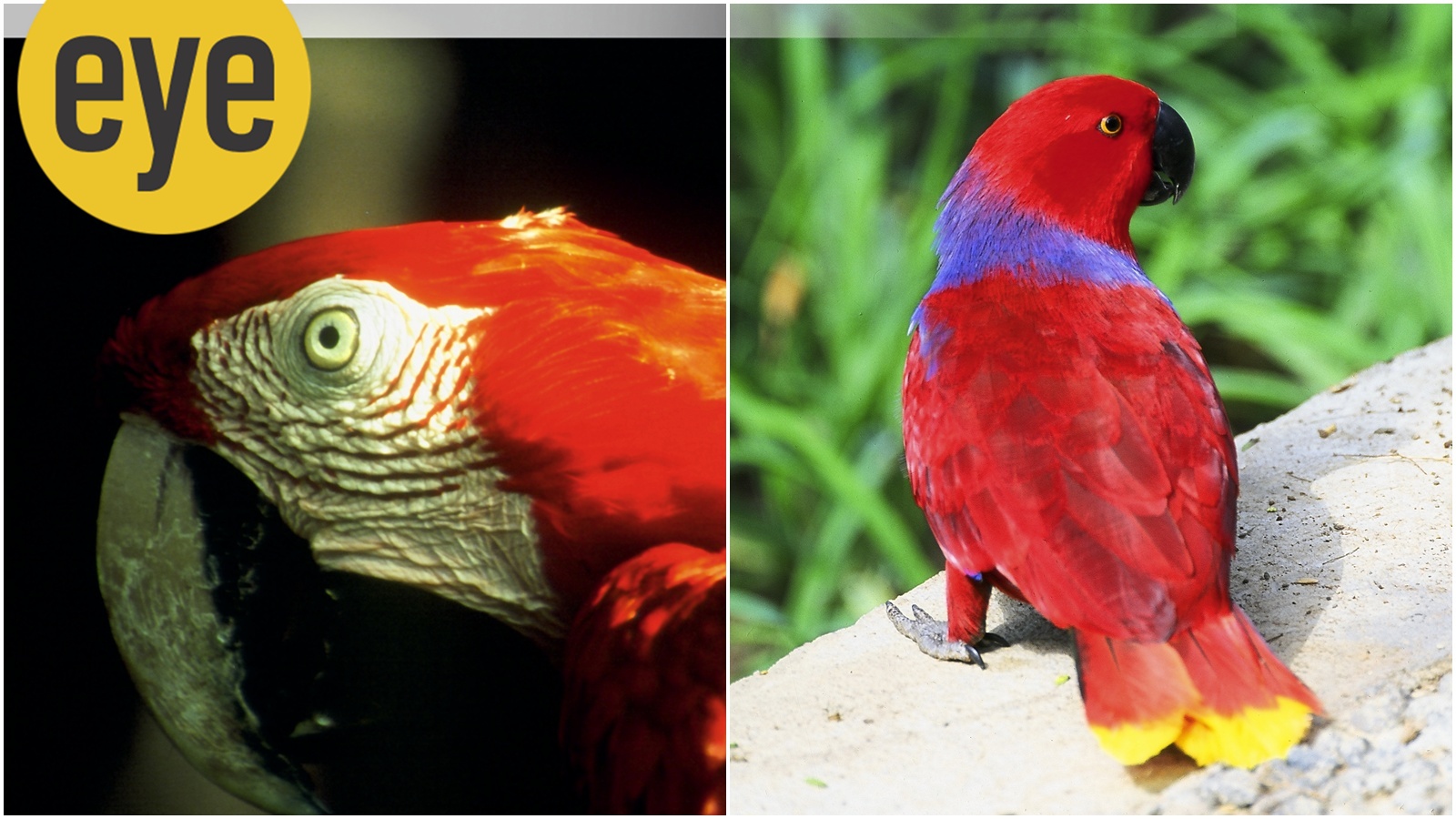
Also different countries have different rules. Some, like the United States, have different rules within the country. Thus you may be allowed to take your pet tiger for a walk in the park in some places but not in others. In India, you may not of course keep, let alone trade in species which come under the Wildlife (Protection) Act 1972, and need special permission to import alien species - say of rare birds like macaws - both conditions which are ignored wholesale. Thousands of birds of as many as 100 species, are crammed into tiny unhygienic containers, where large numbers die, while being trafficked.
The case for reptiles is even worse. According to one study, published in 2021, the UN Red Data Book, an estimated 87 species of exotic reptiles being traded in the country, five are critically endangered and nine each are endangered and vulnerable. As many as 98.6 per cent of the reptiles (the ball python being one favourite) imported between 1976 and 2018 went unreported to the CITES Management Authorities in the country.
Historically, too, the keeping of private zoos has been an ego issue with the rich and infamous. Pablo Escobar, the drug lord, kept lions and tigers to which he fed his victims. There are those who think that private zoos can be good for both animals and ourselves: Animals on the brink of extinction can be safely bred in captivity (not as easy as it may seem) and then be repatriated to their original homes. Some responsible zoos, such as Jersey Zoo, founded by author and naturalist Gerald Durrell have indeed done so with such species as the pygmy hog of Assam. Also, private zoos allow the public to see and interact with rare animals they wouldn't normally do so - though this is true for any zoo keeping rare species. Besides, many private zoos do not allow the access of public, running it like a hush-hush enterprise.
The red-eared slider turtle of American origin is a prime example (it holds the title of the 'world's most invasive species') of this and has now invaded ponds and waterbodies, even here in India.
I was enchanted to see them in an aquarium in Goa, until I learned about their notoriety. The Burmese python, enthusiastically kept as a pet in the US was another favourite, until its appetite grew so large that it caused Junior to disappear before breakfast one morning... They are now being dumped wholesale, into the Everglade swamps where they breed prolifically and wreak havoc with the local wildlife.
Primates, such as chimpanzees, baboons and macaques, have long been pet favourites, and while being sweet and cuddly as babies, grow up into misunderstood monsters - often ripping off the faces and chomping off the fingers of their owners. They are complex, complicated animals, best not
to tangle with. Heroic macho studs, who keep large carnivores as 'pets' and love showing off by roughhousing with them, often end up dead or dreadfully maimed when their big cuddly pussycat suddenly turns on them for no apparent reason.
Even giant gentle elephants can turn on their mahouts, if they feel slighted, or more usually when they come into 'musth'. The keepers of such animals - pet parents they like being called - may love their wards. Whether their wards love them back equally is a moot point: they would I think rather run free and not be the 'Gorilla in your Guestroom'.