
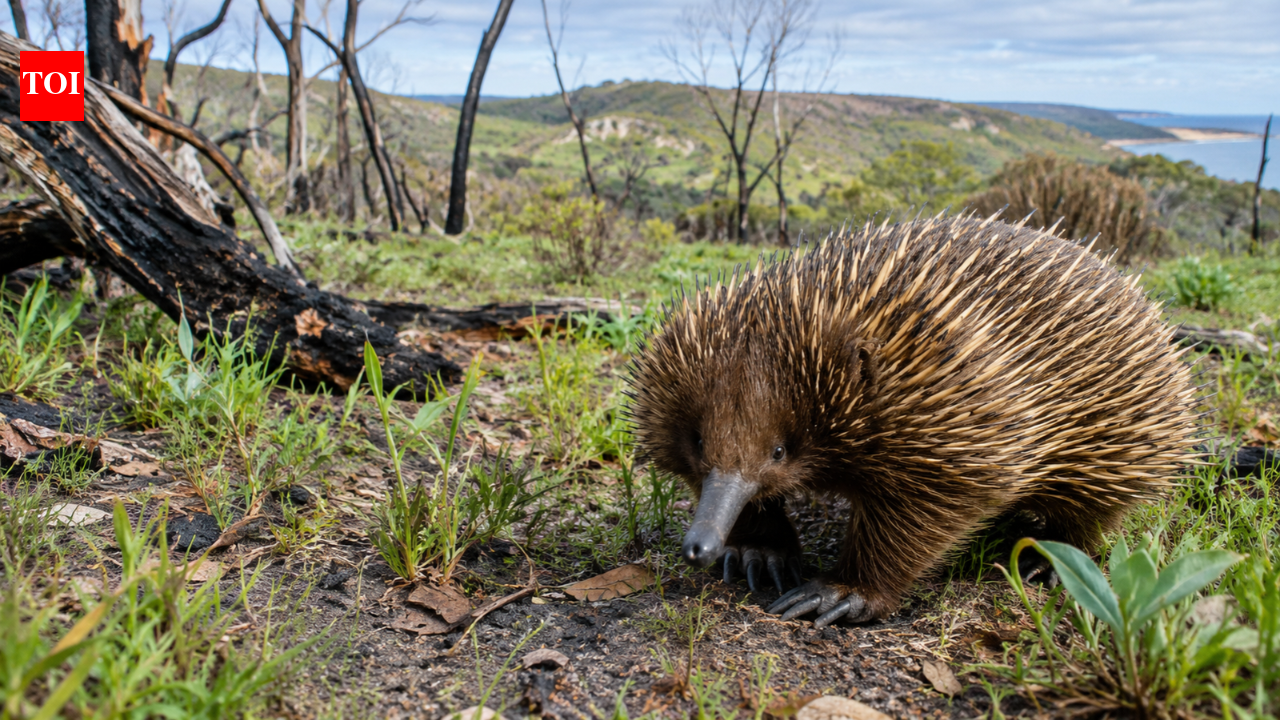
Indigenous rangers found echidnas on Lungtalanana, an Australian island where bushfires destroyed 98% of vegetation in 2014. Ranger Tasha Cooper saw one in September 2026, saying, "I did not know whether to cry or scream." Cameras now show the animals at four locations, giving hope that the species survived there.
An unexpected wildlife discovery has raised hopes for the recovery of an Australian island where conservationists once feared that native animals had disappeared. On Lungtalanana, also known as Clarke Island, off Tasmania's north-east coast, Indigenous rangers have recorded multiple sightings of echidnas, small, spiny mammals that had not been encountered in person on the island for decades. The discovery is particularly significant because a devastating bushfire in 2014 destroyed 98% of the island's vegetation, raising fears that the animals had been wiped out. Now, trail-camera footage from several locations and a ranger's remarkable encounter have offered fresh evidence that the species may have survived in greater numbers than initially believed.
An echidna found inside a cage meant for feral cats
The latest breakthrough came in September 2026, when Pakana ranger Tasha Cooper was learning to trap invasive feral cats on the island. During the operation, she discovered an echidna curled up inside one of the cages intended to capture the predators.The encounter was particularly meaningful because the animal had not been seen in person on Lungtalanana for decades. Cooper immediately contacted her colleagues over the radio to share the discovery.She described the excitement as overwhelming, saying she did not know whether to cry or scream when she saw the animal.
The echidna, known as trimanya in palawa kani, the language of Tasmania's Aboriginal people, had become an unexpected symbol of hope for the island's wildlife restoration efforts.
Trail cameras reveal echidnas at four different locations
The ranger's encounter was not the first indication that echidnas might still be surviving on the island. In 2023, a wildlife monitoring camera captured two images of an echidna, taken months apart. However, the photographs were not discovered until 2024 because of the large volume of footage that needed to be reviewed.The discovery attracted attention after WWF Australia described the animal as "Australia's loneliest echidna", raising concerns that it could be the only surviving member of its species on the island.Rangers subsequently increased camera surveillance. Further images were recorded in 2025, followed by three more in 2026. The latest monitoring has now documented echidnas at four separate locations across Lungtalanana, suggesting that the animal may be more widely distributed than initially thought.
Scientists believe more echidnas could be hiding on the island
The repeated sightings prompted rangers to consult Stewart Nicol, an echidna expert at the University of Tasmania, to determine whether the photographs represented one animal moving between locations or several different individuals.Nicol explained that echidnas are difficult to count because of their elusive behaviour. Without tracking individual animals, it is challenging to establish an accurate population estimate.However, he suggested that the island could be home to considerably more echidnas than conservationists initially expected. Based on the island's size and the four or five recorded encounters, he said he would be surprised if there were fewer than a dozen. He also suggested the population could exceed 20 or 30 animals.The estimate has strengthened hopes that the echidnas were not simply represented by one isolated survivor but could be part of a previously undetected population.
How a devastating bushfire threatened the island's wildlife
Lungtalanana, an island covering approximately 8,230 hectares in Tasmania's Furneaux group, has experienced extensive environmental damage over several decades.Agricultural activities, including sheep and cattle grazing, led to large-scale vegetation loss, while introduced animals such as feral cats and rabbits placed additional pressure on native wildlife. The disruption of traditional cultural burning practices also changed the island's vegetation and contributed to the severity of wildfires.In 2014, a particularly destructive bushfire swept across the island, destroying approximately 98% of its vegetation. The damage intensified concerns about the survival of native species, many of which had already disappeared because of habitat destruction and introduced predators.A wildlife survey conducted by rangers the following year found very few native animals, adding to concerns about the island's ecological condition. The subsequent discovery of echidnas therefore represents an important development in understanding which species managed to survive.
Indigenous rangers launch an ambitious island restoration project
The echidna sightings come as the Tasmanian Aboriginal Centre leads a major effort to restore Lungtalanana and bring back wildlife that once inhabited the island.The Lungtalanana Restoration Project, launched in October 2026, aims to repair damaged habitats, remove invasive species and restore the island's ecological balance. The initiative also seeks to reintroduce locally extinct native animals, including Bass Strait wombats, Bennett's wallabies and long-nosed potoroos.Pakana rangers are using a combination of traditional land-management practices and modern conservation techniques. Their work includes cultural burning, weed removal, wildlife monitoring and efforts to control feral cat populations.
Removing invasive predators is a major priority before large-scale habitat rehabilitation and wildlife reintroductions can begin. The project also aims to create employment and training opportunities for Palawa people while strengthening their connection with ancestral land.
Why the echidna discovery matters for the island's future
For conservationists, the repeated sightings offer more than an encouraging wildlife update. They provide evidence that some native animals may have persisted despite decades of environmental pressure, habitat destruction and invasive predators.The findings could also help rangers understand how surviving wildlife uses the island's remaining habitats and where restoration efforts should be concentrated.The larger ambition is to transform Lungtalanana into a healthier ecosystem where native species can survive without the constant threat posed by invasive animals and degraded habitats.