
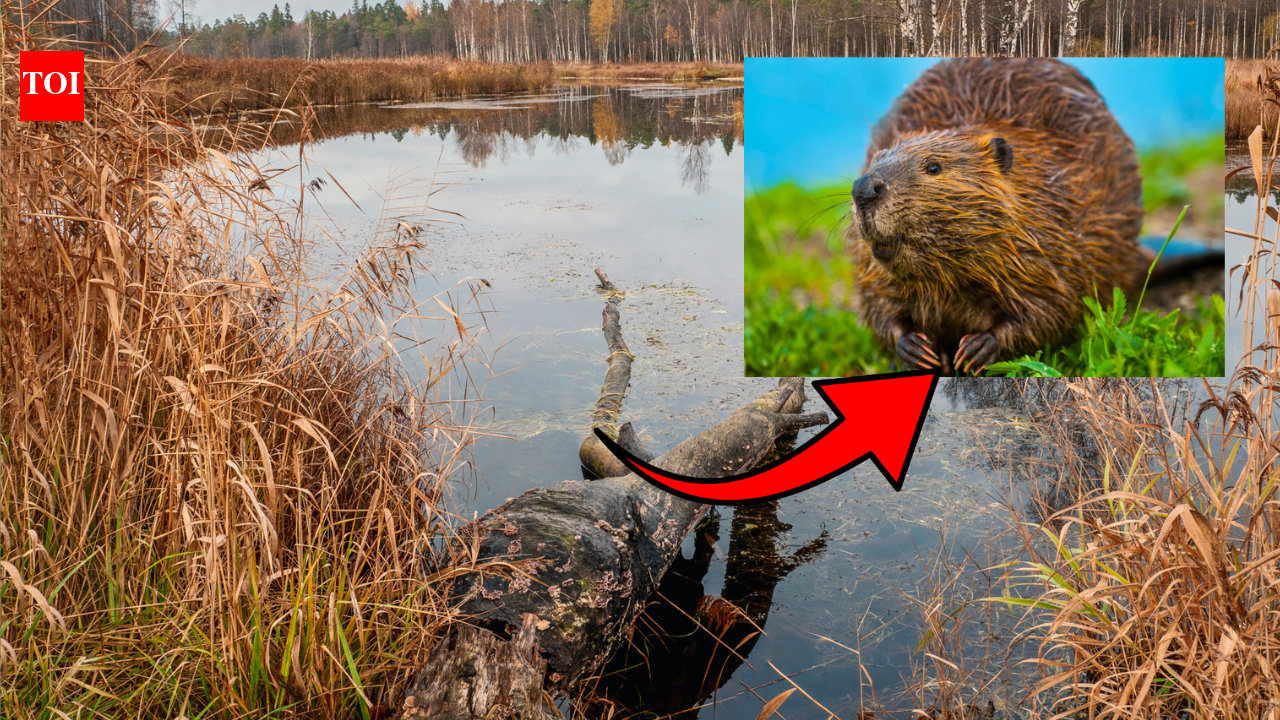
NatureScot announced on October 30 that conservation groups got a licence to release up to 15 beaver families into the River Ness catchment. These animals were last recorded around Loch Ness in about 1527. This three-year project aims to restore the ecological balance by bringing back the native species.
Every coin has two sides. While human civilisation continues to move forward at a breathtaking pace, driven by trade, industry and technological advancements, somebody else often has to pay the price for it. The natural world has been one of the biggest victims of this progress, with several species being pushed to the brink of extinction. Beavers were among them. Once native to Scotland, these industrious mammals were hunted extensively for their fur, meat and castoreum, a secretion that was highly valued in the perfume trade. Centuries of exploitation eventually wiped them out from the Scottish landscape. Now, nearly 500 years later, they are preparing to make a comeback around Loch Ness.
On October 30, 2026, NatureScot, Scotland's nature conservation agency, announced that a licence had been granted to two conservation organisations, Trees for Life and Beaver Trust, to bring beavers back to the River Ness catchment. Under the three-year project, the organisations will be allowed to relocate and release up to 15 beaver families from other parts of Scotland, where they are currently facing conflicts with human activities.
The initiative aims to establish a healthy, self-sustaining beaver population in the region while restoring the ecological balance of its rivers and wetlands.
Why did beavers disappear from Scotland?
Beavers were once a familiar part of Scotland's natural landscape, with their beautiful fur and distinctive appearance, but the very things that made these creatures special also made them victims of human greed. Beavers were once hunted extensively for their thick, waterproof fur, which was highly sought after in Europe. Their pelts were used to make felt hats, which became quite fashionable and turned beaver hunting into a profitable trade. But fur was not the only reason these animals were hunted. Their meat was also consumed, while castoreum, a secretion produced by their scent glands, was valued for its use in perfumes and traditional medicines.Over time, the growing demand for these products took a heavy toll on their population. Their activities also brought them into conflict with humans, as the dams they built could flood agricultural land and interfere with farming. As hunting continued and their natural habitats changed, beaver populations gradually declined until they eventually disappeared from Scotland.Hector Boece, in his History and Chronicles of Scotland, translated by John Bellenden, mentioned beavers as one of the most proficient among the wildlife found in the region around 1526-27. Nearly five centuries later, their presence is once again being planned for the very landscape they once called home.
Scotland plans the return of beavers after 500 years
As NatureScot announced its three-year conservation plan for the reintroduction of beavers to areas where they once thrived, it granted a licence to two conservation organisations, Trees for Life and Beaver Trust. Under the three-year project, the organisations will be allowed to release up to 15 beaver families in the region. The animals will be relocated from other parts of Scotland, particularly areas where their activities have created conflicts with agricultural land.
The initiative, known as the Ness Beaver Project, aims to re-establish a healthy, self-sustaining population of beavers in the region. Before being released, the animals will undergo health checks to ensure they are suitable for relocation. The first releases could begin as early as November 2026, marking an important step in Scotland's efforts to restore its native wildlife.Interestingly, this is not Scotland's first attempt to bring back the species. Beavers were officially reintroduced to the country in 2009 through the Scottish Beaver Trial in Knapdale, Argyll. Their return to the River Ness catchment would extend their presence into another part of their former natural range.
How will beavers help restore the ecosystem?
Beavers are often described as ecosystem engineers, and for good reason. Unlike many other animals, they have the ability to reshape the landscapes around them through their natural activities. By building dams using branches, logs and mud, they slow down the movement of water and create ponds and wetlands. These newly formed habitats provide shelter and breeding grounds for several other species, including fish, amphibians, insects and birds.
Their wetlands can also help retain water during dry periods, reduce the impact of flooding by slowing water flows and improve water quality by trapping sediments.
Their activities can therefore benefit much more than just their own population. By changing the way water moves through a landscape, beavers help create diverse habitats and support a wider range of wildlife. However, their dams can also create challenges for nearby agricultural land and infrastructure, which makes careful conservation and management important.For Scotland, their planned return to the River Ness catchment is about more than bringing back a species that disappeared centuries ago. It is also an opportunity to restore natural habitats and allow an ecosystem to function with the help of one of its former inhabitants. Nearly 500 years after their disappearance, beavers are preparing to reclaim a place in Scotland's landscape, reminding us that conservation is not simply about protecting what remains, but also about bringing back what we have lost.