
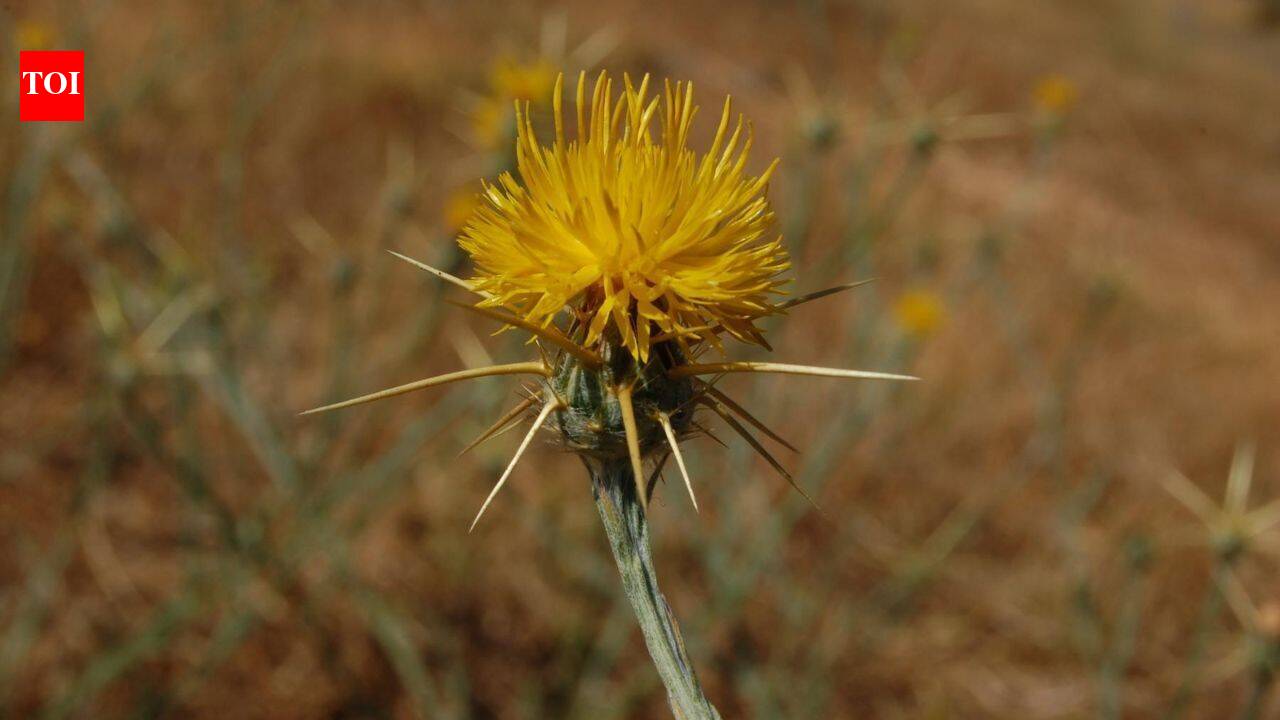
Yellow starthistle arrived in California after 1849 through contaminated alfalfa seed from Chile. This invasive weed now affects more than 15 million acres across the state. It grows deep roots to survive, making it hard to control. Many farmers and land managers struggle as the plant spreads into open areas.
Yellow starthistle, a plant originally native to Eurasia, has become one of California's most widespread invasive weeds since arriving in the state in the mid-19th century. It is believed to have entered North America after 1849 through contaminated alfalfa seed grown in Chile. Over the following decades, the plant spread across grasslands, roadsides, pastures and other open areas. According to the University of California Agriculture and Natural Resources, yellow starthistle now affects more than 15 million acres in California, creating challenges for land managers, farmers and efforts to protect native ecosystems.
How did yellow starthistle spread across California
Yellow starthistle, scientifically known as Centaurea solstitialis, belongs to the sunflower family and is native to Eurasia. Its introduction into California is generally traced to the period after 1849, when contaminated alfalfa seed from Chile is believed to have carried it into the state. The plant subsequently established itself in agricultural areas before spreading into surrounding landscapes.The University of California explains that the weed expanded in several waves. Its spread accelerated between the 1920s and 1940s, followed by another period of expansion from the 1960s onwards.
The weed became established along river levees, alfalfa fields and nearby roadsides during the early 20th century. From these locations, it moved into other open environments, including rangelands, grasslands, orchards and vineyards.According to the California Invasive Plant Council, yellow starthistle had spread across more than one million acres in California by 1958. Its distribution subsequently increased substantially, with historical assessments recording its presence in 56 of the state's 58 counties.
What makes the weed difficult to control
Yellow starthistle is a winter annual, meaning it generally grows during the cooler, wetter months before flowering and producing seeds as conditions become warmer. The US Forest Service explains that its seeds can germinate from autumn through spring in California, depending largely on rainfall.The plant grows a long taproot, so it can tap into moisture deeper in the soil. This allows it to keep growing when shallow-rooted plants start to run out of water. It can grow from approximately 6 inches to 5 feet tall, developing branching stems and yellow flowers surrounded by sharp spines.Its reproductive capacity also contributes to its persistence. The University of California reports that a square yard of yellow starthistle can produce as many as 30,000 seeds. The seeds can remain viable in the soil for three years or longer, allowing new plants to emerge even after an infestation has been reduced.The weed spreads through natural processes and human activity. Although most seeds fall close to the parent plant, contaminated hay, uncertified seed, agricultural machinery and road maintenance equipment can transport them to new locations. Road construction and other activities that disturb the soil can create favourable conditions for its establishment.
The weed poses a threat to native plants and wildlife
Yellow starthistle can form dense stands that leave little room for other plants. Its ability to use water from deeper soil layers can reduce the moisture available to neighbouring vegetation, affecting the growth of native grasses and other species.The California Invasive Plant Council identifies changes to soil moisture, the displacement of native plants and reductions in wildlife habitat and forage among the weed's ecological impacts. Dense infestations can also fragment habitats, making it more difficult to maintain the diversity of plants and animals found in affected areas.Its sharp flower-head spines create another problem for grazing animals. Livestock and wildlife may avoid heavily infested areas because the mature plants are difficult to eat safely. The weed can therefore reduce the availability of usable forage even where vegetation appears abundant.Horses face a more serious danger. Yellow starthistle is poisonous to horses and can cause a neurological condition known as chewing disease.The plant does not tolerate shade well, making open grasslands and disturbed areas particularly suitable for its growth. Once established, however, it can spread beyond roadsides and other disturbed locations into neighbouring plant communities.
Long-term management requires several methods
Controlling yellow starthistle usually requires sustained action rather than a single treatment. Complete control typically takes 3 to 5 years, although the results depend on the size of the infestation, the timing of treatment and the methods used.The University of California identifies several approaches, including hand-pulling, hoeing, burning and the use of suitable herbicides. Encouraging desirable plants to grow can also help them compete with the weed for available space and resources.Timing is everything because the plant produces a lot of seeds. Removing plants before they set seed can reduce the amount entering the soil and limit future growth. But seeds already planted may still sprout in future seasons, so you need to keep an eye on it over time.Researchers have also investigated biological control, which uses natural enemies to help suppress invasive plants. UC Weed Science described the release of a new biological control agent as part of efforts to combat yellow starthistle.