
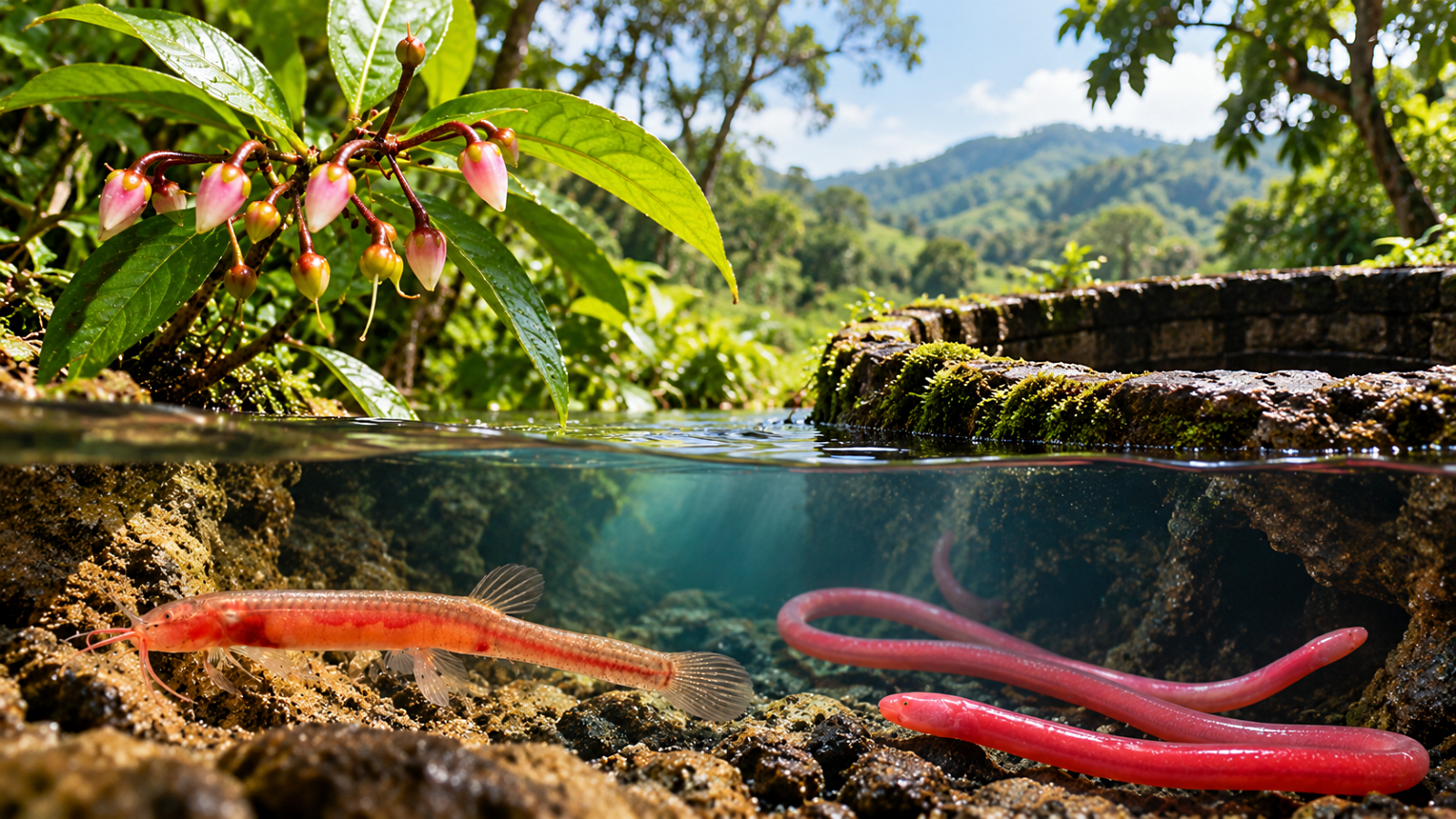
Scientists rediscovered a shrub last recorded in 1821 and found two new fish species in Assam wells. The shrub, Ardisia colorata, reappeared after 204 years. Meanwhile, researchers identified Gitchak nakana and Rakthamichthys anchi in Goalpara. These findings show how much we still have to learn about our local natural habitats.
A shrub last recorded in 1821 has been rediscovered in Assam, alongside two fish species new to science found in wells in Goalpara.
You might not think twice about a plant growing in a forest or a creature spotted while cleaning a well. But in Assam, both have led to some interesting discoveries. Scientists have rediscovered a shrub first recorded in 1821 and identified two fish species previously unknown to science, offering a fresh glimpse into the state's lesser-known biodiversity.
Assam Chief Minister Himanta Biswa Sarma shared the findings on X, highlighting the importance of protecting natural habitats and preserving lesser-known species.
A shrub rediscovered after 204 years
The shrub, Ardisia colorata, was first described in 1821 but had not been recorded again for 204 years, according to the chief minister's post.
Its rediscovery highlights how much we still have to learn about the plant life around us. Even a species documented centuries ago can remain unrecorded for generations before researchers encounter it again.
Two fish species found in wells
The discoveries also include two fish species, Gitchak nakana and Rakthamichthys anchi, found in wells in Goalpara. Both live in underground groundwater environments, which are less explored than rivers, lakes and other surface-water habitats.
One of the fish is particularly unusual. Gitchak nakana is a tiny, blind loach measuring around two centimetres. Its body is transparent, giving it a reddish appearance because its blood and internal organs are visible through its skin.
The second species, Rakthamichthys anchi, is a slender, eel-like fish belonging to the swamp eel family.
Their discovery also has an interesting backstory. Researcher Wimarithy K. Marak first collected a specimen of Gitchak nakana in 2021 after encountering an unusual creature in a well and sharing its photograph with her supervisor. Another specimen, later identified as Rakthamichthys anchi, was collected in 2024 after a relative encountered it while cleaning a well.
Why these discoveries matter
Underground water systems remain less explored than many surface-water habitats, making discoveries like these valuable for understanding how fish survive in such environments.
They also highlight the need to protect these habitats from pollution and changes in land use. Wells and forests may seem familiar, but they can hold species that scientists have yet to fully document.
Assam's latest discoveries remind us that biodiversity is not limited to the animals and plants we see every day. Sometimes, even a tiny fish found while cleaning a well can reveal something new about the natural world.
Explore more captivating stories about pets and animals here, and make us your daily stop for the latest from the animal kingdom.