
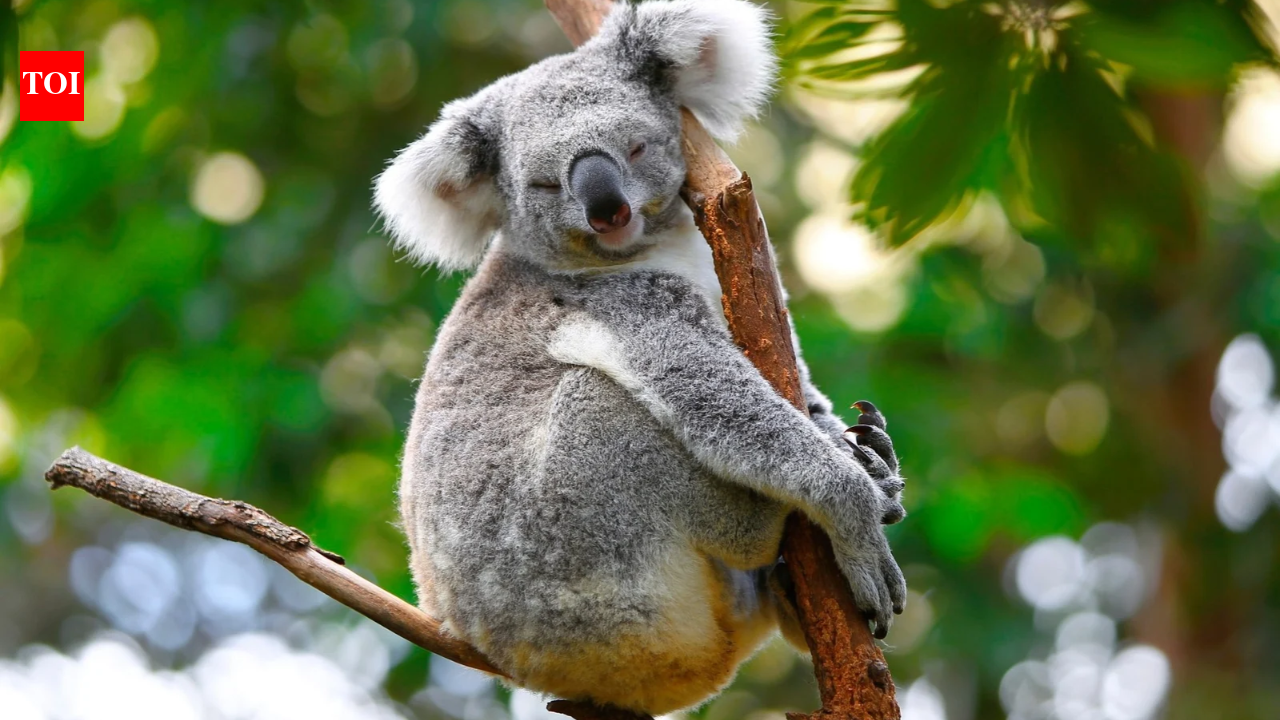
Scientists gave a wild koala named Bamse a new biodegradable vaccine implant in Queensland on 19 May 2026. This device delivers a second dose without needing a second capture. Dr Michael Pyne said she was a great candidate as a young female koala, and the team hopes to see her have her first joey.
Australian scientists have developed a biodegradable implant that delivers the second of two vaccine doses to wild koalas, so that both can be given in one capture. The first wild koala to receive it, an 18-month-old female named Bamse, was captured in Burleigh and treated at Currumbin Wildlife Hospital on 19 May 2026. The chlamydia vaccine project is led by Queensland University of Technology and Currumbin Wildlife Hospital. It is the only koala chlamydia vaccine to use two doses. World Wide Fund for Nature Australia is backing the research, with funding support from furniture brand Koala.
How Bamse was sedated, vaccinated, given an implant and returned to the bushland on the same day
According to the World Wide Fund for Nature Australia, Senior Veterinarian Dr Michael Pyne, assisted by Dr Freya Russell of Queensland University of Technology, sedated Bamse, injected her with the first vaccine dose and inserted the implant. Her name is Norwegian for teddy bear. Currumbin Wildlife Sanctuary's koala ecology team returned her to her bushland home on the same day.The implant was designed to break down after 30 days to deliver the second dose. Bamse was fitted with a tracking collar and was to be monitored for at least six months to assess how well the implant works. Pyne said she was a great candidate as a young female koala, and that the team hopes to see her have her first joey.
How early results look and why researchers trusted the implant after testing it in captive koalas
By the time of the announcement in July, five wild koalas from Burleigh had received the implant. Bamse and another koala were recaptured for their one-month check-up, and both were chlamydia free.The implant had already proved effective in captive koalas, which gave the researchers the confidence to launch the wild trial, in the hope that it would be equally successful. The trial is described as a major milestone for the project.
Over 500 vaccinated koalas and an Elanora population that went from heavy infection to a baby boom
More than 500 koalas have been vaccinated at Currumbin Wildlife Hospital and the Moggill Koala Rehabilitation Centre, including more than 30 young koalas from Elanora on the Gold Coast. The vaccinations stabilised that population and sparked a baby boom.In 2020, more than 70 per cent of Elanora koalas presenting to Currumbin Wildlife Hospital were infected with chlamydia. Chlamydia admissions from that general area have since fallen by 75 per cent, and 41 joeys and 13 grand-joeys have been born in what was previously one of Queensland's most diseased populations.
Why a biodegradable implant instead of a second capture makes mass vaccination more practical
Success with the Elanora population came through a two-step process, koalas were captured for an initial vaccine and recaptured four weeks later for a booster shot. The implant removes the need to recapture them because it delivers the second dose itself. The process is much less stressful for the animals, requires fewer staff and resources, and makes large-scale vaccination of wild koalas far more practical.Pyne said the team has worked with chlamydia vaccines in koalas for more than five years, and called the implant a massive breakthrough that turns a two-injection vaccine into one injection and an implant, all applied in a single examination.
Independent report prepared for the Queensland Government backs the vaccine and urges wider rollout
The report, by Dr Lyndal Hulse of The University of Queensland, involved taking swabs from more than 1100 male and female koalas at wildlife hospitals in South East Queensland. It found that the vaccine produced substantial reductions in chlamydial disease and deaths among vaccinated wild koalas, and that vaccination is operationally feasible at scale. Hulse said the lower burden of infection and disease at the population level shows the two-shot vaccine is working.She recommended prioritising Somerset-South Burnett, Redland City, Logan City, Western South East Queensland and Moreton Bay because of their high disease burden. Logan City was the worst affected, with 58 per cent of koalas infected with the eye form of chlamydia and 56 per cent with the urogenital form. Infection levels were much lower on the Gold Coast and in Brisbane, which have benefited from vaccination. The study, titled "Maximising effective deployment of the koala Chlamydia vaccine in South East Queensland", was funded through the Queensland Government.Pyne said it is critical to roll the vaccine out en masse to at-risk populations, citing the devastation caused by chlamydial disease in South East Queensland and New South Wales. Tanya Pritchard, Senior Manager of Koala Recovery at World Wide Fund for Nature Australia, said that protecting and restoring habitat at scale is a problem if sick koalas move into those areas, so chlamydia and habitat must both be tackled.Scientists see wider uses for the implant in animal health as chlamydia strains in koalas changeRussell said the implant could be adapted to a wide range of animal vaccines and medicines that usually require several doses, opening possibilities beyond koalas. She said discussions are under way with wildlife and livestock research groups, and that many farmers have told researchers the technology would be life-changing by reducing the effort needed to vaccinate cattle.
Pyne added that the team wants to improve the vaccine further.
Hulse said the vaccine will need monitoring over time. Just as the flu vaccine changes every year because flu strains change, the genotypes of Chlamydia pecorum, the most common chlamydia strain among koalas, are changing, and researchers must check that the vaccine keeps working.