
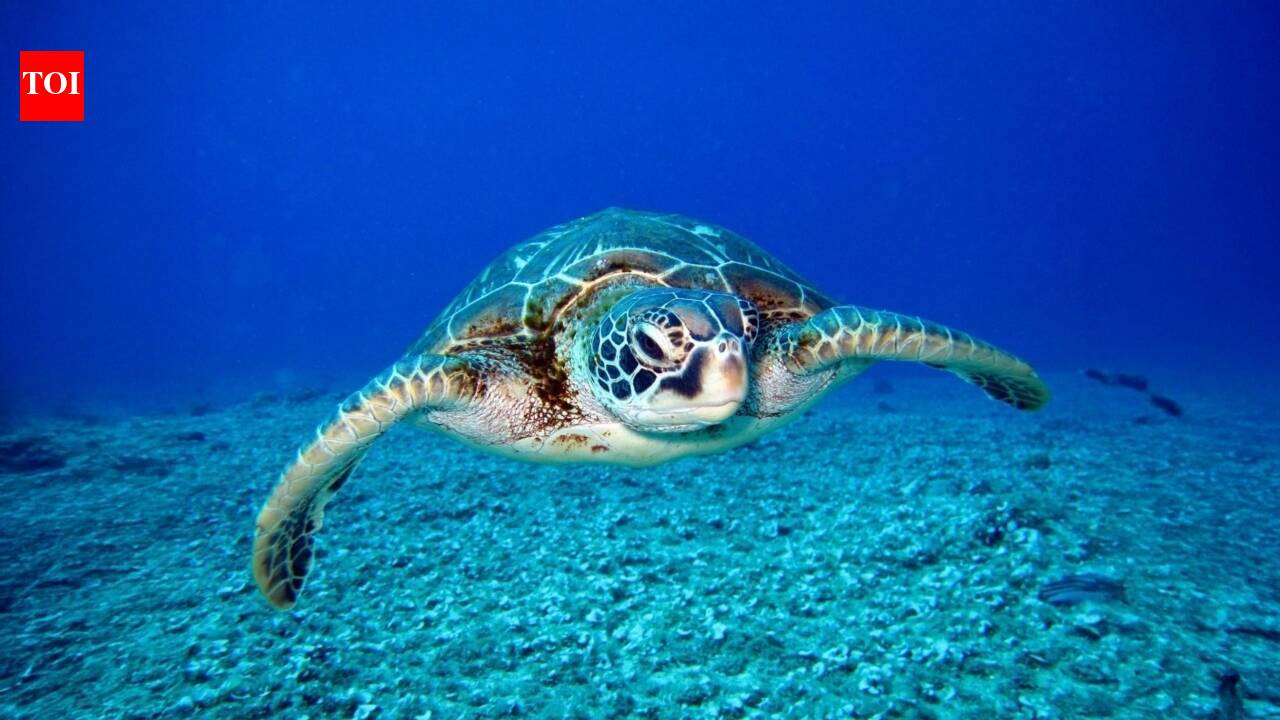
Green sea turtles moved from 'Endangered' to 'Least Concern' in the IUCN 2025 update. This shift follows decades of hard work across 80+ countries to stop poaching and protect nesting beaches. Since the 1970s, populations grew by 28%. The United Nations Convention on Migratory Species called it a major conservation achievement.
Imagine reading news updates about a species, spending decades battling poaching, fishing nets, plastic pollution, and disappearing nesting beaches, and finally, one fine day, you wake up with yet another update about them -- but this time, a hopeful one!
If ever there was a reason to celebrate in the world of wildlife protection, this is it: green sea turtles, once teetering on the edge of extinction, have made it off the International Union for Conservation of Nature's (IUCN) 'Endangered' list and now sit comfortably in the 'Least Concern' category. That shift isn't just a line on a global Red List; it's proof that committed, patient conservation efforts actually work.
What happened?
According to the Oceanic Society, the recovery is particularly visible in Malaysia's Turtle Islands. Back in the 1970s, nesting green turtles were a rare sight, but now, there are over 20,000 nests a year. This turnaround comes from decades of relentless work: protected beaches, bans on eating turtle meat and eggs, and constant vigilance against poachers. Local communities, conservationists, and even businesses have chipped in. It's not a perfect situation, as poaching, fishing nets, pollution, and climate change still threaten turtles worldwide, but it's a win worth pausing to appreciate.
Today, the green turtle's recovery is therefore both a heartening environmental success story and a reminder of how much work remains to protect the oceans.
Why are green turtles off the 'Endangered' list?
Green sea turtles (Chelonia mydas) have struggled for generations.
When hunting, egg collection, destructive fishing, and habitat loss whittled their numbers away, IUCN declared them Endangered in 1982. Fast forward to December 2024: the global population has rebounded enough for IUCN to reclassify them to Least Concern in its 2025 update. This isn't just a paperwork change; it's the first time a marine turtle species has moved out of a threatened category.
And the numbers tell the story more clearly. Since the 1970s, green turtle populations are up by around 28%. This boost comes from efforts across 80+ countries: beach protection, safer hatcheries for eggs, tougher laws, cleaner oceans, and international partnerships. The United Nations Convention on Migratory Species even called it "a major conservation achievement." Turtles don't pay attention to borders, but luckily, the people protecting them do.
Malaysia's Turtle Islands: A model for success
In Malaysia's eastern state of Sabah, the Turtle Islands Park has become a global conservation beacon. Since receiving protected status in 1977 (and banning turtle meat and eggs in 1997), nesting has exploded, which is three times the activity seen in the 1970s. The local community plays a huge part, with workers patrolling beaches and relocating eggs to safe hatcheries.
On Omadal Island, a women's cooperative started protecting eggs in 2012, using money from handicrafts and catering to fund conservation. Their work means more eggs survive, more hatchlings make it, and the community benefits too. Over at Mataking Island, a resort got involved, and egg numbers skyrocketed from just 600 in 2006 to around 36,000 now. The lesson is simple: when locals, businesses, researchers, and government join forces, conservation is not just possible; it's powerful.
Why do green sea turtles matter?
Green turtles aren't just charismatic animals; they're key players in marine ecosystems. Adults can grow over a meter long and weigh more than 100 kg, and it's not their shells but the greenish hue of their fat (thanks to their herbivore diet) that gives them their name.
Unlike other sea turtles, green turtles feed mostly on seagrass and algae. They keep those underwater meadows healthy, which supports countless marine creatures. Seagrass beds also absorb carbon and maintain coastal resilience. These turtles travel thousands of kilometers, often returning to their own birthplace to nest. Their lifecycle is epic: sometimes 20 to 50 years to reach maturity, which means conservation is a multi-generational commitment.
Are all the threats gone?
Not quite. Yes, the global outlook is brighter, but green turtles are far from safe everywhere. Illegal hunting and egg collection continue, especially where turtle products are still part of local diets or black markets. Fishing nets accidentally trap turtles, as bycatch remains a massive concern. And then, there are plastics in the ocean. Turtles mistake them for food, resulting in injury or death. Coastal development, tourism, and artificial light harm nesting beaches.
Climate change messes with sex ratios of hatchlings, since sand temperature dictates whether babies become males or females, and a warmer world means more females, which could disrupt breeding.
Plus, not all populations are thriving. North Indian Ocean green turtles are still Vulnerable; Central South Pacific ones, Endangered. Some East Pacific groups are struggling too.
The journey's not over
Green turtles moving from Endangered to Least Concern is a rare environmental win, and it's a sign that consistent action makes a difference. But this isn't the finish line. Numbers are far short of historic levels, and other turtles aren't so lucky; six of seven species remain threatened.
Their future depends on us. Keeping beaches safe, tackling ocean pollution, improving fishing tech, and ensuring these creatures can finish their incredible journeys is the real challenge.