
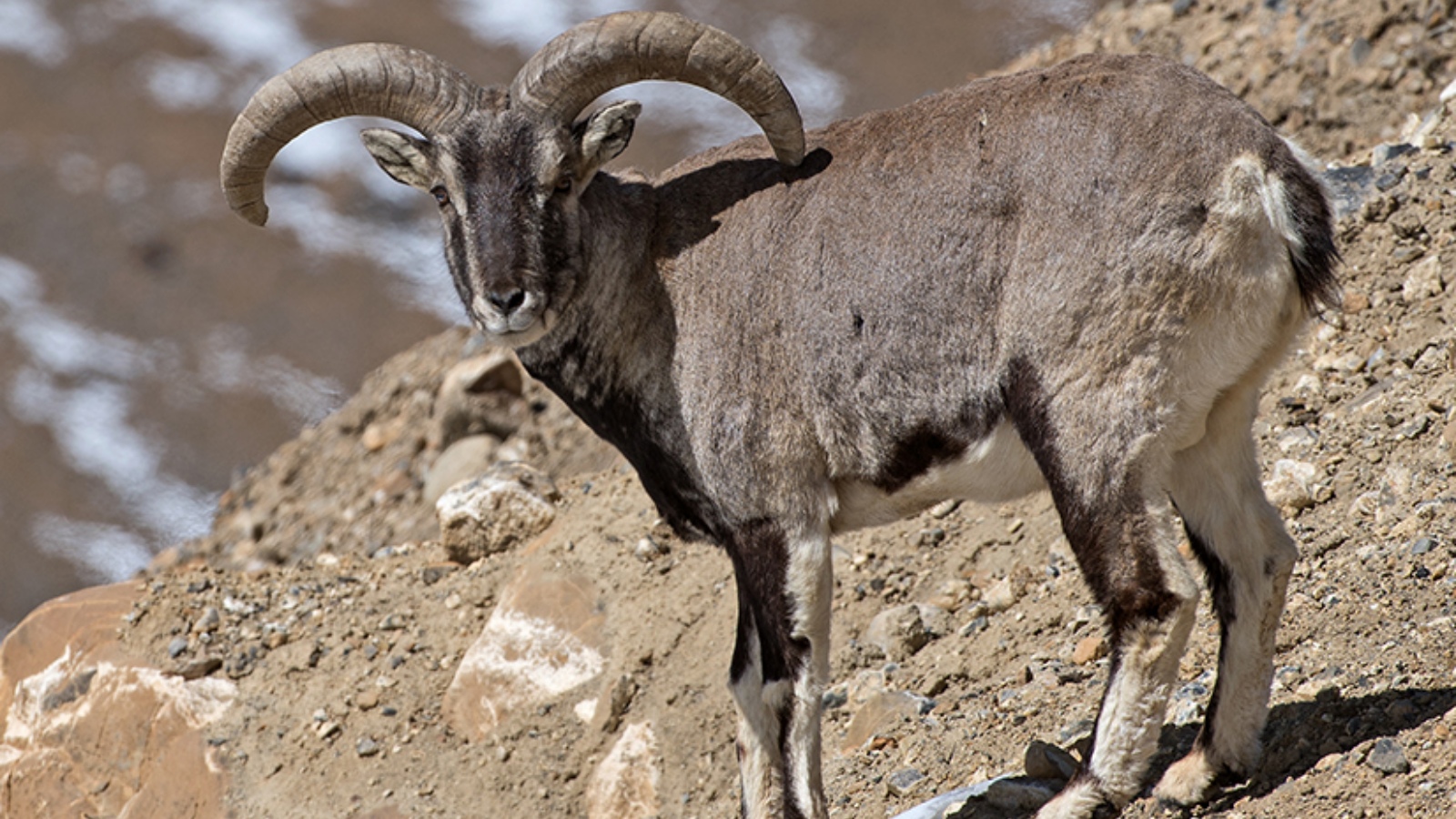
Ladakh’s cold desert supports a fascinating range of wildlife adapted to life at extreme altitudes. Beyond the famous snow leopard, visitors can spot blue sheep, Asiatic ibex, Himalayan marmots, and the Ladakh urial. These animals use their special skills to live on rocky mountainsides and in high-altitude mountain meadows.
From sure-footed mountain climbers to burrowing rodents and elusive predators, Ladakh's cold desert supports a fascinating range of wildlife adapted to life at extreme altitudes.
For many wildlife enthusiasts, Ladakh brings to mind one animal above all others: the snow leopard. The elusive big cat, which inhabits the region's rugged mountains, has become a major draw for visitors hoping to glimpse it in the wild. But Ladakh's cold desert offers much more than the chance to spot this rare predator.
Here are five animals to look out for on a wildlife trip to Ladakh, beyond the snow leopard.
1. Blue sheep (Bharal)
Also known as bharal, these wild sheep are adapted to steep, rocky terrain. Visitors may spot the bharal on Ladakh's rocky mountainsides. Despite its name, the animal is not actually blue. Its coat has a greyish-blue appearance that helps it blend into the surrounding rocks, making it surprisingly difficult to distinguish from a distance.
Blue sheep are known for their agility and ability to navigate steep slopes. Their specialised hooves provide traction on uneven surfaces, allowing them to move across terrain that would be difficult for many other mammals to negotiate. They graze on grasses and other vegetation found on mountain slopes.
2. Asiatic ibex
Another mountain-dwelling mammal, the Asiatic ibex is another species wildlife enthusiasts can look for in Ladakh. A type of wild goat, it is particularly recognisable for its long, backwards-curving horns, which are especially prominent in adult males.
The animal's powerful legs and specialised hooves allow it to negotiate steep, rocky slopes with remarkable ease. These adaptations help it move across rugged mountain terrain in search of grasses, shrubs and other available vegetation.
Ibex are often found on rocky mountainsides and in remote valleys, where the landscape provides both feeding grounds and protection. They are also part of the wider ecosystem that supports Ladakh's large carnivores.
3. Himalayan marmot
Himalayan marmots are burrowing mammals commonly associated with Ladakh's high-altitude meadows. Unlike the elusive predators that attract much of the attention, the Himalayan marmot can sometimes be easier to notice during the warmer months. This large ground-dwelling rodent lives in burrows in open grasslands and alpine meadows, where it feeds on grasses, herbs and other vegetation.
4. Ladakh urial
The Ladakh urial, locally known as shapu, is a wild sheep associated with the region. The Ladakh urial, also called shapu, is a wild sheep native to parts of the northwestern Himalayan region. It is among Ladakh's distinctive mammals, inhabiting open slopes, rocky hillsides, and areas around river valleys.
5. Tibetan wolf
The Tibetan wolf inhabits Ladakh's open valleys and high-altitude landscapes. For those interested in observing Ladakh's predators beyond the snow leopard, the Tibetan wolf is another animal to look out for. Adapted to the harsh conditions of the Trans-Himalayan region, this wolf inhabits open plateaus, valleys and mountainous terrain.
Its thick coat helps it cope with cold temperatures, while its keen senses and hunting abilities make it well suited to life in a landscape where food can be scarce. Tibetan wolves prey on wild ungulates and smaller mammals, including marmots, and may also come into conflict with livestock-rearing communities.
Explore more captivating stories about pets and animals here, and make us your daily stop for the latest from the animal kingdom.