
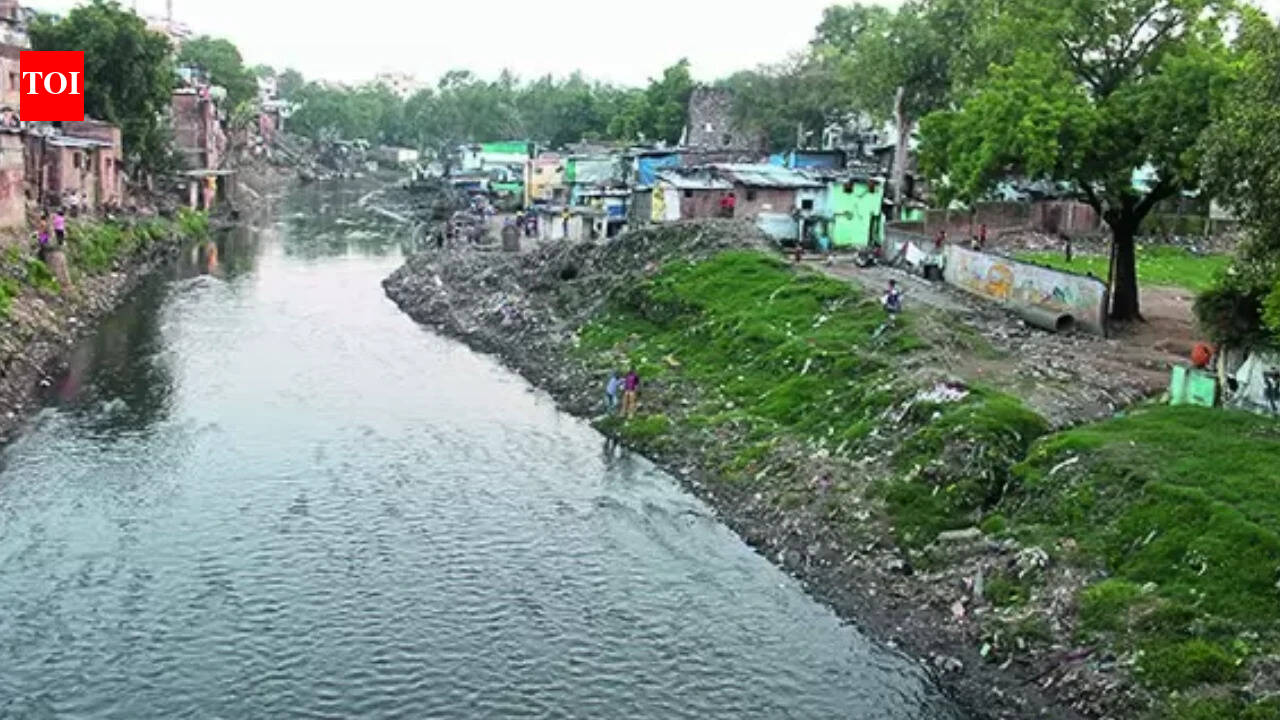
An estimated 30 crore pilgrims will take a holy dip at Simhastha 2028, but IIT Indore found a heavily polluted drain feeding the Kshipra river. Tests showed sewage bacteria and heavy metals, with waste levels 200 times the limit. The state government has yet to act on these alarming findings.
BHOPAL: Foul-smelling, thick with sewage bacteria and loaded with seven heavy metals, a drain in Madhya Pradesh's Dewas is pouring into Kshipra, the same river in which an estimated 30 crore pilgrims are expected to take the holy dip at Ujjain during Simhastha 2028.
IIT Indore's investigation of Nagdhaman Nala conducted ion August found water with almost no oxygen left in it, faecal bacteria at every point tested and a waste load beyond 200 times the national limit for bathing water at the worst spot.Researchers also recorded a foul odour and signs of untreated household and industrial wastewater flowing in. Their verdict: the water is unfit even for direct household or recreational use without treatment. With Ujjain's Simhastha less than a year and a half away, the departments concerned of MP govt are yet to act, say sources.Ahead of Simhastha, a dirty drain, a 'clean' chit & unanswered questions A state govt department has written to the Additional Chief Secretary, Environment Department, demanding immediate action to stop industrial waste entering the drain.A copy has gone to the Member Secretary of Madhya Pradesh Pollution Control Board (MPPCB), the agency responsible for policing industrial discharge, say sources.
There is no record yet of any notice to industrial units, inspection of discharge points or fresh sampling by MPPCB.
The findings also cut against the official position on record. Dewas collector Ritu Raj, citing an MPPCB investigation, had said that industrial effluent in the drain was within the permissible limit. IIT Indore found heavy pollution at every point it tested.What the drain is carrying: Prof Kiran Bala and Prof Manish Kumar Goyal of IIT Indore collected water from three points on the drain in Dewas. A river needs oxygen to stay alive. Healthy river water holds more than five units of oxygen. At one point, the water held almost none, far below one unit. At another, oxygen was close to normal, but the water was still heavily polluted.The waste load was far beyond safe levels. The national limit for bathing water is three units of waste. At one point, the drain carried over 200 times that. At another, it carried roughly 100 times the limit. A second test, which measures the chemical burden in the water, also showed very high readings at all three points. The study found seven heavy metals: cadmium, chromium, copper, nickel, zinc, manganese and lead. These metals do not break down in water and can build up in living things.Sewage contamination was found at all three points. Faecal bacteria went beyond the highest level the test could measure, and E. coli was also detected. IIT rated the point beside the treatment plant as highly polluted and the other two as severely polluted. The report does not name any company as the source of a particular pollutant.Why Ujjain should worry: Nagdhaman Nala runs through the Dewas industrial area and joins Kshipra near Hawankhedi village. Comptroller and Auditor General's audit on the degradation of Kshipra documents this confluence and marks a sampling point there to check the impact of Dewas's industrial waste and sewage on the river.Officials say the IIT study tested the drain, not the river, and does not claim these concentrations have reached the bathing ghats in Ujjain. But whatever the drain carries enters Kshipra, which flows on towards Ujjain. A drain carrying heavy metals and sewage bacteria into the river cannot be treated as a local Dewas problem.The gaps that remain: IIT cautions that the samples were taken in the monsoon, when rain dilutes pollution. In the dry months, the drain could be worse. Its findings relate only to the samples tested. The MPPCB laboratory report behind the earlier assurance is not in the documents, and IIT tested water in the drain, not effluent at individual factory outlets, so the two sets of results cannot be directly compared. But Environment Department and MPPCB will have to explain the gap between them.What must happen now: IIT's report calls for identifying every pollution source, controlling industrial discharge, better sewage management and a structured monitoring and clean-up plan.That means inspecting and sampling every industrial outlet on the drain separately, checking whether the sewage treatment plant at Sarvodaya Nagar is working and stopping untreated household sewage from entering the drain. It means making Hawankhedi a regular testing point, with samples from the river before the confluence, at it, downstream and at Ujjain's bathing ghats. Testing must be repeated in summer, and the results made public before and during Simhastha.
Roads, bridges and ghats can be built on a schedule. Clean water cannot be improvised in the final weeks. The pilgrims who arrive in Ujjain in their crores will judge Madhya Pradesh's preparations by the water they step into. The drain has already been on National Green Tribunal's radar. A joint committee report filed in response to NGT orders in a 2023 case on Kshipra recorded that Nagdhaman Nala meets the river near Hawankhedi, that sewage from colonies upstream of the Dewas industrial area flows into it, and that the city's sewage treatment plants were not treating the wastewater of its drains. NGT has also directed Ujjain's civic body and district administration to stop untreated sewage entering Kshipra ahead of Simhastha.