
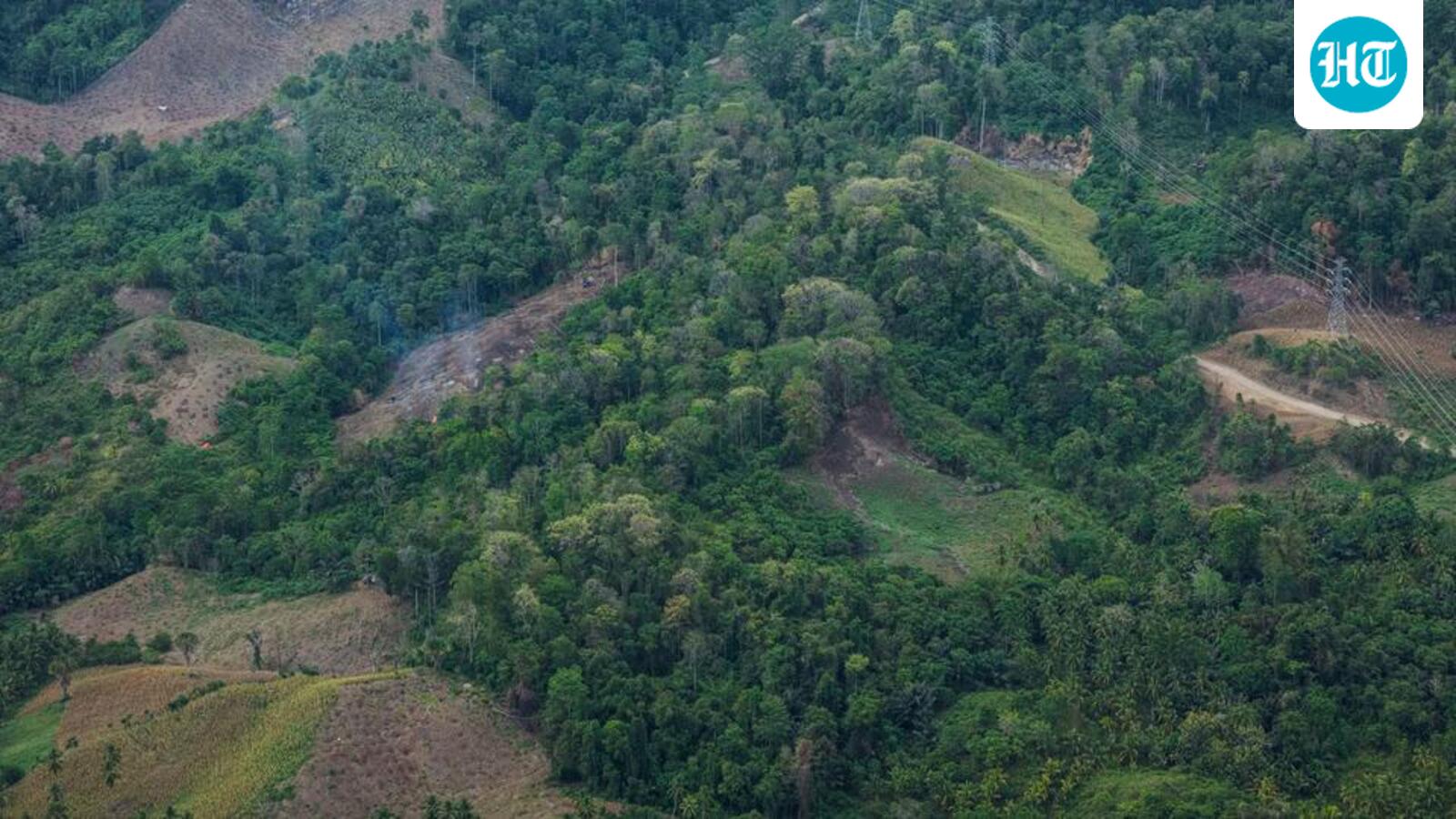
Three villages affected by the Torrent Power project fall under the eco-sensitive Western Ghats draft notification. Dhak, Potal and Saidongar are among six villages set to lose over 32,000 trees for the 3,000-MW hydroelectric project. NGO Vanashakti said, "The destruction in the MMR and Western Ghats is needless, serving vested interests."
MUMBAI: Three of the six villages that are jointly set to lose over 32,000 trees for the Gujarat-based Torrent Power's 3,000-MW hydroelectric project in Karjat fall under the eco-sensitive Western Ghats draft notification. HT has seen the names of the three villages -- Dhak, Potal and Saidongar -- in the draft notification.
While no rules restrict tree felling in these villages until the draft notification is finalised, NGO Vanashakti has written to chief minister Devendra Fadnavis seeking revocation of the project. "Your ministry (MoEFCC) has dragged its feet for over 16 years for finalising the Ecologically Sensitive Areas of the Western Ghats. The reasons for this delay are not hard to comprehend. We are shocked to see that three villages (Dhak, Potal and Saidongar) are in the draft notification," the letter reads.
Vanshakti questions how despite the area being identified as an ESA in the Western Ghats, the MoEFCC "even considered looking at this proposal". "Is the final notification being deliberately delayed to allow ecologically important areas to be plundered? How on earth did the state forest department ignore this crucial fact when it recommended the proposal?" the NGO asks.
The project entails land acquisition of 377 hectares (ha), of which 233 ha is forest area and remaining 144 ha is private land. Of the six villages, the maximum private land for the project, 73.55 ha, is in Dhak, where the upper reservoir is proposed. While 11.79 ha is required in Saidongar, the project requires 6.87 ha in Potal.
"The Western Ghats, a globally recognised biodiversity hotspot, sustain wildlife and humans alike, and our Constitution obligates us to protect them. Yet, as Maharashtra faces drought and falling groundwater, the government remains indifferent," Stalin D, director, Vanashakti told HT. "Deforestation lowers the water table and worsens heat waves, stripping away our first defence against climate change."
The activist said that 300,000 or more trees would be felled in the Mumbai Metropolitan Region (MMR) alone in the coming months. "We are being led into a raging fire," he said. "The destruction in the MMR and Western Ghats is needless, serving vested interests at the environment's expense."
The environment clearance lists 14 mammals, six birds and six reptiles (see box) as Schedule I species under the Wildlife (Protection) Act, 1972, which accords the highest level of protection to endangered animals and plants. "When there is an overwhelming presence of Schedule 1 and other protected species of wildlife, the site can no longer be called an "exclusive forest land". It becomes a wildlife habitat," the letter states.
Stating that the environmental clearance says that the Forest Rights Act claims for Dhak have not been completed, the letter reads, "When this is pending, how has the work started on the ground? We are given to understand that the gram sabhas of the villages affected have objected to the proposal."
Vanashakti has sought to restore the damaged forest areas, protect the wildlife habitat, and respect the rights of the local tribal communities that will be displaced and hit by "this vanity project masquerading as a power project".
A senior forest official told HT that Fadnavis had addressed all issues on Sunday. "We have nothing more to say," he said.