
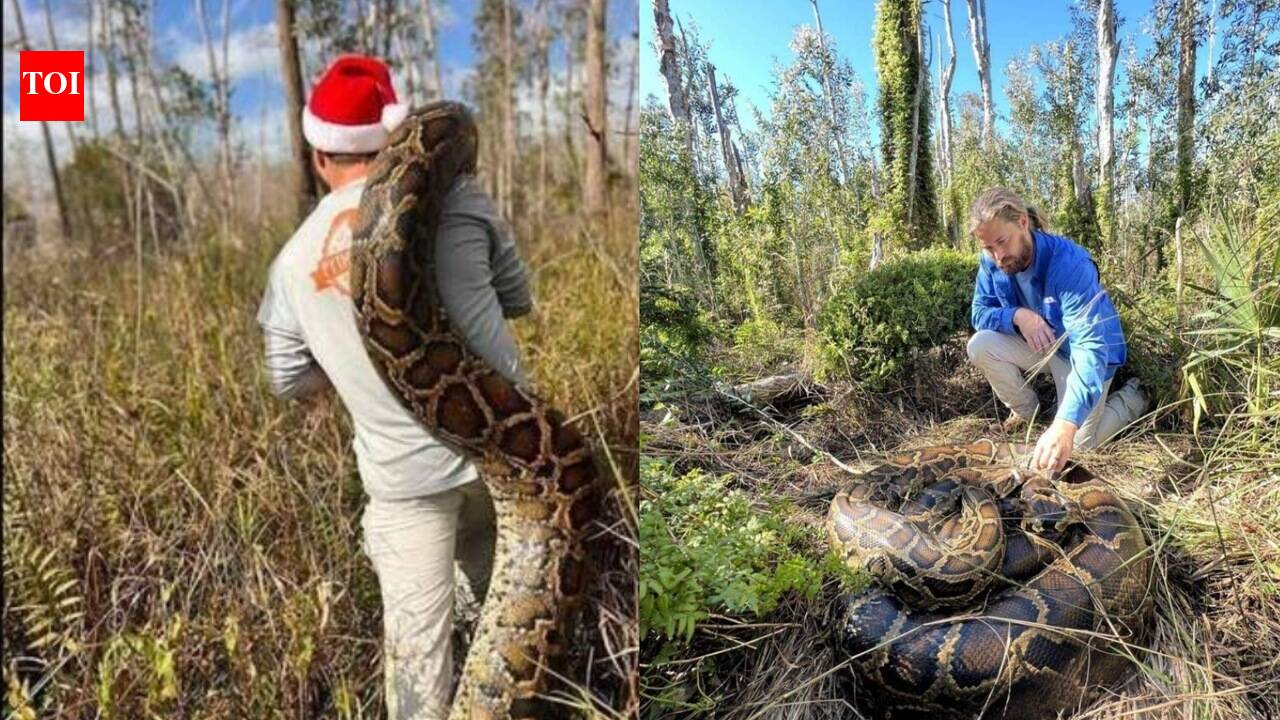
ഫ്ലോറിഡയിലെ എവർഗ്ലേഡ്സിൽ റേഡിയോ ടാഗ് ഘടിപ്പിച്ച ആൺ പാമ്പിനെ ഉപയോഗിച്ച് 153 പൗണ്ട് ഭാരമുള്ള ഭീമൻ പെരുമ്പാമ്പിനെ ബയോളജിസ്റ്റുകൾ കണ്ടെത്തി. അധിനിവേശ വർഗ്ഗമായ പാമ്പുകളെ നിയന്ത്രിക്കാൻ ശാസ്ത്രജ്ഞർ നടത്തുന്ന 'സ്കൗട്ട് സ്നേക്ക്' പദ്ധതിയുടെ ഭാഗമാണിത്. പ്രജനന ശേഷിയുള്ള പെൺ പാമ്പുകളെ കണ്ടെത്തി നശിപ്പിക്കുന്നതിലൂടെ ഇവയുടെ വംശവർദ്ധനവ് തടയാൻ ഈ രീതി സഹായിക്കുന്നു.
In the days before Christmas 2025, biologist Ian Easterling looked like he was enjoying a festive stroll through the swampy terrain of Southwest Florida, Santa hat and all. His mission was far more serious. According to the Conservancy of Southwest Florida, as reported by the Miami Herald, he was tracking a radio-tagged male "scout" snake, sometimes called a "spy snake," and it led him to a 153-pound female Burmese python, one of the largest caught in 2025. The photo that followed has since become a striking reminder of how big Florida's invasive snakes can get.
A Santa hat and a very big snake
The Conservancy of Southwest Florida, based in Collier County, shared a photo on social media showing Easterling carrying the huge snake over his right shoulder as he walked through a wooded area. The Santa hat gave it a cheerful edge, but the picture also shows just how heavy and thick the snake was. He found it while working on protected lands, as part of the Conservancy's ongoing effort to find and remove invasive pythons from the region.
How "scout" snakes do the searching
The method is clever. Researchers implant radio transmitters in male pythons, then follow their signals through the landscape. The "scout" snake program has been in use since 2013 and is one of the most effective tools for detecting Burmese pythons in remote parts of the Everglades.
The goal is to locate reproductive females and humanely euthanize them, which stops them from breeding. In other words, the males do the searching, and the biologists do the walking.
Why the timing matters
Using male pythons works so well because it can lead researchers to large females carrying developing eggs, which can be removed before they hatch, experts say. A female Burmese python can lay anywhere from 12 to 100 eggs, so every large breeding female taken out of the wild prevents a lot of future snakes. Mating season in South Florida runs from December through April, which explains why the team was out in the field right around Christmas.
A team effort in hard-to-reach places
This work isn't easy. Ian Bartoszek, a biologist and environmental science project manager at the Conservancy of Southwest Florida, told el Nuevo Herald in a 2020 interview that experts from several agencies joined forces to track pythons in Big Cypress National Preserve, Crocodile Lake National Wildlife Refuge and other parts of Southwest Florida. Scout snakes help the team find pythons in remote, hard-to-access areas, though researchers often have to travel long distances on foot to reach and remove the snakes.
Why Florida keeps tracking them
Invasive Burmese pythons have become established across South Florida, yet they remain extremely hard to detect, thanks in part to their camouflage. They can grow to 18 feet or more, and Florida's longest on record, confirmed by the Conservancy, measured 19 feet. For the people working in the swamp, every capture matters. A single large female taken out before she lays her eggs can make a real difference to the local ecosystem.