
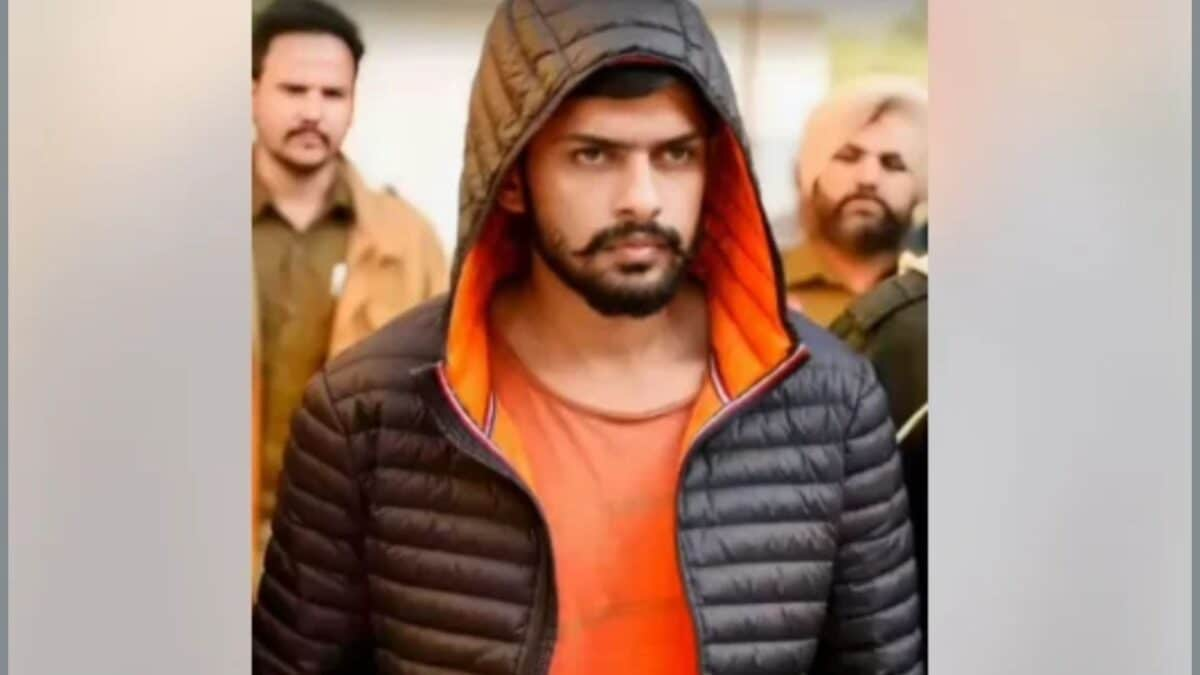
Mumbai Police cannot get custody of Lawrence and Anmol Bishnoi due to Section 303 of the BNSS. The Union Ministry of Home Affairs issued orders restricting their movement from jails in Ahmedabad and Delhi. These legal rules mean police cannot easily take the brothers out for questioning in other cases.
Section 303 of BNSS empowers the appropriate government to direct that a person or category of persons should not be removed from the prison where they are confined
The arrests of three suspects in the October 18 firing incident involving actor Tiger Shroff have put the spotlight back on a legal hurdle confronting Mumbai Police as investigators struggle to secure the custody of Lawrence Bishnoi and his brother Anmol even when they are named in high-profile criminal investigations.
The issue is not simply whether the police suspect their involvement. It is also about where the two men are lodged, the legal restrictions governing their movement and the distinction between questioning an accused and taking physical custody for interrogation.
Lawrence Bishnoi is lodged in Sabarmati Central Jail in Ahmedabad, Gujarat, while Anmol Bishnoi is in Delhi's Tihar Jail. Both have figured in investigations into high-profile crimes in Mumbai, including the firing outside Salman Khan's residence and the murder of former Maharashtra minister Baba Siddique. However, their alleged involvement in any particular case must be established through evidence and legal proceedings.
Section 303 Of BNSS
The principal legal hurdle is Section 303 of the Bharatiya Nagarik Suraksha Sanhita (BNSS), 2023, which replaced the Code of Criminal Procedure (CrPC).
The provision empowers the appropriate government to direct that a person or category of persons should not be removed from the prison where they are confined or detained. Such an order can be issued on grounds that include the nature of the offence, the likelihood of a disturbance to public order and the broader public interest.
The Union Ministry of Home Affairs (MHA) invoked this provision to restrict the movement of Lawrence Bishnoi and subsequently Anmol Bishnoi.
A similar restriction was imposed on Lawrence in August 2023 under the corresponding provision of the CrPC and subsequently extended under the BNSS. An order restricting Anmol's movement from Tihar Jail was issued by the MHA on December 5, 2025, for one year.
These orders mean that another police force cannot simply take either accused out of the prison because it wants to question him in a separate case. The restriction creates a legal barrier to physical transfer, even when another state's police have registered a case and want to investigate an alleged connection.
Why Mumbai Police Cannot Just Bring Them To Mumbai
Ordinarily, investigators can seek the custody of an accused in connection with a separate criminal case, subject to the applicable law and judicial authorisation. But when a government order specifically restricts an accused's removal from prison, the process becomes more complicated.
Mumbai Police must follow the prescribed legal procedure and obtain the necessary permissions. A production warrant or a request from a court does not automatically override a valid restriction on transferring an accused from prison.
The difficulty became evident in the Baba Siddique murder investigation. In July 2026, a court rejected Mumbai Police's plea seeking Anmol Bishnoi's custody, citing the MHA order restricting his movement from Tihar Jail.
The episode demonstrated that naming an accused in a chargesheet or seeking his interrogation does not, by itself, guarantee that investigators can physically take him into custody.
However, police can approach the competent court and follow the applicable procedure to seek access for interrogation.
But questioning someone inside a prison can be more restrictive than taking physical custody. Investigators may have limited time and access, and coordinating questioning with other accused persons or examining certain evidence alongside the suspect can become more difficult.
What Happens In The Tiger Shroff Case?
The three arrests in the Juhu firing investigation give Mumbai Police an opportunity to examine the alleged shooters' roles, communications and possible connections to other individuals.
A social media claim attributed to the Bishnoi gang has reportedly claimed responsibility for the attack.
If investigators find evidence pointing towards either brother, they would need to pursue the relevant legal process to question them or seek their custody, subject to the existing restrictions and any applicable court orders.
The larger challenge is balancing the state's obligation to investigate serious crimes with the legal safeguards governing prisoners and public order. Section 303 does not grant an accused immunity from investigation. It regulates the circumstances in which a prisoner can be moved.