
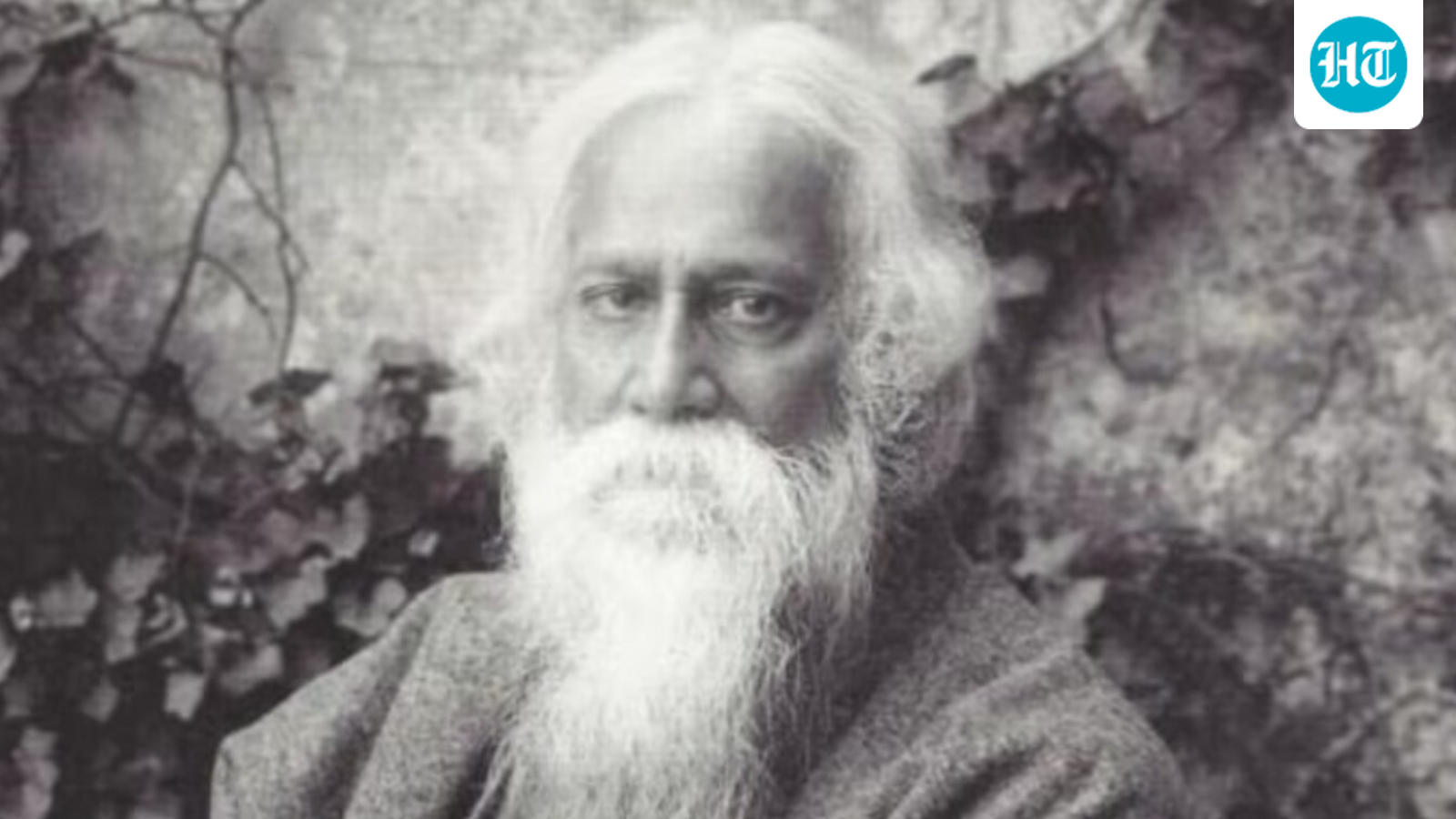
Rare manuscripts, letters, and personal belongings of Rabindranath Tagore will go on display at Christie’s in Mumbai. The collection, preserved by the family of Maitreyi Devi, offers a personal look at the poet’s life. Nishad Avari said, "Tagore compared restrictive education to being in prison," highlighting his unique creative vision.
Rabindranath Tagore's writings, paintings and music have been celebrated across generations, but a newly revealed family archive offers a more personal glimpse into the life of the Nobel laureate. The collection includes handwritten manuscripts, letters, photographs and belongings preserved by a family close to him. These materials shed light on his creative process, his relationships and his final years.
An exhibition at Christie's in Mumbai will bring the private collection into public view for the first time, offering admirers an opportunity to discover lesser-known aspects of the celebrated writer and artist.
The archive comes from the family home of Maitreyi Devi, a writer and close associate of Tagore, in Mungpoo, a village in Darjeeling. He visited the family between 1938 and 1940, during the final years of his life. Tagore died in 1941.
According to a report by The Guardian, the collection includes 10 complete manuscripts, hundreds of letters, artworks and personal belongings. One of the notable documents is a 1940 manuscript believed to be a draft of his memoir, Chelebela, also known as My Boyhood Days.
The manuscript reflects on his childhood in Calcutta, now Kolkata, and the changes he witnessed as electricity and motorcars became part of everyday life. It also offers insights into his thoughts on education.
Nishad Avari, head of South Asian modern and contemporary art at Christie's and the exhibition curator, told The Guardian that Tagore compared restrictive education to being in prison. His ideas about freedom and curiosity were closely connected to the learning environment he created at Santiniketan, where students learnt in the open, often sitting under trees with their teachers.
The archive also reveals the closeness Tagore shared with Maitreyi Devi and her family. One manuscript is particularly significant because it was dictated to Devi, reflecting the trust he placed in her.
The collection contains copies of his publications signed for her, along with correspondence exchanged first with her father and later with Devi herself.
There are also small doodles among the corrections in his manuscripts, offering clues to how his writing and visual art influenced each other. Among the personal belongings preserved at the family home are a kurta and a lungi that Tagore had left behind.
The artworks include a portrait of Devi and a landscape depicting the forests of Mungpoo, which had become a retreat for the poet.
Tagore was the first non-European to receive the Nobel Prize in Literature, which he won in 1913 for Gitanjali. His legacy extends beyond literature, with his compositions including the national anthems of India and Bangladesh.
The newly revealed archive is particularly valuable because major institutions such as Visva-Bharati in Santiniketan and the National Gallery of Modern Art already hold substantial collections of his work.
Titled Rabindranath Tagore and Mungpoo, the exhibition will run at Christie's space in south Mumbai from November 10 to December 18. It aims to offer visitors a closer look at the man behind the celebrated works, through objects and documents that have remained within a private family collection for decades.