
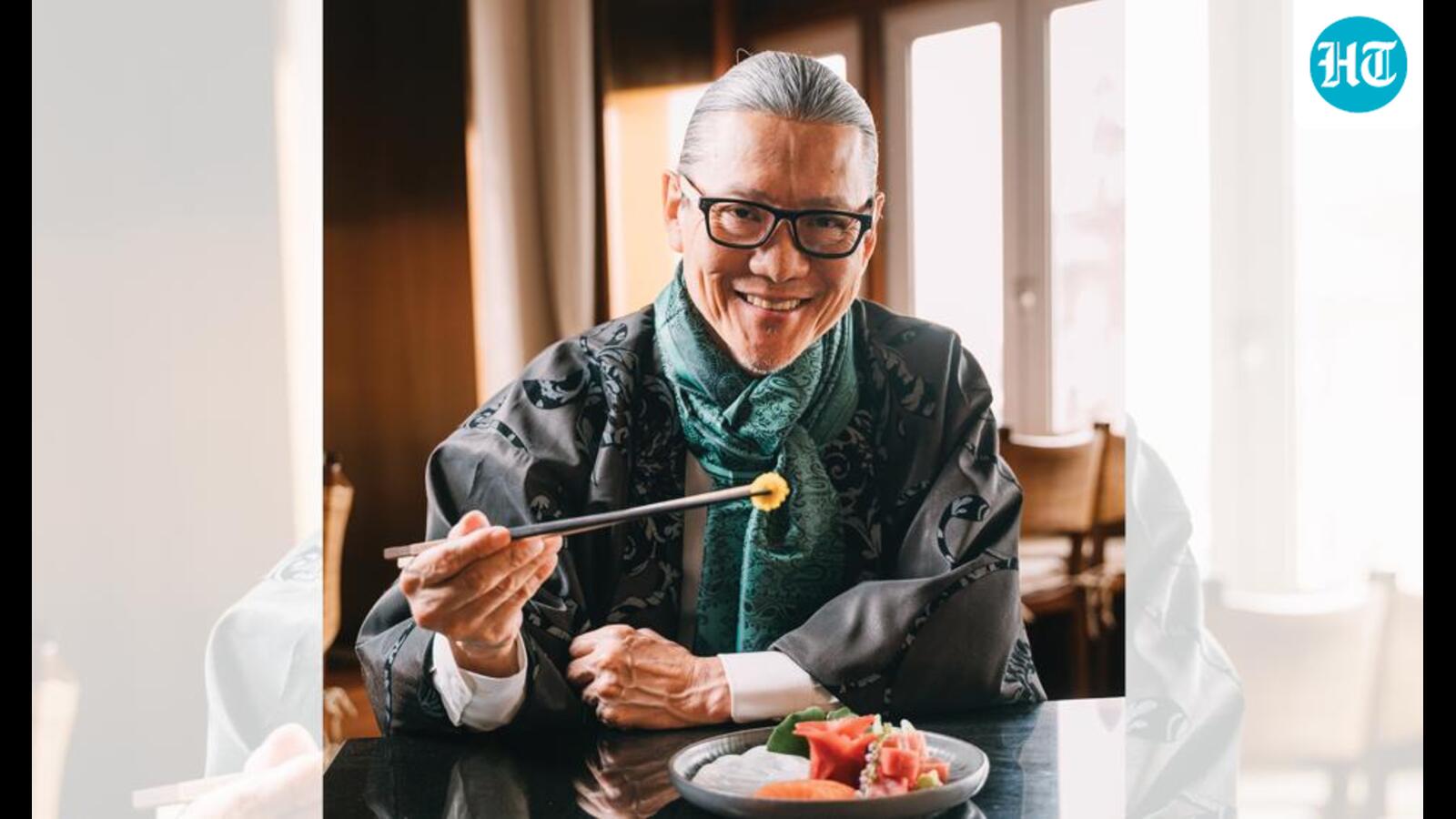
Masaharu Morimoto opened Wasabi at the Taj Mahal Hotel in Mumbai two decades ago. The restaurant became a huge success and launched a dining boom across India. While it faced some bad phases, the current team restored its glory. Morimoto said, "Many years later, I was able to smile."
Masaharu Morimoto is the most famous Japanese chef in Mumbai. His fame derives from the success of Wasabi, the Japanese restaurant he opened at the Taj Mahal Hotel in Mumbai two decades ago. Wasabi is small (around 40 covers), hideously expensive and hard to get into on weekends (and often on weekdays too). It is still the restaurant that the city's wealthy elite will go to for a celebration, and it remains Mumbai's most exclusive restaurant.
I spoke to Morimoto at Wasabi last weekend. He was on one of his infrequent trips to the city (he has 27 restaurants around the world now) and we talked about how risky the Mumbai venture seemed when it opened. Would people like Japanese food? Would they pay such high prices? Would they find Indian chefs who understood Japanese food well enough to assist the two chefs Morimoto had sent over?
Many years later, Morimoto was able to smile about the early doubts. Not only has Wasabi been a huge success, but its menu has been imitated by scores of restaurants all over India. Like all significant restaurants, it launched a boom that continues to this day.
It has had its ups and downs. I remember going there around a decade ago and being appalled by the drop in food quality and especially, service standards. I tweeted about it. The Taj management reacted foolishly and vindictively to the tweet, but the truth was that the whole hotel was going through a bad phase then. Fortunately, things have been back to normal for a while, and the current top team of Ritesh Sharma and chef Rohit Sangwan have restored the glory of the Taj and of Wasabi in particular.
Talking to Morimoto, I was reminded that though Wasabi may have been the most influential Japanese restaurant in India it was not the first.
We don't realise this now, but at the end of the 19th century and for much of the early 20th century, Bombay and Japan had very close connections. According to some estimates nearly 2,000 Japanese lived in the city (more conservative guesswork puts the figure at around 1,000) and the Japanese had their own school, cemetery and restaurants. By the 1930s, trade between Japan and India was so strong that we imported more textiles from Japan than we did from the UK. Indians travelled regularly between the two countries for business, and Japan was regarded by Bombay people rather as our generation regards Thailand. For instance my mill-owning Gujarati grandfather thought nothing of visiting Japan; it remained the only foreign country he ever visited.
All that changed with the Second World War, when Japan fought the Brits, and soon Japan began to be regarded as a faraway, strangely exotic land and its food became a mystery. In Delhi, for instance, restaurants sported such Japanese names as Ginza and Akasaka, but served food that was resolutely Indian-Chinese.
In Mumbai, on the other hand, there remained a slight Japanese influence. As Meher Mirza tells us in her excellent Sea, Salt and Spice, a history of Mumbai through its food, that Mumbai favourite, the sizzler, has Japanese origins.
I have a faint memory of a mildly Japanese-influenced restaurant near Mumbai's Excelsior cinema. Mirza reminds us that it was owned by Firoz Erani who had a Japanese wife called Tachiko. This connection gave Erani an insight into Japanese food traditions. His family owned a steel company and he developed a steel plate that could be used for teppanyaki. He used the plate to introduce teppanyaki to Mumbai and later developed the concept to offer all kinds of sizzling dishes.
The Erani family also started Touché Sizzlers on Warden Road. And a former manager of Touché started the massively successful Kobe Sizzlers. The reference to Kobe suggested Japanese food, but the menu was eclectic and hardly anyone in Mumbai today recognises that the city's beloved sizzlers are in direct descent from teppanyaki.
The first totally authentic Japanese restaurant in India opened in the late 1980s at the Ashoka hotel in Delhi. From what I remember, it emerged out of Rajiv Gandhi's desire to give Japanese businessmen a taste of home.
Rajiv was eager to re-establish trade links with Japan and was told by Japanese ministers that businessmen were reluctant to go to India because they missed their food. Rajiv saw the point and told the government-owned ITDC to collaborate with the Japanese to open a restaurant at the Ashoka in Delhi. The restaurant was called Tokyo, had a Japanese chef, used ingredients imported from Japan and, because Indians were not its primary guests, made totally authentic food that appealed to Japanese people.
Because it was a prestige project, ITDC put its best restaurant manager in charge, and it soon became my favourite restaurant in Delhi. In Japan, unlike India, sushi is served at specialised places, not at every restaurant. So Tokyo had no sushi on the menu and as Indian guests began frequenting it, they got used to real Japanese food. Changes of government meant that ITDC went through many upheavals and lost most of its best people. Sadly Tokyo did not survive those upheavals.
There was no good Japanese restaurant in India for a while until Nikko, a company owned by Japan Airlines, began managing the Metropolitan Hotel in Delhi. Nikko opened an outstanding Japanese restaurant, Sakura, with a temperamental but excellent chef and served real Japanese food. Many of the ingredients it required (Kobe beef, for instance) were not available in India (this was before the anti-beef frenzy began) but Sakura procured them anyway. It was believed - but never confirmed - that Japan airlines crew brought them into India in their baggage.
The Mumbai equivalent of Sakura was Wasabi, though the styles of cooking were different. Wasabi was the brainchild of Raymond Bickson, who ran the Taj in that era. Bickson wanted to open Nobu but was stymied by the eponymous chef's view that he wanted a 100-cover restaurant.
He turned instead to Morimoto, who had been executive chef at the first Nobu, and had helped perfect the menu's iconic dishes including Black Cod in Miso. At that stage, Morimoto had only one restaurant of his own and was not sure that Indians would like Japanese food, so the venture was a gamble for both Bickson and Morimoto. As we now know, it worked brilliantly.
The Taj has a history of introducing new cuisines to India and watching as bastardised versions take off at the lower end of the market. It happened with Sichuan food and then with Japanese food, where numerous Wasabi imitators have sprung up.
But I am sure that Wasabi itself will never compromise on the food. In the heyday of the Ashoka's Tokyo, the restaurant manager became committed to the cuisine, developed a working knowledge of kitchen Japanese, and became so popular that ITDC even put his picture in the ads for the restaurant.
That manager is still as passionate about Japanese food. Except that he is now the CEO of the Taj group. He is called Puneet Chhatwal and is the country's leading hotelier. But sadly he no longer features in any ads!