
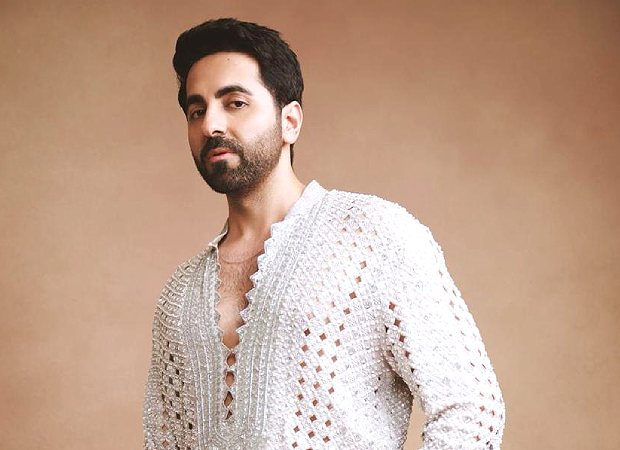
Ayushmann Khurrana is stepping into the iconic role of Prem in Sooraj R. Barjatya’s film Yeh Prem Mol Liya. Arriving in cinemas on November 27, the movie brings together Rajshri’s idealised world and Ayushmann’s real, imperfect characters. Fans now wait to see how this fresh combination changes the classic Bollywood hero.
For decades, Rajshri Productions has built its cinematic universe around the belief that love, family and goodness can triumph over adversity. Its heroes are often guided by an uncomplicated moral compass, its romances are rooted in commitment, and its families, despite their disagreements, ultimately find their way back to harmony.
Rajshri gave Bollywood its most IDEAL hero. Ayushmann gave Bollywood its most REAL hero. What happens when the two come together?
Ayushmann Khurrana's filmography, meanwhile, has frequently explored what happens when real life refuses to follow an ideal script. His characters confront awkward truths, social prejudice, family embarrassment and personal insecurities. They are rarely perfect, but their imperfections make them recognisable.
With Sooraj R. Barjatya's Yeh Prem Mol Liya, arriving in cinemas on November 27, 2026, these two storytelling traditions are coming together. Ayushmann is stepping into the iconic role of Prem. The intriguing question is whether the actor's instinct for playing imperfectly human protagonists can bring a fresh dimension to Barjatya's idealised romantic world.
Rajshri's greatest strength has been its ability to make goodness aspirational. In Hum Aapke Hain Koun..!, love unfolds amid celebrations, rituals and familial affection. In Hum Saath-Saath Hain, the family becomes a moral centre, with loyalty and togetherness tested by misunderstandings and competing emotions.
These films do not necessarily suggest that families are free of conflict. Rather, they place faith in the possibility of reconciliation. The ideal Rajshri hero is someone who understands that love involves responsibility, that relationships deserve patience and that personal happiness cannot always be separated from the happiness of those around him.
Such storytelling has a distinct emotional appeal. In a world where relationships are increasingly examined through the language of individual choice, Rajshri offers the comforting possibility of belonging to something larger than oneself.
However, an ideal hero can also seem distant if audiences cannot recognise their own struggles in him. This is where Ayushmann's screen persona becomes particularly interesting.
Ayushmann's most memorable characters have often been defined by the gap between how they want to be perceived and who they actually are.
His films derive much of their appeal from imperfection. Their characters are not automatically wise, confident or emotionally articulate. They stumble, worry about what others think and sometimes take time to understand what matters.
Yet their journeys ultimately lead them towards greater empathy and acceptance. This is an important distinction: Ayushmann's characters may begin far from ideal, but they often discover the value of relationships through their mistakes.
That emotional progression could make him an interesting fit for Barjatya, whose films frequently revolve around the choices people make when love and family obligations intersect.
The meeting point between Rajshri and Ayushmann need not be a compromise between two contrasting styles. It could be the very reason the combination works.
Rajshri provides an emotional destination: the belief that love can overcome differences and that relationships deserve to be protected. Ayushmann brings the possibility of a more contemporary journey towards that destination, one in which the hero may have doubts, encounter uncomfortable realities and discover that doing the right thing is not always straightforward.
Imagine the distinction between a hero who instinctively knows what love demands and one who must learn it through experience. Both can ultimately embody commitment, but the latter offers audiences a more visible process of growth.
For Yeh Prem Mol Liya, this creates an opportunity to preserve the warmth associated with Rajshri while allowing Prem to feel relevant to a generation accustomed to more complicated protagonists.
The casting also raises an important creative challenge. Ayushmann's familiar comic timing and naturalistic style must serve the emotional world of the film rather than undermine its sincerity. Equally, Barjatya's traditional sensibility must leave enough room for the actor's individuality. If the balance is right, the film could offer a Prem who feels both aspirational and approachable.
The most compelling outcome would not be Ayushmann abandoning his identity to become an old-school Rajshri hero. It would be the two approaches influencing each other.
If Yeh Prem Mol Liya can bring those worlds together, Prem could emerge as something more interesting than a familiar ideal: a recognisably human hero who gives audiences a reason to believe in one.