
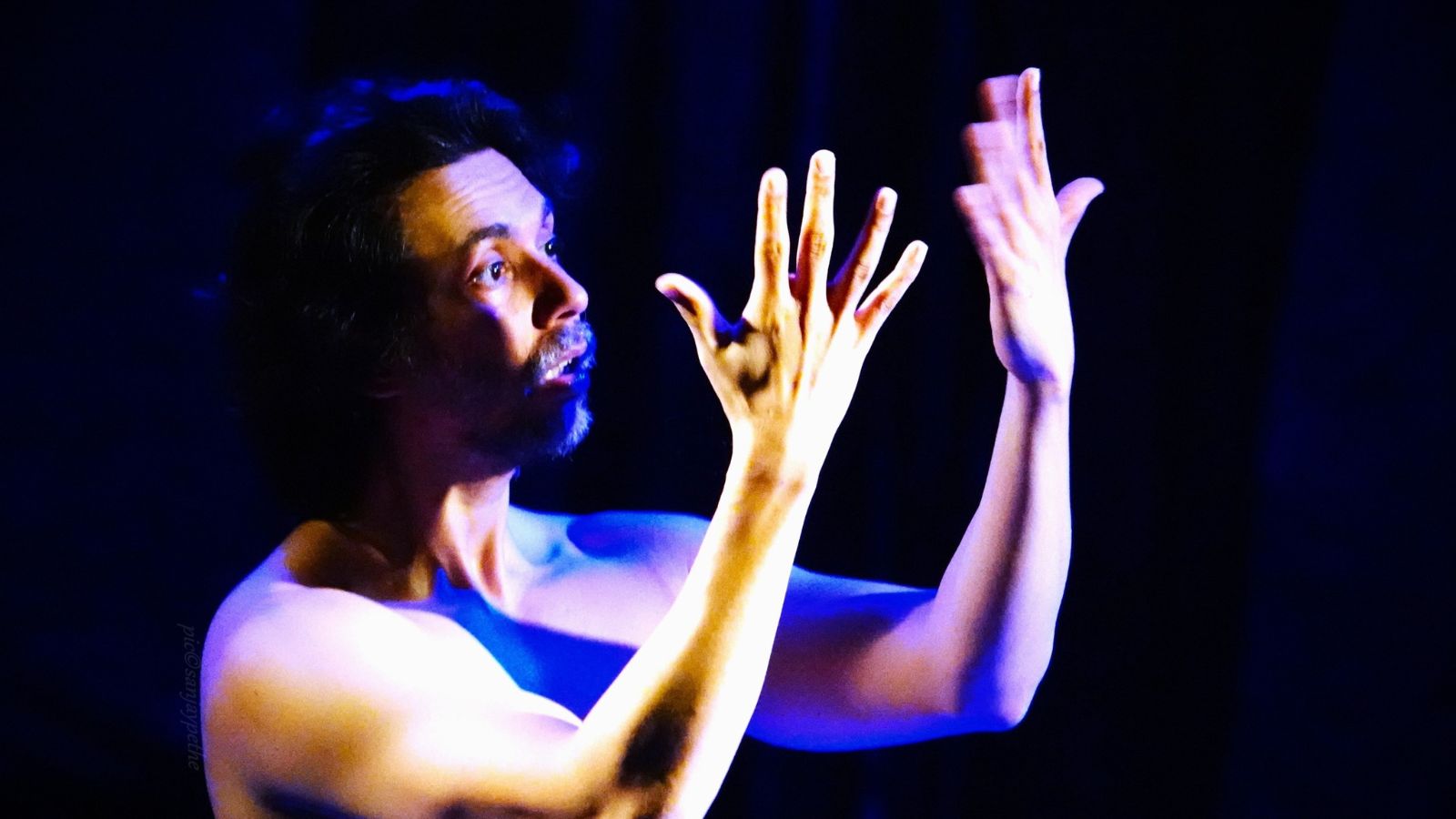
Mahesh Elkunchwar’s play Eka Natacha Mrityu will head to the Prithvi Theatre Festival on November 5 and the Habba Theatre Festival in January 2027. Director Atul Pethe said, "The play explores the mystery of life, suspended between the cycles of birth and death." Performances also start in Pune this October.
What are we, really? What gives meaning to our existence? How do the intricate webs of relationships shape our lives? And if we were to shed the many masks we wear, would we discover the truth at our core?
These are the existential questions that haunt the protagonist of Eka Natacha Mrityu (Death of an Actor), a thought-provoking play by eminent Marathi playwright Mahesh Elkunchwar and directed by highly acclaimed director Atul Pethe.
The experimental production has been selected for two prestigious theatre festivals, the Prithvi Theatre Festival in Mumbai on November 5 and the Habba Theatre Festival in Bengaluru in January 2027. Performances have been scheduled in Pune on October 24 and 25.
"The play explores the mystery of life, suspended between the cycles of birth and death," Pethe told The Indian Express. Describing it as the final and markedly different play in Elkunchwar's distinguished career, he said its selection for the renowned festivals in Mumbai and Bengaluru was a matter of pride for Marathi theatre.
At its heart, Eka Natacha Mrityu explores the symbolic death of an actor and the possibility of the human being's rebirth. Yet, the journey towards this transformation is neither simple nor painless.
In his review of the production, noted playwright Prof. Vibhakar Mirajkar describes a striking opening image- a heap of human form lying under a harsh, unforgiving beam of light, gradually awakening to consciousness through tortured, half-human, half-animal groans. Wracked by pain, the figure finds himself unable to move, ensnared in the strands of a suffocating web.
The actor must relinquish the bhangar which is the accumulated clutter of a lifetime, comprising awards, honours, fame, recognition and ego.
"The more desperately he tries to shake off the strands clinging to his body, the more deeply he becomes entangled. Ironically, he is also the spider who has woven these shimmering strands himself. The web that once glittered with achievement has now become his prison," Mirajkar writes.
The play's central metaphor evokes the ancient Greek maxim 'Know thyself', inscribed at the Temple of Apollo at Delphi as a reminder to seekers of wisdom. The journey towards self-knowledge, the production suggests, begins with confronting one's inner conflicts and stripping away the identities accumulated over a lifetime. Only then does the possibility of liberation emerge.
Pethe has reworked the play to bring it in tune with his theatrical vision, bridging a gap of more than two decades. According to Prof Mirjakar, Pethe's adaptation pares back the text, making it less word-heavy while heightening its theatrical impact.
The result is an interplay between the actor's body and the written word, with each complementing the other while retaining its own space. This balance, Mirajkar said in his review, allows the audience to experience the very essence of theatre.
Produced jointly by Natakghar and The Box, the play features Abhay Mahajan in the lead role. Pradeep Vaidya has designed the lighting, while Shyam Bhutkar and Kushal Mahant are responsible for the set design.