
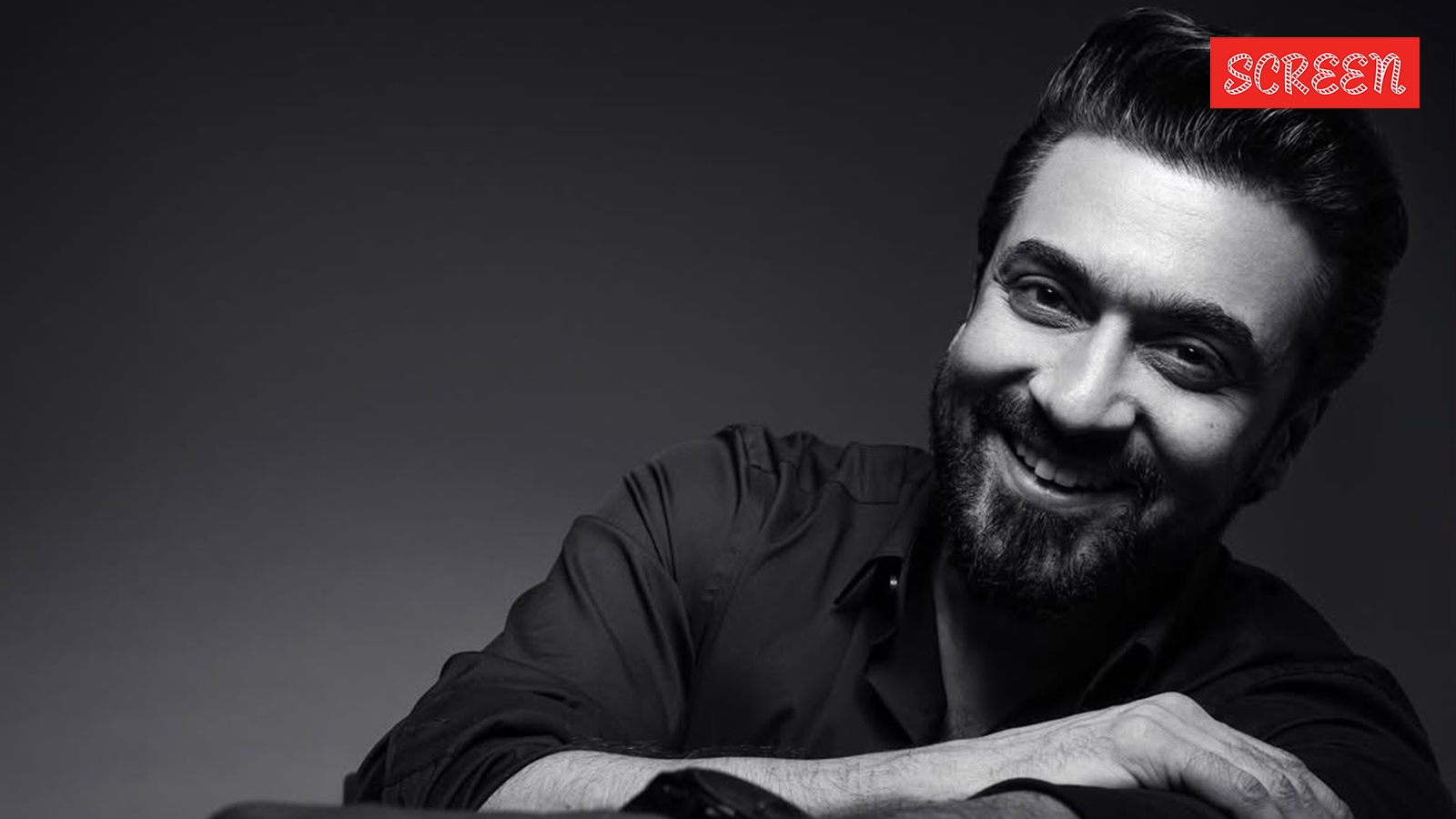
Suriya turned his box office failures into a Rs 600 crore 2026 comeback. After Kanguva and Retro saw underwhelming responses, the actor chose to work with RJ Balaji on Karuppu. This fantasy action drama ran for weeks and crossed Rs 310 crore worldwide, helping him secure a successful year in cinema.
The fall
After winning the National Award for Best Actor for Soorarai Pottru and earning universal praise for Jai Bhim, both of which released directly on Amazon Prime Video during the pandemic and never had proper theatrical runs, Suriya returned to cinemas with a clear intention: he would not go back to the formulaic filmmaking that had defined his middle period. He would not repeat the mass-hero template that guaranteed opening weekends but offered him nothing as an actor. He would choose directors whose sensibilities interested him, stories that pushed him into unfamiliar territory and characters that required him to be something other than what the audience expected.
The results were brutal. Kanguva, a period fantasy directed by Siva, was meant to be his return to theatrical dominance and establish his pan India presence. However, the writing and narrative structure came under severe criticism, even as Suriya’s performance and the film’s visual ambition were acknowledged. The budget-to-returns ratio was devastating. Jyotika publicly defended the film against trolling, calling the backlash a “propaganda” effort, but the numbers spoke for themselves.
If Kanguva was a clear failure, Retro (May 2025) was something more complicated and, in some ways, more painful. Directed by Karthik Subbaraj, one of Tamil cinema’s most original filmmakers, the film cast Suriya in a dual role in a love-story-war epic.
Between Kanguva’s disaster and Retro’s ambiguity, a specific kind of damage had been done. Not to Suriya’s talent, which was never in question, or to his willingness to take risks, which remained intact. The damage was to the industry’s belief in him as a commercial proposition.
Two big-budget films which resulted in two underwhelming response. A National Award winner who could not buy a clean theatrical blockbuster. The trade narrative hardened: Suriya’s instincts were off. He was picking wrong and needs to go back to what worked.
This is the part that makes the 2026 hat-trick genuinely meaningful rather than just commercially impressive.
2026: The year of Suriya
Karuppu, directed by RJ Balaji, is a fantasy action drama rooted in Tamil folk mythology. Before Karuppu, Balaji was known for comedies and satire. He had never made anything at this scale nor directed a star of Suriya’s magnitude. The pairing was unconventional by any measure. But Suriya said yes, and the film ran for weeks on relentless word of mouth to cross Rs 310 crore worldwide. It became the highest-grossing film of the actor career. It also announced something the industry was not prepared for: Suriya had not been choosing wrong.
If Karuppu left room for the argument that Suriya had simply gotten lucky with a crowd-pleasing concept, Vishwanath and Sons ended that argument. A family entertainer directed by Venky Atluri, a Telugu filmmaker whose track record was in sentimental dramas rather than star vehicles, the film asked Suriya to do something he had rarely been asked to do: be ordinary. Suriya cracked the code by weaponising nostalgia without making it look like fan service. Vishwanath and Sons was built, quietly and deliberately, on the emotional memory of the characters Suriya had played in his earlier career, and the film crossed Rs 200 crore worldwide.
Scene is arguably the most experimental of the three. A dark crime comedy about a blind DSP hunting a serial killer who treats murder like a weekday routine, directed by a Malayalam filmmaker Jithu Madhavan making his Tamil debut, with Naslen as the villain and Nazriya Nazim returning to Tamil cinema after 12 years. The music is by Sushin Shyam, yet another Malayalam debutant in Tamil.
If Karuppu proved Suriya could still open a film, and Vishwanath and Sons proved it was not a one-off, Scene proves something more interesting than either. It proves the audience is now willing to follow the actor into almost anything.
The reason it works is partly the film itself, which is inventive, sharply written and directed with the kind of eccentric confidence that only a filmmaker fully in control of his material can manage. But it also works because of where Suriya is as a performer right now. The lean years stripped away the need to be the centre of every scene, the compulsion to carry the film on his shoulders, the star’s anxiety about whether the audience will accept him if he does not dominate every frame. What is left is an actor who is comfortable being part of an ensemble, who can play vulnerability without making it a performance, who can be funny without mugging and cool without announcing it.
Hit and a miss
Now look at the choices that produced the flops. Kanguva was a genre experiment on a massive scale with a director whose commercial instincts had not been tested at that budget. Retro was an ambitious multi-genre epic with a filmmaker whose sensibility does not naturally align with mainstream commercial filmmaking. Both were unconventional choices. Both required Suriya to step outside his comfort zone. Both were driven by the same appetite for risk that drove Karuppu, Vishwanath and Sons and Scene.
The choices that produced the flops and the choices that produced the hits are the same kind of choice. Suriya did not change his decision-making process. He did not go back to formula after Kanguva failed. He did not play it safe after Retro’s divided opinion. He continued doing exactly what he had been doing: picking directors who interested him, genres he had not tried before and characters that required him to stretch.
The difference between the flops and the hits is not in the choosing, it is in the execution. The scripts got better and the material matched the ambition. But the actor making the call remained the same, making the same kind of bet, with the same tolerance for risk that the industry had mistaken for poor judgment.
Where does Suriya go from here?
The combined worldwide gross of Suriya’s three 2026 releases is heading toward Rs 650 crore mark. For an actor who spent two years being told he was making the wrong choices, the numbers prove that the audience is willing to follow Suriya into any genre left, with none seemingly off-limits.
The question is what he does with that freedom. The temptation, after a year like this, will be to consolidate. To pick projects that extend the winning streak rather than risk it. To play it safe now that safety is available.
But if the last two years have taught us anything about Suriya, it is that he does not play it safe. The same instinct that walked him into Kanguva will walk him into whatever comes next. The difference is that now, after 2026, the industry will follow him rather than question him.
The flops did not break him, they seem to free him. And the freedom is producing the best work of his career.